How did Thomas Cochrane become a legendary sea captain
TL;DR
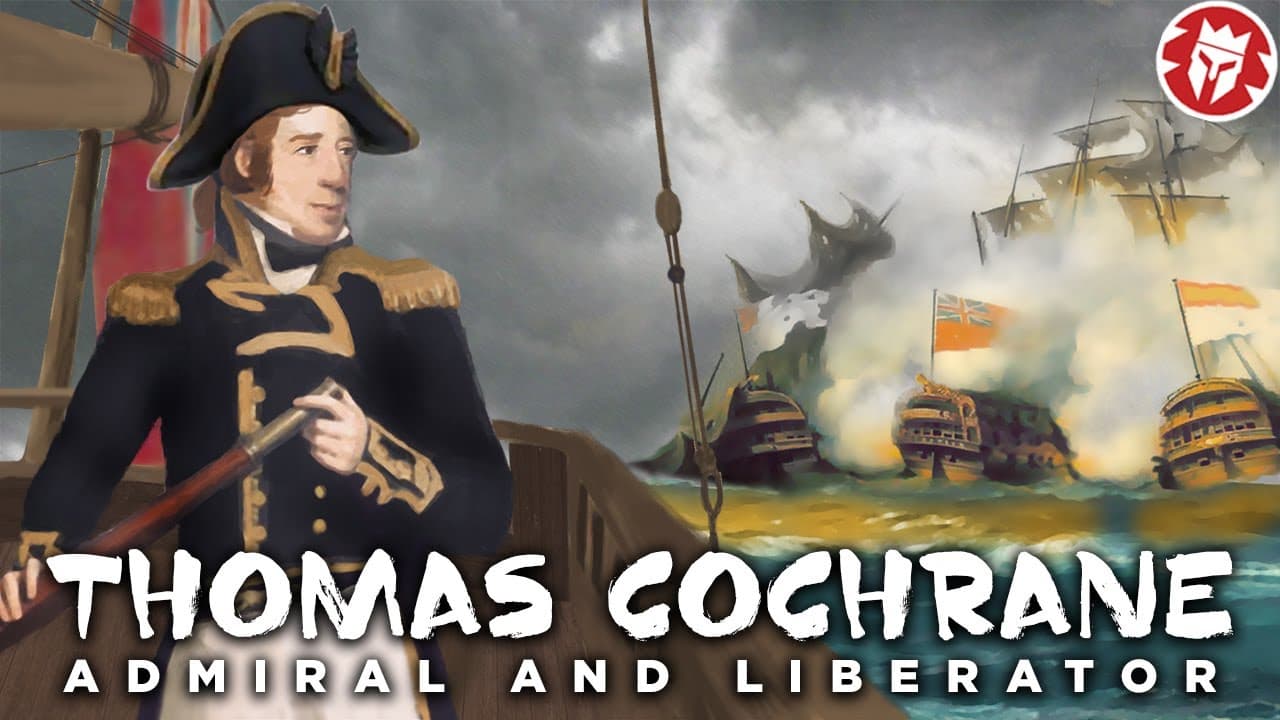
Cochrane used bold deception, rapid raids, and aggressive leadership to outmaneuver larger enemies. He frequently employed false flags, night actions, and daring captures to disrupt Napoleonic era operations and later aided independence movements in Chile, Peru, and Brazil, earning him a reputation as a fearless and unyielding commander.
Transcript
Sometimes, the life of a single man can be utterly extraordinary. Such is the case of a certain 19th century Scottish madman, whose daring exploits played a crucial role in defeating Napoleon, but also made him a revolutionary war hero in Chile, Peru, and Brazil. Yet also, a man whose utter stubbornness made him an enemy of every superior offic... Read More
Key Insights
- Cochrane is a Scottish naval officer who became famous for audacious tactics.
- The key to his success was using speed and deception to compensate for smaller vessels.
- Cochrane repeatedly used false flags to mislead enemies before striking.
- He rose to command with notable early victories and aggressive leadership.
- A palace of social influence surrounded him, boosting his career prospects.
- He earned a reputation for defying authority and engaging in duels.
- His exploits off the Mediterranean coastline included capturing multiple vessels.
- His career extended beyond Europe, influencing naval and independence movements in the Americas.
- More videos from this channel:
- More from this channel: Kings and Generals
Install to Summarize YouTube Videos and Get Transcripts
Explore YouTube Video Summarizer or Get YouTube Transcript Extractor
Questions & Answers
Q: How did Thomas Cochrane start his naval career and what formed his early reputation?
Thomas Cochrane joined the Royal Navy as a midshipman on July 28, 1793, receiving support from his aristocratic connections. In the early years he impressed superiors with his leadership and curiosity, earning promotions and a reputation for bold, rule bending behavior. His defiance toward authority set the tone for his subsequent career.
Q: What were Cochrane’s notable methods on the HMS Speedy?
On the HMS Speedy, Cochrane used small ship advantages to surprise larger foes. He employed nighttime operations, swift dawn strikes, and deception through false flags to mislead enemies about his true identity. This combination allowed him to capture or harass many ships, despite Speedy’s modest firepower.
Q: How did deception influence Cochrane’s naval victories?
Deception mattered greatly in Cochrane’s victories. By flying Danish or British colours and staging ploys like claiming ships were plague ridden, he induced French and Spanish ships to lower their guard. These ruses enabled him to approach, disengage safely, and capture or disable enemies more easily.
Q: What incident showed Cochrane’s willingness to challenge authority?
Cochrane’s willingness to challenge authority is shown by his court martial after a dispute with the Barfleur’s first lieutenant, which led to him being acquitted but earned him the admiral’s displeasure. This incident highlighted a recurring pattern of defiance that would follow him throughout his career.
Q: What role did Cochrane play in the broader Napoleonic conflict?
Cochrane operated primarily against Napoleonic era naval forces, blockading enemy fleets and attacking coastal shipping. His actions contributed to disrupting French and Spanish naval power in the Mediterranean and Atlantic, and his aggressive approach helped Britain project naval dominance during a critical period of the wars against Napoleon.
Q: How did Cochrane demonstrate risk taking and bold leadership?
Cochrane frequently accepted risk by choosing to engage larger, more powerful ships with smaller vessels. His leadership style relied on decisive, aggressive actions, often taking the initiative in battles and raids, which earned him both success and scrutiny from peers and superiors alike.
Q: What is the significance of Cochrane’s later influence in the Americas?
Cochrane’s daring reputation extended beyond Europe as his tactics and leadership influenced independence movements in Chile, Peru, and Brazil. His adaptability and bold naval strategy inspired local revolutionaries and contributed to anti-colonial efforts in the Americas, sealing his status as a legendary maritime figure.
Q: How did Cochrane’s legacy persist in naval lore and history?
Cochrane’s legacy endures in naval lore as a model of audacity, tactical ingenuity, and the willingness to defy traditional hierarchy when necessary. His career demonstrates how strategic deception, speed, and aggressive leadership can overcome material disadvantages and shape outcomes in maritime warfare.
Summary & Key Takeaways
-
Cochrane was born in 1775 in Annsfield, Scotland, and joined the Royal Navy in 1793, rising through the ranks with bold leadership and a restless spirit. He earned early recognition for aggressive actions and earned a reputation for defiance of authority.
-
As commander of the HMS Speedy, Cochrane used deception and rapid hit-and-run tactics, including flying false flags, to capture multiple enemy vessels off the Mediterranean coast, cementing his reputation as a cunning and audacious captain.
-
His career featured clashes with superiors, a court martial for insubordination, and a series of bold actions that leveraged speed and surprise to compensate for smaller ships, eventually shaping his legendary status across Britain and allied nations.
Read in Other Languages (beta)
Share This Summary 📚
Summarize YouTube Videos and Get Video Transcripts with 1-Click
Try YouTube Summary with ChatGPT & Claude or YouTube Transcript Generator
Explore More Summaries from Kings and Generals 📚



Summarize YouTube Videos and Get Video Transcripts with 1-Click
Try YouTube Summary with ChatGPT & Claude or YouTube Transcript Generator