How did Khalid ibn al-Walid conquer Syria and Iraq?
TL;DR
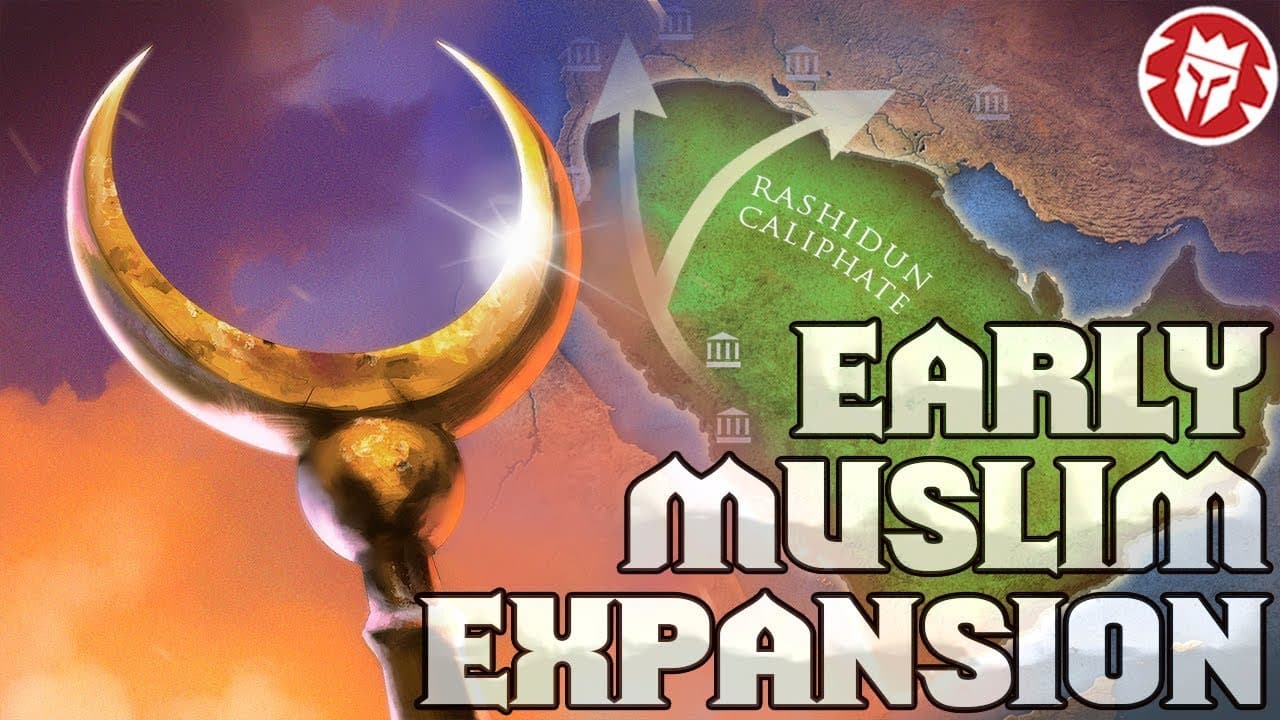
Khalid ibn al-Walid leads rapid Rashidun campaigns against the Byzantines and Sassanids, expanding the caliphate in Syria and Iraq. The documentary covers pivotal battles such as Yarmouk, Ullais, and Qadisiyyah, plus the political upheaval and leadership under Abu Bakr and the early Muslim conquests. It ties military actions to the broader rise of the Rashidun Caliphate.
Transcript
almost 1,400 years ago the ancient and prosperous lands of the Middle East were on the verge of a conflict of three empires and three religions two of them fighting a constant bloody and fruitless war for centuries warned a newcomer looking to make its mark the newcomer was the rashidun caliphate and its arrival would change the history of the regi... Read More
Key Insights
- Khalid ibn al-Walid is the central field commander featured in the conquests.
- The Rashidun Caliphate expands its territory by defeating both the Byzantine and Sassanid empires.
- Khalid conducts campaigns in Syria and then moves into Iraq from a base at Yamaha.
- Qadisiyyah and Yarmouk are highlighted as pivotal battles in the narrative.
- Abu Bakr's leadership is presented as critical to organizing and sustaining early conquests.
- Arab and Persian frontier dynamics are described as unstable due to civil and external pressures.
- Military campaigns are shown as part of a broader rise of the Rashidun Caliphate, not isolated actions.
- The documentary ties religious origins of Islam to political-military expansion during this era.]
- Summary points emphasize the strategic and political dimensions of rapid Islamic expansion.
- More videos from this channel:
- More from this channel: Kings and Generals
Install to Summarize YouTube Videos and Get Transcripts
Explore YouTube Video Summarizer or Get YouTube Transcript Extractor
Questions & Answers
Q: What sparked the Rashidun Caliphate's expansion into Syria and Iraq?
The expansion followed the consolidation of Muslim control in the Arabian Peninsula under Abu Bakr, who ordered campaigns against neighboring frontiers after Muhammad’s era. Khalid ibn al-Walid led 18,000 troops from Yamaha, initiating invasion into Iraq in 633, leveraging momentum built during earlier conflicts to push toward major cities and fortresses.
Q: Who was Khalid ibn al-Walid and why is he important in this video?
Khalid ibn al-Walid is presented as the principal general whose leadership and tactical prowess enabled rapid conquests. He recruited an army, utilized mobile strike forces, and executed campaigns across Syria and Iraq. His actions are shown as the driving force behind the Rashidun push against Byzantine and Sassanid defenses, shaping the early empire.
Q: What are the major battles highlighted in the documentary?
The video emphasizes pivotal engagements such as the battles near the Yarmouk River and the siege and capture of key Syrian and Iraqi towns. It also references the battles of Ullais, Muzayyah, Firaz, Ajnadayn, Damascus, Emesa, and the decisive battles at Yarmouk and al-Qadisiyyah that contributed to the territorial expansion of the Rashidun Caliphate.
Q: How did internal Persian and Parthian strife influence the conquests?
Civil wars and factional struggles within the Sassanid and Parthian realms weakened their cohesion and frontiers, creating opportunities for Rashidun forces. The documentary shows how internal conflict reduced effective resistance on the eastern borders, making it easier for Khalid and subsequent commanders to press into Mesopotamia and beyond.
Q: What role did Abu Bakr play in these conquests?
Abu Bakr is depicted as the strategic organizer who unified and directed campaigns across the peninsula and frontiers. He split armies to counter multiple rebellions and directed resources toward aggressive offensives, establishing a coherent governance structure that supported sustained military expansion into Syria and Iraq.
Q: How does the video describe the relationship between religious movements and military expansion?
The narrative links the rise of Islam from Mecca to Medina with the subsequent political and military expansion of the Rashidun Caliphate. It presents religious unity and new political authority as motivating factors, while military campaigns are shown as means to consolidate control, secure frontiers, and spread influence across conquered territories.
Q: What is the significance of the Mecca to Medina transition in this context?
The transition marks the shift from a religious community to a political-military state that could project power beyond Arabia. As Islam established itself, the Rashidun Caliphate leveraged this unity to organize large-scale campaigns against Byzantine and Sassanid provinces, leading to rapid territorial changes and reshaping governance in the region.
Q: Why are the battles of Yarmouk and Qadisiyyah emphasized?
Yarmouk and Qadisiyyah are presented as turning points that demonstrated the effectiveness of Rashidun tactics against major empires and led to substantial territorial gains. These battles symbolize the decline of Byzantine and Sassanid influence in the region and illustrate how rapid, coordinated campaigns changed the balance of power.
Summary & Key Takeaways
-
The video explains how the Rashidun Caliphate built power through rapid campaigns in Syria and Iraq, highlighting Khalid ibn al-Walid as the main field commander. It connects battlefield victories to the collapse of Sassanid and Byzantine fronts, shaping a new regional order.
-
It outlines the key battles and sieges that defined the expansion, including chain of fortifications and river crossings, showing how tactics and mobility under Khalid overwhelmed larger empires. The narrative also contextualizes the rise of Abu Bakr as Caliph.
-
It ties together religious, political, and military factors from the Mecca era to early Islamic expansion, illustrating how leadership decisions, tribal dynamics, and imperial exhaustion enabled the Rashidun conquests to reshape the Middle East.
Read in Other Languages (beta)
Share This Summary 📚
Summarize YouTube Videos and Get Video Transcripts with 1-Click
Try YouTube Summary with ChatGPT & Claude or YouTube Transcript Generator
Explore More Summaries from Kings and Generals 📚
Summarize YouTube Videos and Get Video Transcripts with 1-Click
Try YouTube Summary with ChatGPT & Claude or YouTube Transcript Generator