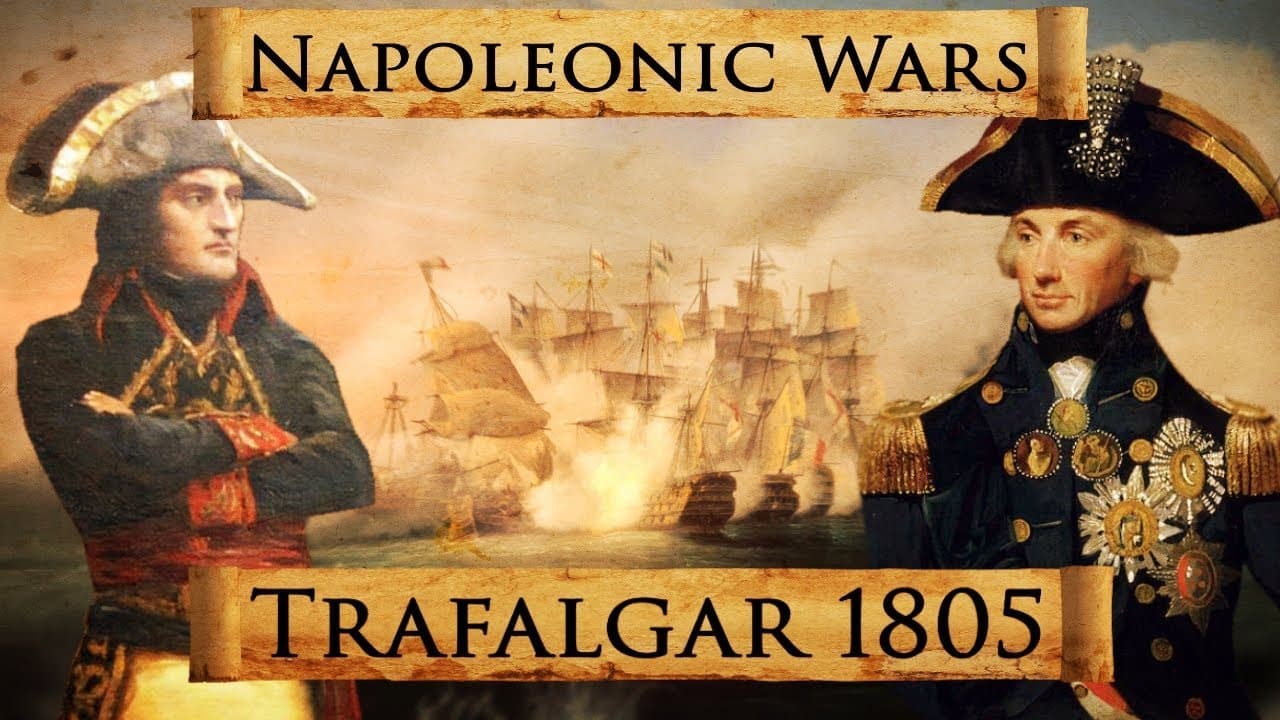
How Trafalgar ended Napoleon's invasion hopes and shaped naval power
TL;DR
The battle marked British naval dominance, preventing a French invasion of Britain. Nelson split his fleet to strike the enemy line, breaking Allied cohesion and capturing 18 ships. Victory but at a cost, with Nelson mortally wounded, the outcome shifted European power for years.
Transcript
Napoleon Bonaparte kept the whole of Europe in fear for more than a decade. And although the Napoleonic Wars were predominantly a land conflict, many of his political and military decisions were informed by the dominance of the British fleet at sea and the naval actions that were fought earlier in the war. Among them was the last great sea battle f... Read More
Key Insights
- Trafalgar was the decisive naval battle that ensured British control of the seas and thwarted Napoleon’s invasion plans.
- Nelson split his fleet into two groups to implement a breakthrough attack, diverging from traditional line tactics and maximizing firepower exposure.
- The victory involved the capture of 18 enemy ships and the mortal wounding of Nelson, signaling a high-cost but favorable outcome for Britain.
- Collingwood led the southern division, supporting Nelson and coordinating the broader assault against the Allied fleet.
- The battle demonstrated that ship quality, crew training, and decisive leadership could overcome numerical inferiority.
- The term England expects that every man will do his duty was Nelson’s guiding command, energizing crews during critical moments.
- Despite success, the battle occurred while the Grand Army moved in Germany, illustrating concurrent arms campaigns in Europe.
- The Trafalgar outcome solidified Britain’s naval dominance for the Napoleonic era and constrained future French maritime ambitions.
- More videos from this channel:
- More from this channel: Kings and Generals
Install to Summarize YouTube Videos and Get Transcripts
Explore YouTube Video Summarizer or Get YouTube Transcript Extractor
Questions & Answers
Q: What led to the Battle of Trafalgar in 1805?
The buildup to Trafalgar involved Napoleon seeking to break the British blockade and unite with allied fleets to challenge British sea power. After a series of meetings and maneuvers, Villeneuve chose to move toward Cadiz and, despite signals, engaged Nelson off Cape Trafalgar, where the two fleets clashed in a decisive encounter that would determine naval supremacy.
Q: Who commanded the British at Trafalgar and what was his strategy?
Horatio Nelson commanded the British fleet, with Collingwood as his second in command for the southern group. Nelson’s strategy was to divide his fleet into two halves and attack the Allied line from the center and flanks, breaking the enemy formation rather than adhering to traditional line tactics, aiming to disrupt and overcome with superior firepower.
Q: What critical moment defined the outcome of Trafalgar?
A key moment was Nelson’s bold maneuver that placed Victory between the Bucentaure and Redoutable, enabling broadsides on both sides. This choice weakened the French flagship and allowed Temeraire to assist, ultimately contributing to the capture of several ships and the dispersion of the Allied fleet.
Q: What happened to Nelson during the battle?
Nelson was wounded by a French sharpshooter aboard his flagship Victory. Despite the injury, his leadership and signaling persisted, and he continued to direct the engagement until the battle’s favorable conclusion, after which he died from his wound, leaving a lasting legacy of tactical audacity.
Q: How many enemy ships were captured at Trafalgar?
The British captured 18 enemy ships, a figure that reflected both the effectiveness of Nelson’s tactic and the disciplined execution by the Royal Navy crews. Although heavy casualties occurred, the strategic objective of disabling the Franco-Spanish fleet was achieved.
Q: What was the broader strategic significance of Trafalgar?
Britain’s naval dominance was cemented, preventing Napoleon from launching an invasion across the English Channel and projecting British power globally. The victory shaped naval doctrine for years, emphasizing bold maneuvering, decisive engagements, and the importance of leadership and seamanship in determining outcomes.
Q: What happened to the Allied fleet after Trafalgar?
After the battle, the remaining Allied ships retreated or surrendered, and the victory established British superiority at sea. The defeat forced France to rethink naval strategy and contributed to a shift in European power dynamics, with Britain maintaining maritime supremacy throughout much of the Napoleonic era.
Q: What other major events occurred concurrently with Trafalgar?
While Trafalgar played out at sea, Napoleon’s Grand Army moved into Germany to confront Austrian and Russian forces. This illustrates how land campaigns and naval campaigns ran in parallel during the Napoleonic Wars, influencing strategic considerations on both land and sea fronts.
Summary & Key Takeaways
-
The Trafalgar engagement decisively disabled the Franco-Spanish fleet and ensured British sea control, blocking Napoleon’s invasion plans and securing Britain’s safety from a major cross-channel threat.
-
Nelson’s unconventional tactics and bold leadership overcame numbered disadvantage, leveraging faster ships and decisive signaling to disrupt the enemy line and seize advantage.
-
The battle occurred as a broader Napoleonic conflict context, where naval dominance complemented Britain’s land campaigns and limited Napoleon’s strategic options across Europe and the seas.
Read in Other Languages (beta)
Share This Summary 📚
Summarize YouTube Videos and Get Video Transcripts with 1-Click
Try YouTube Summary with ChatGPT & Claude or YouTube Transcript Generator
Explore More Summaries from Kings and Generals 📚





Summarize YouTube Videos and Get Video Transcripts with 1-Click
Try YouTube Summary with ChatGPT & Claude or YouTube Transcript Generator