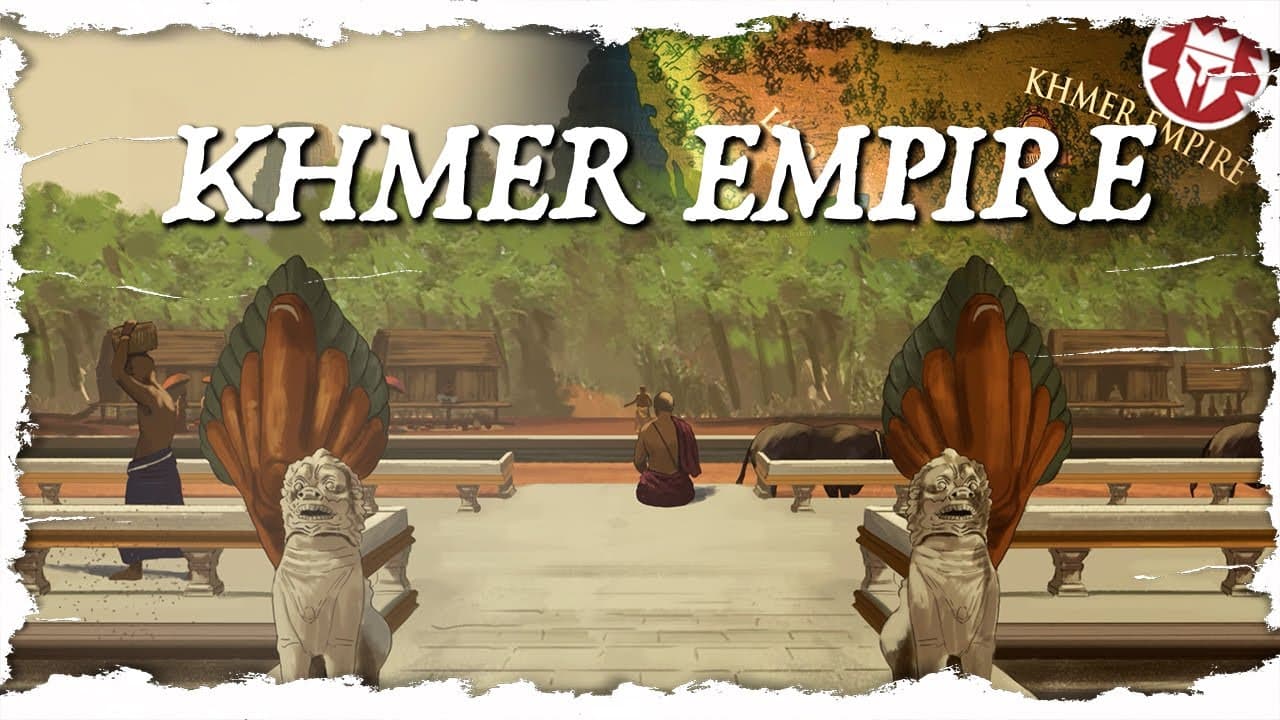
How did the Khmer Empire rise, flourish, and fall?
TL;DR
The Khmer Empire grew from Funan and Zhenla roots and unified under Jayavarman II, establishing Khmer independence and building a centralized state. It reached its peak through massive temple construction, irrigation, and trade, while later decline came from climate stress, wars with Champa and Ayutthaya, and internal power struggles. The video traces key kings, public works, and religious shifts that defined its five centuries.
Transcript
The History of the Khmer Empire: Introduction: Arin strode serenely amongst the iridescent gardens of Angkor, his medicine bag clutched to his waist. He was a Brahmin, belonging to the ritual caste of Hinduism, but he had long ago forsaken the rituals of Shiva and Vishnu for the teachings of the Buddha. A citizen waved for his attention by the c... Read More
Key Insights
- The Khmer Empire traces its origins to Funan and Zhenla, showing early Indian influence in language, religion, and social hierarchy.
- The rise of Jayavarman II marks the start of an independent Khmer identity, with the Devaraja cult reinforcing divine kingship.
- Kings sponsored temples in capital cities and conquered towns to project power, legitimacy, and religious legitimacy.
- Suryavarman I expanded territory and strengthened trade networks, linking Cambodia with Java, Srivijaya, and regional partners.
- Irrigation and reservoir projects under successive kings supported population growth and temple economies in Angkor and Yasodharapura.
- Religious life was syncretic, balancing Hindu deities with Mahayana Buddhism and local animist practices at major temples.
- The empire maintained diplomacy and military campaigns with Champa, Srivijaya, and other polities, shaping its political landscape.
- The fall of Angkor involved climate stress, warfare with Champa and Ayutthaya, and internal noble factionalism that eroded centralized control.
- More videos from this channel:
- More from this channel: Kings and Generals
Install to Summarize YouTube Videos and Get Transcripts
Explore YouTube Video Summarizer or Get YouTube Transcript Extractor
Questions & Answers
Q: A real search query question about the video (e.g. 'How to...', 'What is...', 'Why does...', 'When should...'). Question 1
What is the origin of the Khmer Empire and how did Funan and Zhenla contribute to its formation? The video explains that Indianization brought Hinduism and Sanskrit culture, while Funan and Zhenla introduced administrative practices, temple building, and religious institutions that laid the groundwork for a centralized Khmer state. This early phase established networks of power, trade, and ritual legitimacy that later rulers built upon.
Q: Question 2
How did Jayavarman II establish independence and royal legitimacy in the Khmer Empire? The narrator states that Jayavarman II proclaimed Khmer independence from Java and used the Devaraja concept, a divine kingship, to legitimize his rule. This combination of political sovereignty and sacred authority helped unify diverse polities into a single kingdom, setting a template for future rulers.
Q: Question 3
What role did temple building play in the Khmer political project? The video highlights that building temples in the capital and in conquered regions served to demonstrate divine favor, consolidate control, and foster economic activity through labor and religious tourism. Temples acted as monuments of royal power and religious devotion that connected rulers with both gods and subjects.
Q: Question 4
Who were Suryavarman I and his successors in shaping the empire’s trajectory? The content notes Suryavarman I expanded territory, engaged in warfare with Champa and Mon-Dvaravati, and fostered trade links with the Chola dynasty to balance regional powers. These activities cemented a broader political and economic influence that sustained Angkor’s growth.
Q: Question 5
How did irrigation and infrastructure contribute to Angkor’s urban growth? The description points to the construction of large water reservoirs and irrigation works that supported a growing population in Yasodharapura and other centers. Such hydraulic engineering underpinned agricultural productivity, naval and river-based trade, and sustained the temple economy.
Q: Question 6
What religious shifts influenced Khmer kings and society? The video presents a spectrum from Hindu god-kings to Mahayana Buddhism and Theravada influence, showing a flexible religious policy that allowed kings to mobilize different religious traditions to legitimize rule and unify a diverse populace.
Q: Question 7
What led to the eventual decline of the Khmer Empire? The narration attributes decline to climate stress, repeated wars with Champa and Ayutthaya, and internal noble factionalism. These pressures destabilized Angkor, disrupted food and water supplies, and weakened centralized authority, paving the path to abandonment of the great city.
Q: Question 8
What is the legacy of the Khmer Empire according to the video? The account emphasizes hydraulic civilization, monumental temple architecture like Angkor Wat and Angkor Thom, and a cultural heritage that shaped modern Cambodian identity. This legacy rests on engineering feats, religious synthesis, and enduring urban symbolism.
Summary & Key Takeaways
-
The Khmer state began with Funan and Zhenla and evolved into a centralized Khmer polity through Jayavarman II’s unification.
-
Angkor and its hydraulic systems became symbols of royal power, funded by temple and waterworks projects.
-
Decline arose from climate pressures and military conflicts that disrupted stability and urban life at Angkor.
Read in Other Languages (beta)
Share This Summary 📚
Summarize YouTube Videos and Get Video Transcripts with 1-Click
Try YouTube Summary with ChatGPT & Claude or YouTube Transcript Generator
Explore More Summaries from Kings and Generals 📚

Summarize YouTube Videos and Get Video Transcripts with 1-Click
Try YouTube Summary with ChatGPT & Claude or YouTube Transcript Generator