
AI Summary

A summary of your reading, not of the page

Glasp summarizes articles, PDFs and videos with ChatGPT and Claude — and takes the passages you highlighted as context, so the result is about what you actually stopped at.

4.5 on Chrome Store2,000,000+ highlightersChrome · Safari · Edge · Firefox
In short

What is Glasp AI Summary?

Glasp AI Summary condenses a web article, PDF or YouTube video with ChatGPT or Claude, and passes the passages you highlighted to the model as context. A generic summarizer gives you the document's opening argument; Glasp gives you a summary shaped by what you flagged. Summaries are stored with the source and your notes, export to Notion, Obsidian or Markdown, and feed an AI memory you can question later. Free monthly quota, no credit card.

Price
Free monthly quota, no card
Sources
Articles, PDFs, YouTube, Kindle
Models
OpenAI GPT + Anthropic Claude
Why your summary should not look like everyone else's

How a summary gets personalized

  1. 01

    Highlight while you read

    Select the passages that matter on an article, a PDF, or a YouTube transcript. Add a note if you have one.

  2. 02

    Ask for the summary

    Click summarize and pick a model. Glasp sends the page along with the passages you kept, so the summary knows what you cared about.

  3. 03

    Keep it, export it, or build on it

    The summary is stored with the source and your highlights, exports to Notion or Obsidian, and feeds the AI memory you can ask questions of later.

What you get

Summaries that remember what you cared about

Highlight first, summarize second

Select the passages that matter as you read. Those highlights are handed to the model with the page, so the summary is built around your reading instead of around the first screen of the article.

  • Works on articles, PDFs, YouTube and Kindle
  • Notes count as context too, not just highlights
  • Summarize a page you have not highlighted as well
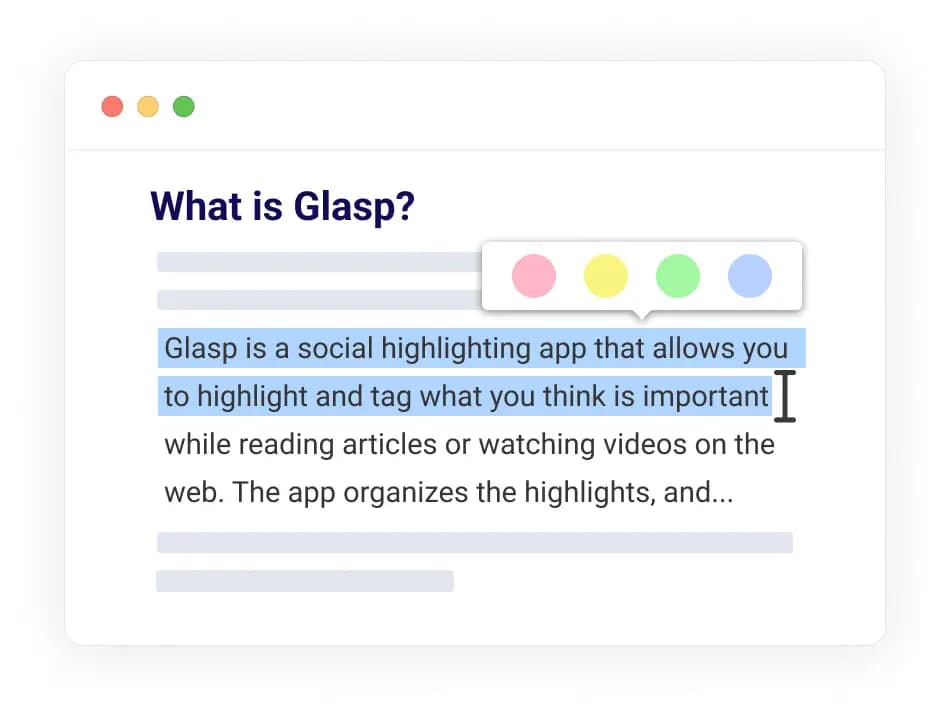
Highlighting passages on a webpage before generating a Glasp AI summary

Pick the model that fits the source

Summarize with the GPT family or with Claude. A dense paper and a ten-minute video do not want the same model, and you can change your mind per source.

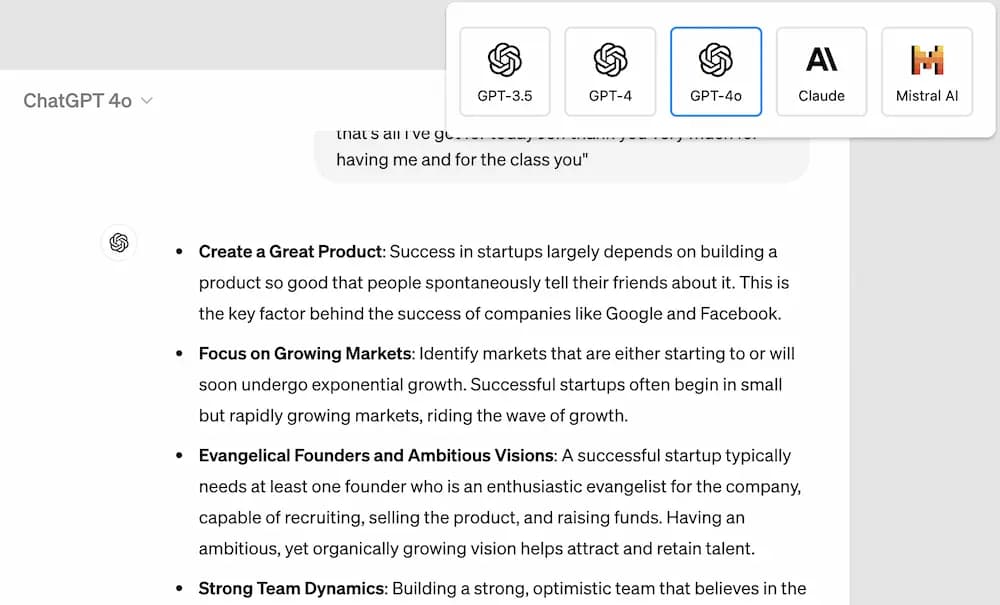
Choosing between ChatGPT and Claude for a Glasp AI summary

The summary stays with the source

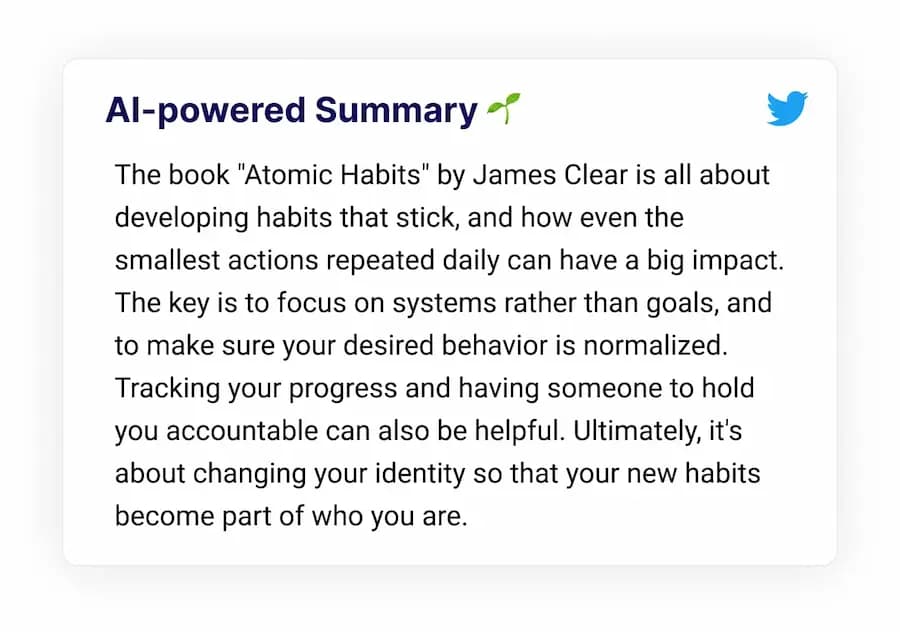
Six months later the article comes back with its summary, your highlights and your notes attached. A summary in a chat window you closed is a summary you no longer have.

A Glasp AI-powered summary card generated from a source a reader highlighted

It compounds into an AI memory

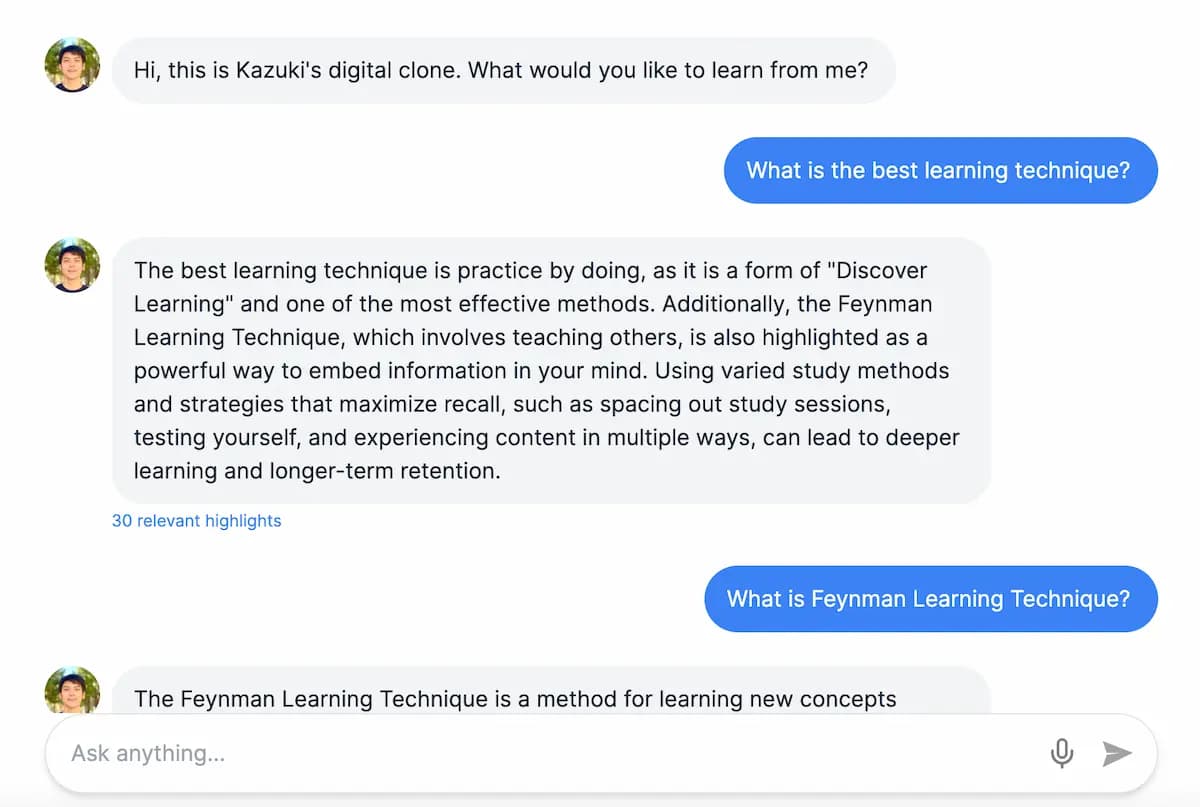
Every summary and highlight feeds a memory of what you have read. Ask it a question months later and the answer is drawn from your own sources rather than from the open web.

Asking a question of the AI memory built from your Glasp highlights
2,000,000+

researchers, students, and lifelong learners highlight with Glasp.

ForbesThe GuardianBusiness InsiderEntrepreneurLifehackerMakeUseOf

What readers say

  • I love Glasp! I use it every time I read online articles. Highlighting with Glasp enforces me to actually read rather than scan through an article. I retain so much more info and can easily revisit my previously read articles to recall details and notes I've made.
    Olive
    Product Designer
  • I've researched every highlighting tool from Liner and Hypothesis to Instapaper and Pocket, and Glasp is the best hands-down. First, it creates a whole category of its own with social highlighting. This is important because it helps learners get recognized for finding amazing highlights, and it helps them connect with others who are learning the same thing at the same time. Also, it has the best highlighting workflow. While reading an article, you can select text in order to highlight and annotate without having to go to a different page. Furthermore, all of your highlights for a specific article appear on a right sidebar as you're reading, and they're easy to copy and paste into another note-taking app.
    Michael Simmons
    Bestselling Author
  • I used Instapaper but ended up hating it and stopped. There just wasn't a tool for me to continue using until Glasp. I was hooked immediately for the ease of use (highlight directly on the article web page), organized feed, and learning from others' highlights and notes. It makes sticking to learning something so easy and you can no longer find any excuses. Highly recommended to anyone who loves reading awesome articles or want to start forming such habit.
    Puppy Tsai
    Product Manager
Answers

Frequently asked questions

What is Glasp AI Summary?

Glasp AI Summary condenses an article, PDF or YouTube video using ChatGPT or Claude, and takes the passages you highlighted as context. That is the difference from a generic summarizer: the result is a summary of your reading rather than of the document's opening pages.

Is AI Summary free?

Yes. Every Glasp account includes a free monthly AI quota with no credit card. The pricing page has higher limits for people who summarize all day.

Which AI models does Glasp use?

Models from OpenAI (the GPT family) and Anthropic (Claude). The available models are updated as better ones ship, rather than frozen at whichever was current when you signed up.

What can Glasp summarize?

Web articles, PDFs, YouTube videos and your own imported Kindle highlights. The same summarizer runs on all of them, so a video and a paper end up in the same library in the same shape.

Can I get the summary in another language?

Yes. Ask for the summary in the language you want and the model produces it there, whatever language the source is in.

Do I have to highlight first?

No — you can summarize a page you have not touched. But highlighting first is what makes the summary personal, because your passages are passed to the model as context.

Can I export summaries to Notion or Obsidian?

Yes. Summaries travel with your highlights into Notion, Obsidian, Roam Research and mem.ai, or download as Markdown, HTML, CSV, plain text or JSON.

What happens to my summaries over time?

They are stored with the source and your highlights, and they feed your Glasp AI memory — so months later you can ask a question and get an answer drawn from things you actually read rather than from the open web.

Is my reading used to train AI models?

No. Glasp does not sell your data and does not use your content to train public AI models. See the privacy policy for how it is handled.

More questions? Read the docs or email hi [at] glasp.co.

Summarize what you actually read

Add Glasp to your browser, highlight a page, and see the difference. It's free.