What is the Greco-Bactrian Kingdom and its impact
TL;DR
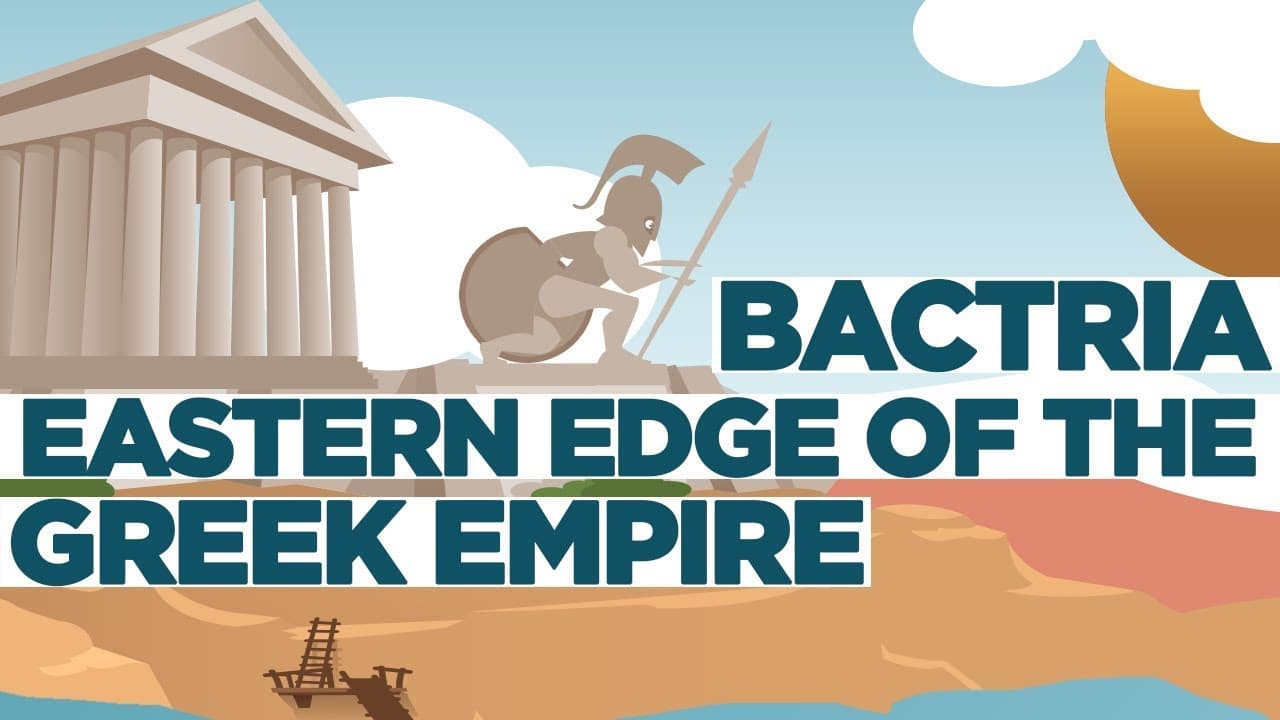
The Greco-Bactrian Kingdom was a Greek ruled state in Central Asia that expanded into Gandhara and western Punjab before dissolving around 125 BC. It linked the Hellenic world with Indian culture through conquest, trade, and art, influencing Indo-Greek and Greco-Buddhist traditions along the Silk Road.
Transcript
If we were to ask you, “Where was the last independent Greek state in the world?” would you believe that the answer was India? Indeed, for a brief period of time, the only part of the Greek speaking world independent from foreign rule was a small enclave in East Punjab. This diminished rump state was once part of a much greater Hellenic presence th... Read More
Key Insights
- The Greco-Bactrian Kingdom began with Diodotus I declaring independence from the Seleucids around 250 BC.
- Euthydemus expanded Bactrian reach to Sogdiana and Ferghana, solidifying Greco-Bactrian rule.
- Antiochus III attacked Bactria, leading to a three-year siege of Balkh and a costly stalemate.
- A peace was reached that included war elephants and a dynastic marriage alliance with the Seleucids.
- Indo-Greek Kingdom split from Bactria when Eucratides staged a coup in Bactria, creating a distinct Indian Greek realm.
- Menander I ruled in India, becoming a famous Indo-Greek king and a patron of Buddhism.
- Bactria was a crossroads hub, described as wealthy and diverse by ancient sources like Justin and Zhang Qian.
- The Greco-Bactrian legacy influenced Greco-Buddhist art and Silk Road exchange, shaping cultural diffusion across regions.
- More videos from this channel:
- More from this channel: Kings and Generals
Install to Summarize YouTube Videos and Get Transcripts
Explore YouTube Video Summarizer or Get YouTube Transcript Extractor
Questions & Answers
Q: What is the Greco-Bactrian Kingdom and how did it start?
The Greco-Bactrian Kingdom began when Diodotus I declared himself king around 250 BC after breaking away from the Seleucid Empire. This act established a distinct Greco-Bactrian sovereignty, enabling the region to pursue its own political and military agendas, including expansion into neighboring territories and consolidation of power.
Q: How did Euthydemus contribute to the kingdom’s expansion?
Euthydemus expanded Greco-Bactrian borders to include Sogdiana and Ferghana, extending control over key Hellenistic cities such as Balkh. His leadership helped solidify the kingdom’s power by broadening its territory beyond Bactria proper, securing a stronger frontier and enhancing the dynasty’s prosperity through additional conquests.
Q: What was the significance of the siege of Balkh?
The siege of Balkh, which lasted three years, marked a major military confrontation between Euthydemus and Antiochus III. Although Antiochus eventually withdrew, the lengthy siege demonstrated the Greco-Bactrians’ stubborn resistance and their capacity to hold strategic cities, contributing to a fragile but recognized independence in the eastern front.
Q: What did the peace between Euthydemus and Antiochus include?
The peace included a tribute of war elephants from Euthydemus to Antiochus and a dynastic marriage alliance linking the two royal families, with Antiochus promising his daughter to Euthydemus’s son Demetrius. This settlement acknowledged mutual threats like nomadic tribes and allowed continued stability in the eastern territories.
Q: How did the Indo-Greek Kingdom form?
Around 180-175 BC, as Demetrius II campaigned in India, a coup by a Bactrian general Eucratides led to a split in Greek territories, with the Indian Greeks forming the Indo-Greek Kingdom. This new political entity ruled parts of India until about 10 AD and continued Greek cultural influence in the subcontinent.
Q: Who was Menander I and why is he notable?
Menander I reigned from 155 to 130 BC as a prominent Indo-Greek king who converted to Buddhism. His patronage strengthened Buddhist practice and art, with Greek artists contributing to Buddhist iconography, leading to a fusion known as Greco-Buddhist art that spread along the Silk Road.
Q: What did Zhang Qian observe about Bactria?
Zhang Qian, visiting Bactria in 130 BCE, noted the diversity of goods and the wealth of the region, observing that many products originated from China itself. This underscored Bactria’s role as a major crossroads and trading hub linking East and West.
Q: What ultimately happened to the Greco-Bactrian state?
The Greco-Bactrian kingdom ended around 125 BC due to the invasion of the Yuezhi, an Indo-European group displaced by earlier conflicts. Although sovereignty collapsed, the region’s urban infrastructure and its cultural influence persisted, continuing to shape later Greek and Buddhist interactions across Central Asia.
Summary & Key Takeaways
-
The Greco-Bactrian Kingdom arose when Diodotus I declared himself king around 250 BC and separated from the Seleucids, establishing sovereignty and a new eastern Greek realm.
-
The kingdom expanded under Euthydemus to include Sogdiana and Ferghana, controlling key Hellenistic cities and creating a formidable frontier against rivals.
-
The end came with the Yuezhi invasion around 125 BC, but its urban infrastructure and cultural exchanges persisted, bridging East and West for centuries.
Read in Other Languages (beta)
Share This Summary 📚
Summarize YouTube Videos and Get Video Transcripts with 1-Click
Try YouTube Summary with ChatGPT & Claude or YouTube Transcript Generator
Explore More Summaries from Kings and Generals 📚

Summarize YouTube Videos and Get Video Transcripts with 1-Click
Try YouTube Summary with ChatGPT & Claude or YouTube Transcript Generator