How was Covadonga the start of the Iberian Reconquista
TL;DR
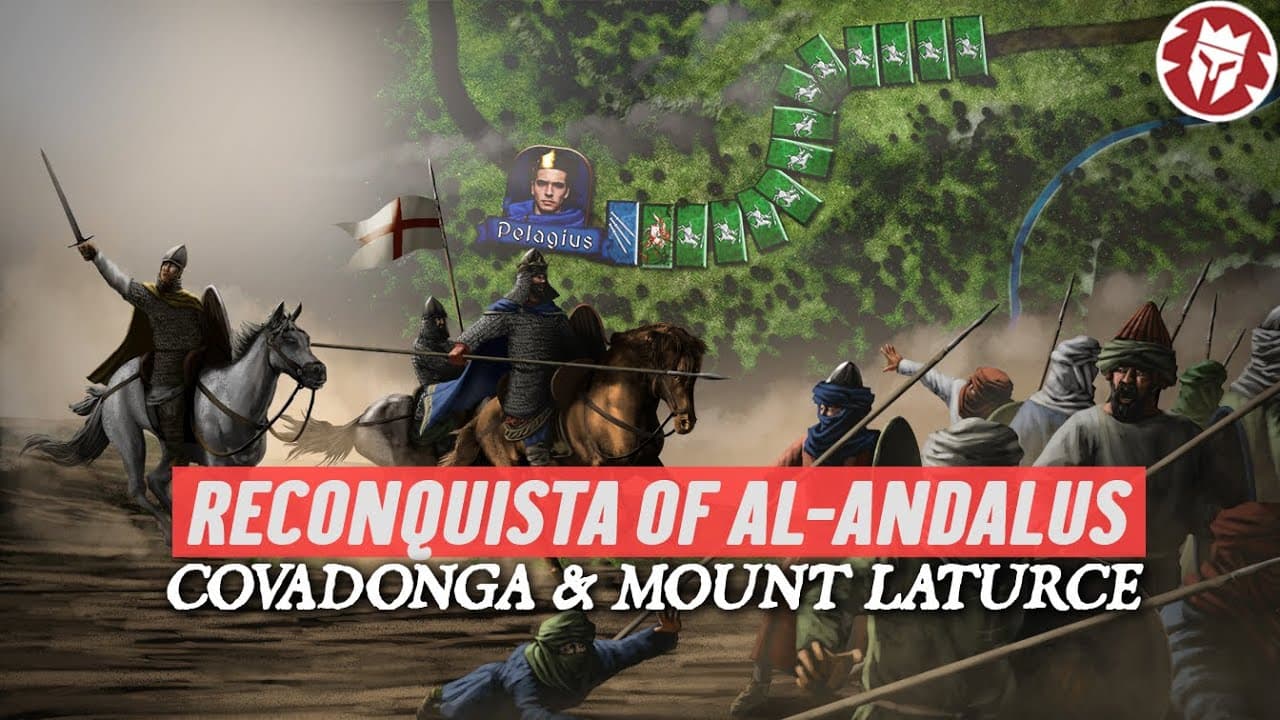
The video shows that Covadonga in 718 marked the start of the Reconquista, as Pelagius and 300 rebels established a foothold in Asturias after the Umayyad advance stalled. Subsequent Asturian rulers like Alfonso I expanded Christian resistance into northern Iberia, while broader conflict continued against Al-Andalus and its emirs, shaping a long struggle culminating in 1492.
Transcript
The year is 718 AD. The Iberian Peninsula is entirely occupied by the Arab and Berber Muslim armies. Well, not entirely ... One small territory of indomitable Visigoths still holds out against the invaders. And life is not easy for the Berber governor’s troops who garrison Northern Spain… The opening narration of the classic Asterix stories is ... Read More
Key Insights
- Covadonga in 718 is identified as the starting point of the Reconquista, with Pelagius defending a narrow gorge against a larger force.
- The Umayyad Emirate in Cordoba faced internal and external pressures that allowed Christian resistance to gain footing in Asturias.
- Pelagius is depicted as a Visigothic lineage leader whose rebellion sparked the northern Christian counteroffensive.
- Alfonso I continued the fight, carrying campaigns that pushed Christian frontiers southward and expanded northern holdings.
- Asturias established a Christian state from which further campaigns could be launched, setting a pattern for later kingdoms.
- The conflict is framed as a long, multifaceted process involving raids, ambushes, and sieges rather than a single war.
- Key battles like Covadonga and Mount Laturce are highlighted as turning points that showed Christian resilience.
- The description ties early medieval power dynamics to later political developments such as the Frankish influence and the formation of the León kingdom.
- More videos from this channel:
- More from this channel: Kings and Generals
Install to Summarize YouTube Videos and Get Transcripts
Explore YouTube Video Summarizer or Get YouTube Transcript Extractor
Questions & Answers
Q: A real search query about Covadonga start of Reconquista
Covadonga is described as the starting point of the Reconquista in 718, where Pelagius and around 300 rebels defended a narrow gorge against the Umayyad forces led by Alqama. The victory disrupted Umayyad calculations, encouraged Christian resistance in Asturias, and allowed the Christian state to emerge from the mountains. This set the stage for further northern expansion and ongoing conflict across Iberia.
Q: How did the Umayyad campaigns respond after Covadonga
After Covadonga the Umayyad rulers chose not to invest heavily in retaking the northern territories. They preferred consolidating control over more prosperous regions in Iberia, relocating from their capital Gijón to safer areas in the central Meseta. This retreat created space for the Asturian kingdom to consolidate and pursue further incursions into Muslim territories under Alfonso I and subsequent rulers.
Q: Who was Pelagius and why is he significant
Pelagius is presented as the Visigothic noble who sparked rebellion in Asturias, mobilizing refugees and veterans to challenge Umayyad rule. His leadership and defense at Covadonga provided a symbolic and strategic anchor for Christian resistance, enabling the creation of a base from which subsequent kings could extend Christian influence and begin the long series of campaigns that define the Reconquista.
Q: What role did Alfonso I play after Covadonga
Alfonso I succeeded Pelagius and ruled for 18 years, conducting raids and campaigns that pushed Christian control southward, expanding into Avila, Segovia, and parts of Galicia. His campaigns extended Christian influence eastward toward Cantabria and Vizcaya, strengthening the northern frontier and sustaining the momentum begun at Covadonga.
Q: How did external powers influence early Reconquista
The series notes Frankish actions under Pepin and Charlemagne affecting Al-Andalus, including the creation of the Spanish March to prevent Muslim incursions into France. This broader political context supplied a buffer zone and contributed to the shifting balance of power that allowed Asturian and other Christian polities to resist more effectively, thereby shaping the trajectory of the Reconquista.
Q: What is the significance of the Mount Laturce event
Mount Laturce, also known as the siege of Albelda in 859, is described as a decisive clash where Ordoño I and Alfonso III leveraged large, split forces to confront Musa ibn Musa. The engagement demonstrates continuing Christian offensives and strategic military organization essential to maintaining pressure on Muslim frontiers and expanding influence in the northeast Iberian region.
Q: How does the video frame early Reconquista as more than constant warfare
The narrative emphasizes long periods of peace, flourishing trade, and cultural exchange between Christian and Muslim states, alongside periodic low intensity conflicts, raids, and sieges. This portrayal shows the Reconquista as a protracted process with moments of compromise and coexistence that gradually shifted the balance of power in Iberia rather than a simple series of battles.
Q: What is the expected takeaway about the Reconquista’s trajectory
The video frames the Reconquista as a centuries long process beginning with a small Asturian resistance at Covadonga, evolving through key campaigns and leadership under Pelagius and Alfonso I, and ultimately culminating with the fall of Granada in 1492. It highlights how early victories laid foundations for later kingdoms and extended Christian influence across the peninsula.
Summary & Key Takeaways
-
Covadonga in 718 is presented as the starting point of the Reconquista, with Pelagius leading a small rebel force against a larger Umayyad army. The narrative emphasizes the tactical defense in a narrow gorge and the morale impact of the defeat on Muslim troops.
-
The video outlines the early Christian responses under Alfonso I and Alfonso III, highlighting raids into Muslim territory and territorial expansion that laid the groundwork for a Christian state in the north.
-
The series connects early northern Christian successes to later events like the Spanish March and the eventual rise of León, framing the Reconquista as a long process with periods of peace and cultural exchange.
Read in Other Languages (beta)
Share This Summary 📚
Summarize YouTube Videos and Get Video Transcripts with 1-Click
Try YouTube Summary with ChatGPT & Claude or YouTube Transcript Generator
Explore More Summaries from Kings and Generals 📚
Summarize YouTube Videos and Get Video Transcripts with 1-Click
Try YouTube Summary with ChatGPT & Claude or YouTube Transcript Generator