What went wrong with feudalism in medieval history
TL;DR
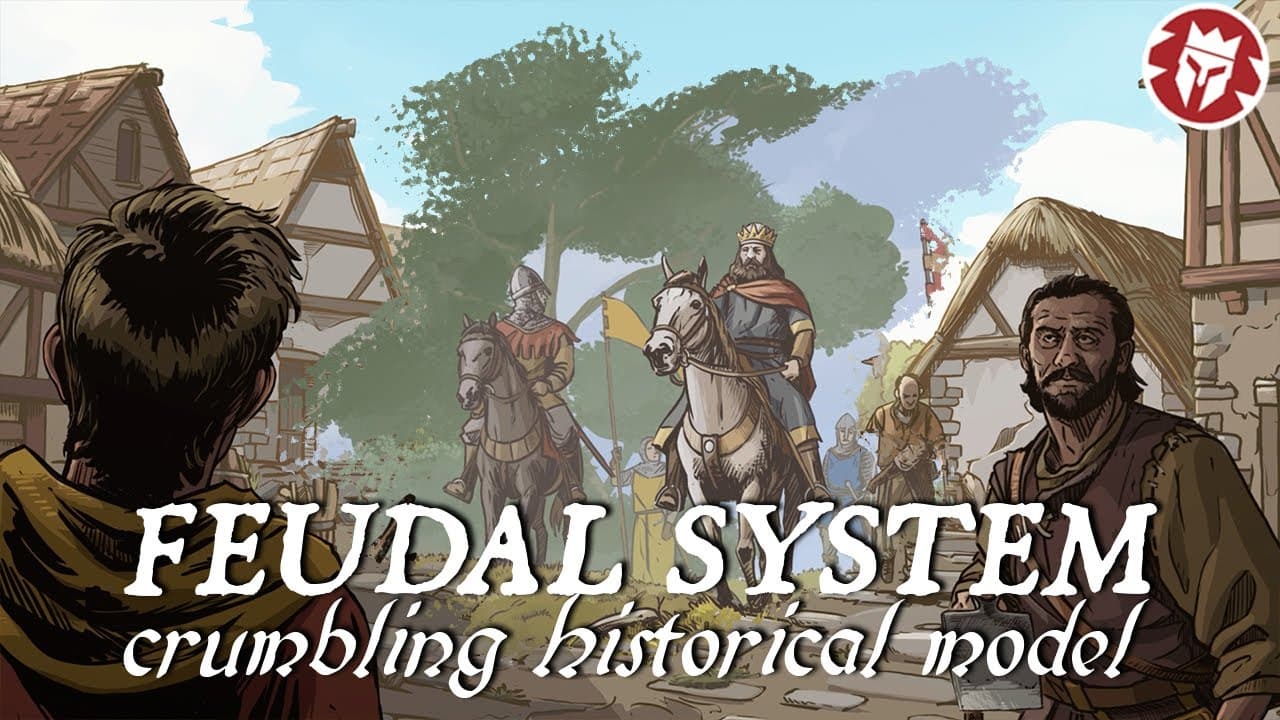
The video argues that the classic feudal model is too neat to describe the Middle Ages. Modern historians question when and how feudalism began and whether it fits regional diversity. The old view tied loyalty to land with military service, but new research shows terms like vassal and benefice are more ambiguous in sources.
Transcript
Most people, whether fans of history or not, will have come into contact with the concept of feudalism in one way or another and will have heard terms such as feudalism, vassals and lords used to describe the legal and social structures that made up the period known as the Middle Ages. This is understandable, as up until the 1990s, the majority... Read More
Key Insights
- Feudalism as a single system is questioned by modern historians.
- The Carolingian era is reinterpreted, showing more regional variation than a universal feudal model.
- Precarium loans are used to illustrate the complexity of land use and obligation beyond simple fief exchange.
- Vassalage and beneficium terms appear in sources but are not always tied to a strict lord–vassal relationship.
- Original assumptions about confiscation of church property for military service lack broad evidence.
- Reynolds’ critique emphasizes rare and context dependent use of terms in early medieval sources.
- The idea that hereditary fiefs emerged to transfer royal power is debated by newer scholarship.
- Regional particularities and source ambiguity complicate the narrative of feudal origins and structure.
- More videos from this channel:
- More from this channel: Kings and Generals
Install to Summarize YouTube Videos and Get Transcripts
Explore YouTube Video Summarizer or Get YouTube Transcript Extractor
Questions & Answers
Q: How did older historians describe the origin of feudalism in the Frankish world?
Older historians described feudalism as developing in the 8th century under the Carolingian Dynasty, combining vassalage, oaths of allegiance, and fief grants. They believed that commendation linked loyalties to a king, and that beneficia or Precarium loans evolved into a system of land grants tied to military service.
Q: What is the role of Precarium loans in the feudalism narrative according to the video?
Precarium loans were viewed as a flexible form of land use where ownership stayed with the lender while the borrower could use land for a period. Historians once argued these loans evolved into fiefs, creating social ties and enabling land grants in exchange for military service, but later analysis questions this direct mapping.
Q: Why do modern historians doubt a universal feudal system across Europe?
Modern historians point to regional variations in medieval societies, diverse legal systems, and cultural differences that contradict a single uniform feudal model. They argue that terms like vassal and fief are not consistently used or interpreted the same way in different sources, indicating a more complex social structure.
Q: What does Reynolds’ critique contribute to the feudalism debate?
Reynolds’ critique highlights that many terms in early medieval sources are not unambiguous, and languages like vassus, beneficia, or fideles do not always indicate a lord–vassal relationship. This undermines the assumption that early sources consistently describe a cohesive feudal system across regions.
Q: Is there solid evidence that Charles Martel confiscated church property for military service?
The video notes that evidence for broad confiscation of church property by Charles Martel is not strong. It cites a synod in 743 or 744 as the source for a later restitution narrative, suggesting that while church property was involved in military provisioning, it was not a widespread or consistently applied practice.
Q: How did the traditional view treat fiefs and vassals in early medieval sources?
The traditional view treated fiefs and vassals as clear, recurring elements of a feudal system, with private loyalty and land grants forming the backbone of medieval society. The video explains that these interpretations often relied on translating terms like beneficium and vassi too literally, without considering regional and chronological nuance.
Q: What is the significance of terms like fideles and milites in early sources?
Terms such as fideles and milites appear in sources but are not always used to denote a strict lord–vassal relationship. The video argues that interpreting these terms requires examining charter context and the exact background, as they can indicate various forms of obligation or loyalty beyond a single feudal framework.
Q: How do regional differences affect the concept of feudalism in the Middle Ages?
Regional differences show that social organization varied widely, with different forms of protection, landholding, and military obligation. This diversity challenges the idea of a single feudal model and supports the view that feudalism was not a universal system but a construct that evolved differently across locales.
Summary & Key Takeaways
-
The video explains that older research linked a simple lord and vassal system to land grants and military service, but later work questions this linkage and highlights regional variations. The old Carolingian model is reexamined, with focus on the ambiguity of terms in early sources.
-
The presenters discuss Precarium loans and land grants as historically complex tools that do not neatly equate to feudal fiefs, challenging a uniform feudal system across the Frankish empire and medieval Europe.
-
The video reviews Reynolds and other scholars who argue that terms like vassal and fief are not as common or straightforward in early sources as previously believed, urging careful interpretation of charter terminology and context.
Read in Other Languages (beta)
Share This Summary 📚
Summarize YouTube Videos and Get Video Transcripts with 1-Click
Try YouTube Summary with ChatGPT & Claude or YouTube Transcript Generator
Explore More Summaries from Kings and Generals 📚
Summarize YouTube Videos and Get Video Transcripts with 1-Click
Try YouTube Summary with ChatGPT & Claude or YouTube Transcript Generator