How did Israel win the Six Day War in 1967?
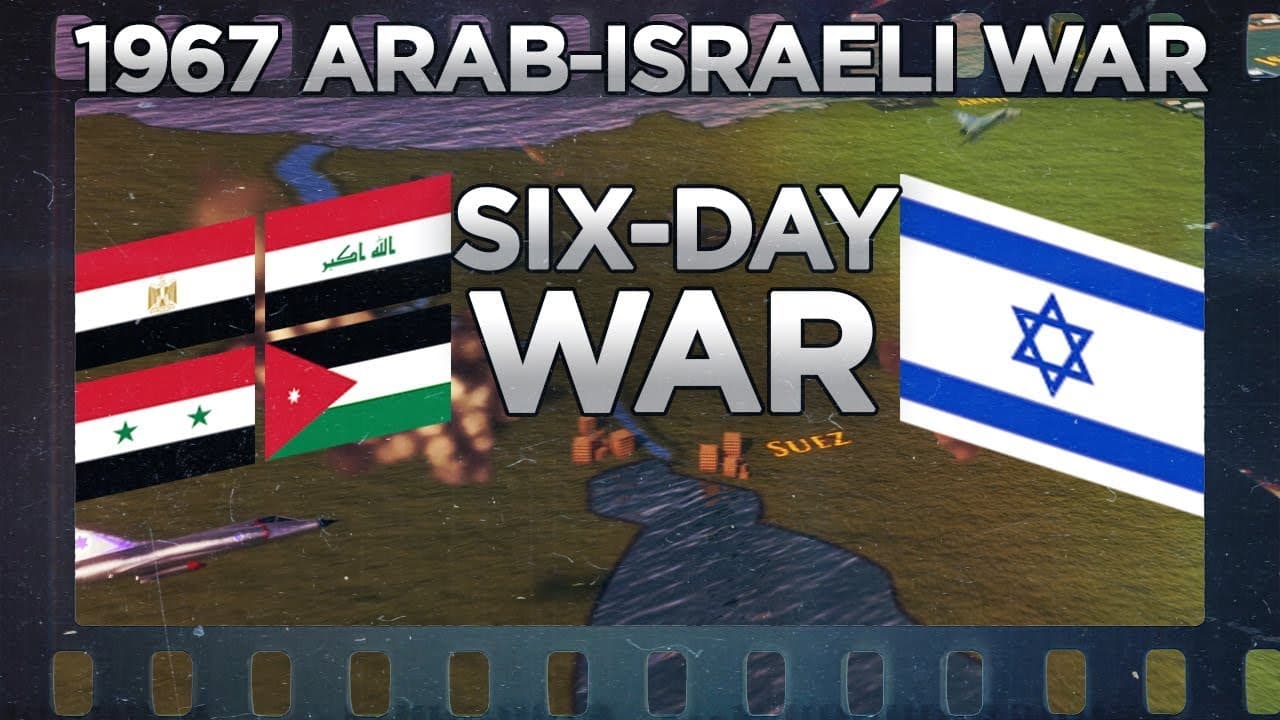
TL;DR
Israel achieved air dominance by June 5, destroying most of the Egyptian air force and preventing a coordinated Arab response. The ground war on three fronts followed, with rapid Israeli advances in Sinai, Jordanian, and Syrian fronts and eventual ceasefire negotiations by mid June.
Transcript
This video is sponsored by Skillshare. Learn more about Skillshare and the exclusive offer they have for our viewers at the end of the video. Ever since Israeli victory during the wars of 1948 and 1956, the Arab coalition led by Egypt, Syria and Jordan was eager to change the situation in the region by defeating Israel. Both sides understood that t... Read More
Key Insights
- Israel planned to strike on June 5 with Operation Focus to destroy the Egyptian air force.
- Israel achieved air dominance early by destroying 338 Egyptian aircraft and neutralizing their air defense system.
- The ground war occurred on three fronts: Sinai, Jordanian, and Syrian fronts, with Israel concentrating forces to outmaneuver Egyptians.
- Israel’s paratroopers and armored divisions advanced rapidly, capturing key locations such as Khan Yunis and Rafah.
- Egyptian forces faced panic in Sinai and retreat orders from Field Marshal Amer, enabling Israeli advances westward.
- Jordanian and Syrian fronts offered resistance but were largely overwhelmed, with airstrikes disrupting Arab capabilities.
- Israel intercepted Syrian airfields on June 5 and shifted focus to air superiority before ground counterattacks.
- Ceasefire was negotiated by June 9, with casualties reported on all sides and large losses for Egyptians, Jordanians, and Syrians.
- More videos from this channel:
- More from this channel: Kings and Generals
Install to Summarize YouTube Videos and Get Transcripts
Explore YouTube Video Summarizer or Get YouTube Transcript Extractor
Questions & Answers
Q: A real search query question about the video (e.g. 'How to...', 'What is...', 'Why does...', 'When should...'). Question 1
What sparked the start of the Six Day War and how did Israel prepare for the conflict on June 5? The war began after escalating mobilizations by Egypt, Jordan, and Syria and the blocking of the Straits of Tiran by Egypt, which prompted Israel to strike. Israel planned Operation Focus to destroy the Egyptian air force, trained pilots, and prepared to achieve air domination within hours, while the Egyptian air defense system was effectively off at the start. This combination allowed Israeli aircraft to attack multiple Egyptian airfields, degrade air capabilities, and set the stage for rapid ground advances across Sinai, the Jordanian front, and the Golan Heights.
Q: Question 2
How did the air campaign influence the ground campaigns on the Sinai front? The air campaign created air superiority by destroying Egyptian aircraft and disabling defense networks, which reduced Egyptian ability to respond to Israeli ground movements. Once Israel established air dominance, ground forces could advance with less opposition, encircle positions, and secure strategic locations such as the Suez Canal region and Sinai passes, enabling rapid territorial gains and forced Egyptian retreats.
Q: Question 3
What were the main fronts of the conflict and how did Israel coordinate attacks there? The conflict unfolded on three fronts: Sinai, the Jordanian front, and the Syrian front. Israel coordinated simultaneous air strikes and ground incursions across these fronts, using paratroopers and armored divisions to exploit weaknesses, capture key towns like Khan Yunis, Rafah, and Abu Ageila, and bypass stronger Egyptian defenses through rapid mobility and air support.
Q: Question 4
What role did Jordan and Syria play in the conflict and what were the outcomes on those fronts? Jordan and Syria engaged in limited but significant actions, with Jordanian and Iraqi aviation contributing to the fighting and attempts to defend West Jerusalem. Israel responded with air attacks to neutralize Jordanian and Syrian airfields, achieving control of areas including East Jerusalem and other territories, while Jordanian forces retreated and Syrian attempts at ground offensive were repulsed, cementing Israeli dominance on those fronts.
Q: Question 5
How did the Israeli leadership justify and execute the timing of attacks on multiple fronts? Israeli leadership chose a preemptive air-first strategy, starting with Operation Focus to degrade enemy airpower before ground operations. The timing was driven by intelligence showing weaknesses in Arab air defenses and the opportunity to strike ahead of a potential coordinated assault, enabling a rapid sequence of air strikes followed by ground advances and eventual armistice negotiations.
Q: Question 6
What were the casualties and the aftermath of the war in terms of losses and ceasefire? Casualties were heavy among Egyptians, Jordanians, and Syrians, with thousands killed on various fronts, and dozens of Israeli aircraft lost. By mid June, ceasefire negotiations resulted in armistice, effectively ending the fighting and reshaping the regional balance. The war demonstrated the importance of air superiority and rapid, multi-front maneuver warfare.
Q: Question 7
What strategic objectives did Israel pursue in Sinai and how did they achieve them? Israel aimed to neutralize Egyptian forces and secure the Sinai Peninsula by defeating air and ground defenses, capturing key passes, and advancing toward the Egyptian mainland. Through air dominance, paratrooper landings, and rapid armored advances, Israeli forces penetrated Sinai, captured strategic locations, and established a momentum that contributed to a conclusive settlement.
Q: Question 8
What were the long term implications of the Six Day War as depicted in the video? The Six Day War demonstrated how a short, intensive conflict can decisively alter the balance of power in the region, showcasing the importance of air supremacy and rapid, coordinated multi-front operations. The war’s outcomes influenced future military and diplomatic calculations in the Middle East and highlighted the vulnerability of uncoordinated mobilizations.
Summary & Key Takeaways
-
Israel launches Operation Focus and secures air superiority, destroying hundreds of Egyptian aircraft and gaining control of the skies early in the war.
-
Ground operations across Sinai, Jordanian, and Syrian fronts rapidly shift momentum in favor of Israel, leading to significant territorial gains.
-
Ceasefire negotiations and armistice follow the rapid early victories, concluding a short, decisive conflict that reshaped the regional balance of power.
Read in Other Languages (beta)
Share This Summary 📚
Summarize YouTube Videos and Get Video Transcripts with 1-Click
Try YouTube Summary with ChatGPT & Claude or YouTube Transcript Generator
Explore More Summaries from Kings and Generals 📚






Summarize YouTube Videos and Get Video Transcripts with 1-Click
Try YouTube Summary with ChatGPT & Claude or YouTube Transcript Generator