What is Xenia and why did Greek hospitality matter?
TL;DR
Xenia is the ancient Greek ritual of hospitality where hosts welcome guests with gifts, feasts, and protection, turning strangers into allies. The practice was religiously rooted in Theoxenia and socially codified through introductions, handshakes, supplication, and long term family bonds. It influenced politics, diplomacy, and culture across Homeric, Classical, and Hellenistic eras.
Transcript
The scorching heat of the Aegean sun burned the stones of Samos like the forge of Hephaestos, the Greek God of Fire. Chares, an Ionian artist known throughout Hellas, looked on from his estate as a boat arrived. A man disembarked, approached, and soon passed through his gates. The wanderer said, “I am Demetrios of Athens, friend of Perikl... Read More
Key Insights
- Xenia is a ritual of hospitality central to Greek culture, often framed as a sacred obligation and built on trust between host and guest.
- Theoxenia connects hospitality to divine tests, suggesting guests could be Olympian gods in disguise and must be treated with reverence.
- Synistanai, or introductions, established initial rapport between Xenoi and set the stage for further exchanges.
- Euergesia, or gifts, were crucial to building trust and signaling social debt rather than trade.
- Dexia, the ritual handshake, formalized friendship and marked the transition from stranger to friend.
- Supplication, or Hiketeia, allowed guests to seek host favor, shifting social status and obligations.
- The ritual also included exchanges of gifts and tokens like Symbolon to inscribe and memorialize friendship.
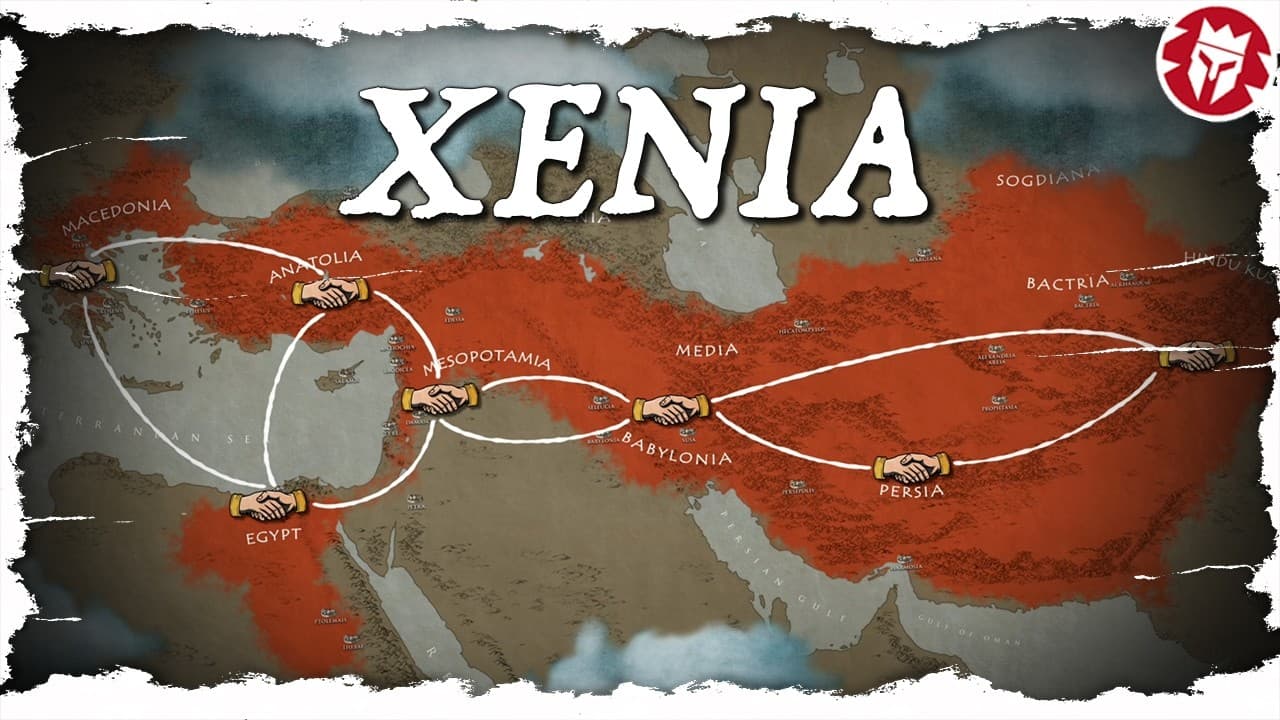
- Xenia extended beyond individuals to political use, influencing proxenia and diplomatic networks across regions.
Install to Summarize YouTube Videos and Get Transcripts
Explore YouTube Video Summarizer or Get YouTube Transcript Extractor
Questions & Answers
Q: A real search query question about Xenia, How did Xenia start in ancient Greece?
Xenia began as a ritual connected to Theoxenia, the hospitality owed to Olympian gods. It evolved from the need to assess and trust strangers as potential allies and guests through introductions, the exchange of gifts, and formal rituals. Over time, it became a central part of elite social life, extending into political and familial obligations that bound households across generations.
Q: What role does the ritual handshakes play in Xenia?
Dexia, the ritual handshake, marks the moment when two Xenoi become friends, transitioning a guest from a stranger to someone connected by social bonds. This gesture is more than a greeting; it signals trust, reciprocal obligation, and the formation of a lasting relationship that may influence future exchanges, help, and alliances.
Q: Why were gifts and tokens important in Greek hospitality?
Gifts and tokens, such as Euergesia and Symbolon, served to establish trust and social debt, signaling that a host values the guest and that the guest is now part of a wider network. These offerings also acted as social contracts, binding families and communities to support one another across time and space.
Q: How did Xenia influence political relations in ancient Greece?
Xenia provided a framework for diplomacy and alliance-building. Through proxenia and the cultivation of friendly ties, city-states and leaders could extend influence, secure alliances, and project power beyond borders. The ritual created social obligation that could be mobilized for political ends across Greece, Egypt, and beyond.
Q: What are examples of hospitality being perverted in literature?
Literary works show hospitality being violated by figures like Polyphemus, the Cyclops, who traps guests and shows hostility, and the suitors who overrun Odysseus’s palace. These violations highlight the moral order of Xenia and demonstrate the consequences of breaking guest rights, often resulting in divine or social retribution.
Q: What is the difference between hospitality and hospitality as a political tool?
Hospitality is the personal, ritual practice of welcoming and caring for guests, based on moral and religious norms. When used politically, it becomes proxenia, a formal system to forge and maintain alliances, contracts, and networks across cities and kingdoms, turning personal generosity into public influence.
Q: How does Xenia relate to Greek myth and epic narratives?
Xenia appears throughout Homeric stories as heroes like Odysseus and Telemachus embody proper hospitality, receiving guests with care and honor. These narratives illustrate both ideal behavior and its consequences, showing how good hospitality allows journeys to continue and how violation of guest rights leads to tragedy or divine punishment.
Q: What lasting cultural impact did Xenia have beyond Greece?
Xenia influenced maritime and colonial networks across the Mediterranean by providing a model of trustworthy exchange and alliance. Its emphasis on reciprocity, family bonds, and symbolic tokens helped spread social norms that underpinned governance, diplomacy, and cultural exchange in later Hellenistic and interacting civilizations.
Summary & Key Takeaways
-
Xenia is a foundational Greek ritual of hospitality that governs how hosts receive guests, requiring generosity, gifts, and formal introductions. This ritual connects individuals to broader social networks and legacy through reciprocal obligations.
-
The practice blends religion and social law, starting from Theoxenia which treats all guests as potential Olympian gods in disguise, and extending to ritual handshakes, gifts, and social contracts binding families across generations.
-
Xenia shapes political and diplomatic relationships, with formats like proxenia and the use of tokens to symbolize friendship, influencing how city-states and leaders built alliances and managed foreign relations across the Mediterranean.
Read in Other Languages (beta)
Share This Summary 📚
Summarize YouTube Videos and Get Video Transcripts with 1-Click
Try YouTube Summary with ChatGPT & Claude or YouTube Transcript Generator
Explore More Summaries from Kings and Generals 📚





Summarize YouTube Videos and Get Video Transcripts with 1-Click
Try YouTube Summary with ChatGPT & Claude or YouTube Transcript Generator