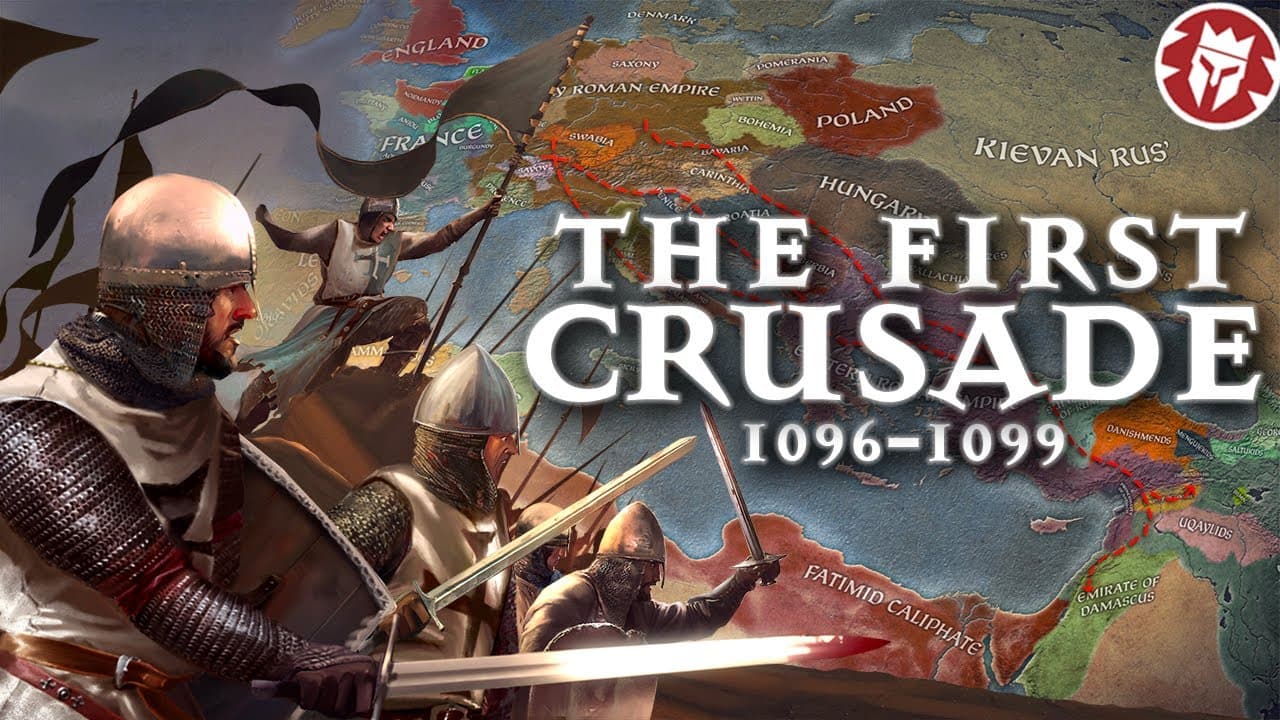
How did the First Crusade unfold in the 11th century
TL;DR
The First Crusade was a complex, multi-faceted effort driven by religious zeal, political maneuvering, and military strategy. It connected Western aims with Eastern Roman vulnerability, leading to a series of sieges and battles under leaders such as Raymond, Godfrey, and Baldwin, and it reshaped the balance of power in the Mediterranean. The campaign also faced myths and misinterpretations that historians seek to clarify through careful study.
Transcript
Welcome to another installment of the full-length Kings and Generals Documentaries. Today, we explore a pivotal moment in medieval history, a moment that witnessed the collision of religion, politics, and military strategy, real religious zeal, but also real greed and ambition. Join us as we explore the First Crusade, a profound event that shaped t... Read More
Key Insights
- The Crusade is portrayed as a collision of religion, politics, and military strategy in the 11th century.
- Leadership for the Crusade included notable figures such as Raymond, Godfrey, and Baldwin and involved strategic sieges and battles.
- Byzantine and Western Western European actors interacted through diplomacy and military campaigns during the Crusade.
- The campaign was shaped by a mix of religious zeal and worldly ambition, challenging simple good vs. evil narratives.
- Misconceptions and myths about the Crusade are addressed, encouraging careful historiography and source analysis.
- The geopolitical landscape of the Eastern Mediterranean created opportunities and pressures that fueled Crusade decisions.
- The video links the Crusade to broader themes in medieval history, including the decline of the Byzantine frontier and the rise of new power centers.
- The documentary emphasizes long-term consequences for medieval politics and interreligious dynamics in the region.
- More videos from this channel:
- More from this channel: Kings and Generals
Install to Summarize YouTube Videos and Get Transcripts
Explore YouTube Video Summarizer or Get YouTube Transcript Extractor
Questions & Answers
Q: A real search query question about the video (e.g. 'How to...', 'What is...', 'Why does...', 'When should...'). Question 1
What were the main drivers behind the First Crusade and how did religious zeal interact with political and military goals in the 11th century? The First Crusade arose from a blend of religious intent to reclaim Jerusalem and pragmatic imperial concerns. It involved leaders who leveraged religious rhetoric to mobilize forces while pursuing strategic gains against rival powers. The interplay between piety and ambition shaped both the planning and execution of sieges and campaigns, producing outcomes that echoed through the medieval political landscape. This analysis highlights how faith served as a mobilizing force but did not operate in isolation from dynastic interests and territorial objectives.
Q: What key figures led the Crusade and how did their roles influence its course?
Key figures such as Raymond of Toulouse, Adhemar of Le Puy, Godfrey of Bouillon, and Baldwin of Boulogne played central roles in directing crusading efforts, coordinating armies, and negotiating with allies. Their leadership choices dictated which routes were chosen, how forces were assembled, and where sieges occurred. The dynamics among these leaders, alongside other nobles and clerics, shaped decision making, tactical priorities, and the overall pace of campaigns, influencing both immediate battles and the long-term outcomes of the expedition.
Q: How did the Byzantine Empire fit into the First Crusade and what was its impact?
The Byzantine Empire connected Western crusading aims with Eastern political realities. As tensions and alliances framed decisions, Byzantine diplomacy and military pressures guided some actions, including sieges and the selection of targets. This interaction affected how Crusader armies moved, which cities were attacked, and how leadership collaborated or clashed with Byzantine authorities. The empire’s internal struggles and external threats constrained and redirected Crusade efforts, leaving a lasting imprint on Balkan and Anatolian frontiers.
Q: What were the major battles or sieges associated with the First Crusade in the narrative?
The documentary outlines significant sieges and campaigns that defined the Crusade, focusing on how military strategy and logistics shaped engagements. Siege warfare, combined with the rhetoric of liberation and religious duty, determined the tempo and success of operations. The portrayal emphasizes the tactical methods used, the resilience of Crusader forces, and the strategic importance of controlling key fortresses and cities as the campaign progressed.
Q: What myths or historiographical misconceptions about the Crusade does the video address?
The video tackles common misconceptions by examining sources, motives, and outcomes with a critical lens. It argues that crusading was not solely a holy war but a complex blend of religious, political, and economic factors. By questioning simplified narratives, the documentary encourages a nuanced understanding of leadership, geopolitics, and the long-term effects of Crusade campaigns on regional power dynamics.
Q: How did the 11th century setting influence the Crusade’s character and objectives?
The 11th century provided a backdrop of shifting power with weakened frontiers and evolving military practice. This period’s political fragmentation, evolving religious authority, and the lure of territorial expansion shaped the Crusade’s goals and the means by which they were pursued. The narrative connects these contextual factors to the choices made by Crusade leaders, the route of the campaign, and the decisions to engage or avoid certain opponents.
Q: What is the lasting significance of the First Crusade according to the documentary?
The documentary frames the Crusade as a turning point that altered the balance of power in the Eastern Mediterranean and reshaped interreligious dynamics. It traces how early Crusade outcomes influenced subsequent campaigns and regional politics, while inviting reflection on the complexities of medieval warfare, leadership, and religious rhetoric that continued to resonate in later centuries.
Q: Who sponsored or promoted the video and what is the scope of the documentary?
The video is part of Kings and Generals animated documentary series, offering a six hour full story that covers events from the 1070s to 1099. It presents a comprehensive retelling of the First Crusade with detailed attention to leaders, battles, sieges, and aftereffects, while also addressing larger historiographical questions and contextual links to other medieval events.
Summary & Key Takeaways
-
The First Crusade emerged from a volatile 11th century in which Western knights, crusading zeal, and Byzantine diplomacy intersected with shifting power structures in the East. Its execution involved a mix of religious motivation, political deals, and military strategy that defined its outcome and subsequent historical narratives.
-
The documentary frames the Crusade within broader Byzantine and Muslim frontiers, highlighting sieges, leadership struggles, and the interplay of ambition and faith. It also addresses historiographical misconceptions, inviting viewers to reassess simple narratives about holy war versus political calculus.
-
The video closes by noting the Crusade’s long-term effects on the Eastern Mediterranean political map and the ongoing debate among historians about sources, motives, and the true costs of conquest across the 11th century.
Read in Other Languages (beta)
Share This Summary 📚
Summarize YouTube Videos and Get Video Transcripts with 1-Click
Try YouTube Summary with ChatGPT & Claude or YouTube Transcript Generator
Explore More Summaries from Kings and Generals 📚
Summarize YouTube Videos and Get Video Transcripts with 1-Click
Try YouTube Summary with ChatGPT & Claude or YouTube Transcript Generator