How Did Genghis Khan Defeat the Jin at Yehuling?
TL;DR
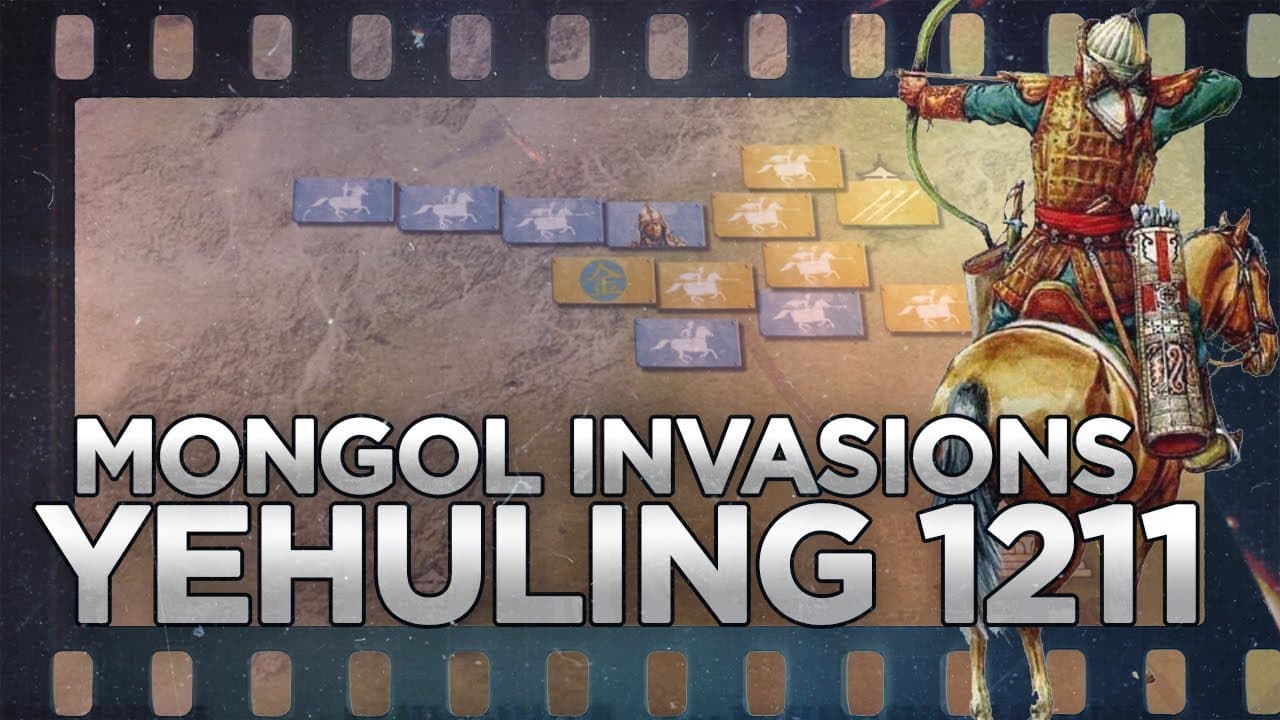
Genghis Khan defeated the larger Jin army at Yehuling by combining disciplined cavalry, mountain flanking maneuvers, and a feigned retreat that drew defenders from their fortifications. The victory opened northern China to Mongol raids and demonstrated how mobility, training, flexible command, and deception could overcome a numerically superior but dispersed enemy.
Transcript
This video was sponsored by The Great Courses Plus. Go to thegreatcoursesplus.com today to start your free trial. Hard places often breed hard people and Mongolia is one of the most inhospitable lands in the world. This is the story of the people who came out of the steppes and built the biggest empire in history. This is the story of Temujin and h... Read More
Key Insights
- Temujin built his power by rewarding skill and loyalty rather than ancestry or tribal affiliation. This policy challenged the traditional Mongolian aristocracy, attracted non-aristocratic followers from defeated tribes, and helped transform a collection of competing clans into an increasingly unified political and military force.
- The Mongol army was organized through a decimal system of units containing tens, hundreds, thousands, and ten thousands of men. Transfers between units were forbidden, desertion brought collective punishment, and commanders operated through a clear chain of command that supported discipline, loyalty, flexibility, and sophisticated battlefield maneuvers.
- Genghis Khan unified the Mongol tribes after a five-year struggle against Jamukha and other opposing clans. A council of Mongol chiefs elected Temujin as their leader and gave him the title Genghis Khan, bringing the previously warring tribes under one banner and one central authority.
- The 1209 campaign against the Liao revealed the Mongols' weakness in siege warfare. Although they succeeded in open battles, fortified cities were harder to capture, forcing them to rely on starvation and disease while gradually learning techniques later applied during their invasions of Jin territory.
- The Jin military advantage was weakened by poor deployment and uneven troop quality. Its roughly 800,000 infantry included many untrained peasants with low morale, while its 150,000 trained heavy cavalry and other forces were distributed along the Great Wall and among separate fortresses.
- The Mongol invasion force consisted of about 90,000 highly trained cavalry divided among scouts, horse archers, and heavy cavalry. Genghis Khan led 60,000 toward the strategic Juyong Pass, while his son Ogedei took 30,000 toward Datong, allowing simultaneous pressure on different Jin positions.
- The victory at Yehuling depended on mobility, terrain exploitation, and deception. Mongol soldiers crossed peaks that Jin commanders considered impassable, attacked from both sides, and used Jebei's feigned retreat to draw defenders from their fortifications into an ambush by thousands of archers.
- The conquest of northern Jin territory combined raids, sieges, ambushes, and selective recruitment. Surrendering populations were often murdered or enslaved, while engineers, artisans, merchants, doctors, teachers, priests, and administrators were spared and incorporated because their specialized knowledge strengthened future Mongol campaigns.
Install to Summarize YouTube Videos and Get Transcripts
Explore YouTube Video Summarizer or Get YouTube Transcript Extractor
Questions & Answers
Q: How did Temujin rise from exile to become Genghis Khan?
Temujin survived poverty, exile, and occasional enslavement after his father's death and the rejection of his claim to leadership. He rebuilt his position with help from Jamukha and Toghrul Khan, recruited defeated peoples, promoted capable and loyal individuals regardless of ancestry, and distributed war spoils. After overcoming rival clans and Jamukha, Mongol chiefs elected him Genghis Khan.
Q: How did Genghis Khan reform the Mongol army?
Genghis Khan organized every able-bodied man within a decimal military system divided into units of tens, hundreds, thousands, and ten thousands. Transfers between units were forbidden, and desertion could bring death to the other nine members of a deserter's unit. Most commanders were chosen by their men, while Genghis personally selected the commanders of ten-thousand-man tumens.
Q: Why did Temujin and Jamukha become enemies?
Temujin and Jamukha initially fought together as blood brothers, but their political values diverged. Jamukha supported the established Mongolian aristocracy, while Temujin gave authority to capable people from outside his tribe. Temujin's growing popularity threatened Jamukha, who attacked him with 30,000 men in 1187 and defeated Temujin's 20,000 soldiers at Dalan Balzhut.
Q: Why did the Mongols invade the Jin dynasty in 1211?
The Jin had previously regarded the Mongols as little more than a nuisance along their northern border and had refused to assist the Liao against them. By 1211, however, Jin leaders were alarmed by Mongol power and demanded Mongol submission. That demand led to war, and Genghis Khan summoned the Mongol chieftains in March to prepare an invasion of China.
Q: How did the Mongol and Jin armies compare in 1211?
The Jin mobilized about 800,000 infantry and 150,000 highly trained heavy cavalry, but many infantrymen were untrained peasants with low morale. Their forces were also dispersed along the Great Wall and among separate fortresses. The Mongols fielded about 90,000 highly trained, loyal cavalry, including scouts, horse archers, and heavy cavalry equipped with lances and curved swords.
Q: How did the Mongols win the Battle of Yehuling?
The Mongols first waited while the Jin held their position, then reunited with forces returning from a successful attack on the western front. They pushed the defenders through mountainous terrain, crossed surrounding peaks that Jin commanders considered impassable, and attacked from both sides. Jebei then staged a retreat, luring Jin troops from their fortifications into a prepared archery ambush.
Q: What was the purpose of the Mongol feigned retreat at Yehuling?
Jebei's feigned retreat was designed to make the Jin defenders abandon the protection of their fortified position. After a brief clash, Mongol troops appeared to flee and deliberately left loot behind. The Jin pursued them, believing they had gained an advantage, but entered a trap where thousands of Mongol archers attacked from multiple directions and destroyed the exposed force.
Q: What happened after the Mongol victory at Yehuling?
The victory opened access to northern China, allowing Genghis Khan to raid the countryside before withdrawing for winter. Later campaigns targeted Datong and numerous Jin fortresses. Mongol mobility prevented an organized response, while ambushes defeated forces attempting to relieve sieges. After securing territory north of the Yellow River, the Mongols besieged Beijing and later returned to breach and raze it.
Summary & Key Takeaways
-
Temujin rose from exile, poverty, and occasional enslavement by forming alliances, attracting warriors, and promoting capable people regardless of tribal affiliation. After defeating rival clans and his former blood brother Jamukha, he was elected Genghis Khan, uniting the previously warring Mongol tribes under one authority and creating a nomadic nation.
-
Genghis Khan transformed Mongol society into a disciplined military structure organized into units of tens, hundreds, thousands, and ten thousands. Commanders were selected for skill and loyalty, while strict rules discouraged desertion. Promised shares of captured wealth, social advancement, and a flexible chain of command strengthened loyalty and attracted additional warriors after each victory.
-
In 1211, about 90,000 Mongol cavalry invaded Jin territory and confronted a much larger but dispersed army. At Yehuling, Mongol forces crossed surrounding peaks, attacked from multiple directions, and used a feigned retreat to lure defenders into an archery ambush. The victory opened northern China to repeated raids, sieges, and eventual devastation.
Read in Other Languages (beta)
Share This Summary 📚
Summarize YouTube Videos and Get Video Transcripts with 1-Click
Try YouTube Summary with ChatGPT & Claude or YouTube Transcript Generator
Explore More Summaries from Kings and Generals 📚




Summarize YouTube Videos and Get Video Transcripts with 1-Click
Try YouTube Summary with ChatGPT & Claude or YouTube Transcript Generator