What Fueled Sengoku Jidai and Who Led It
TL;DR
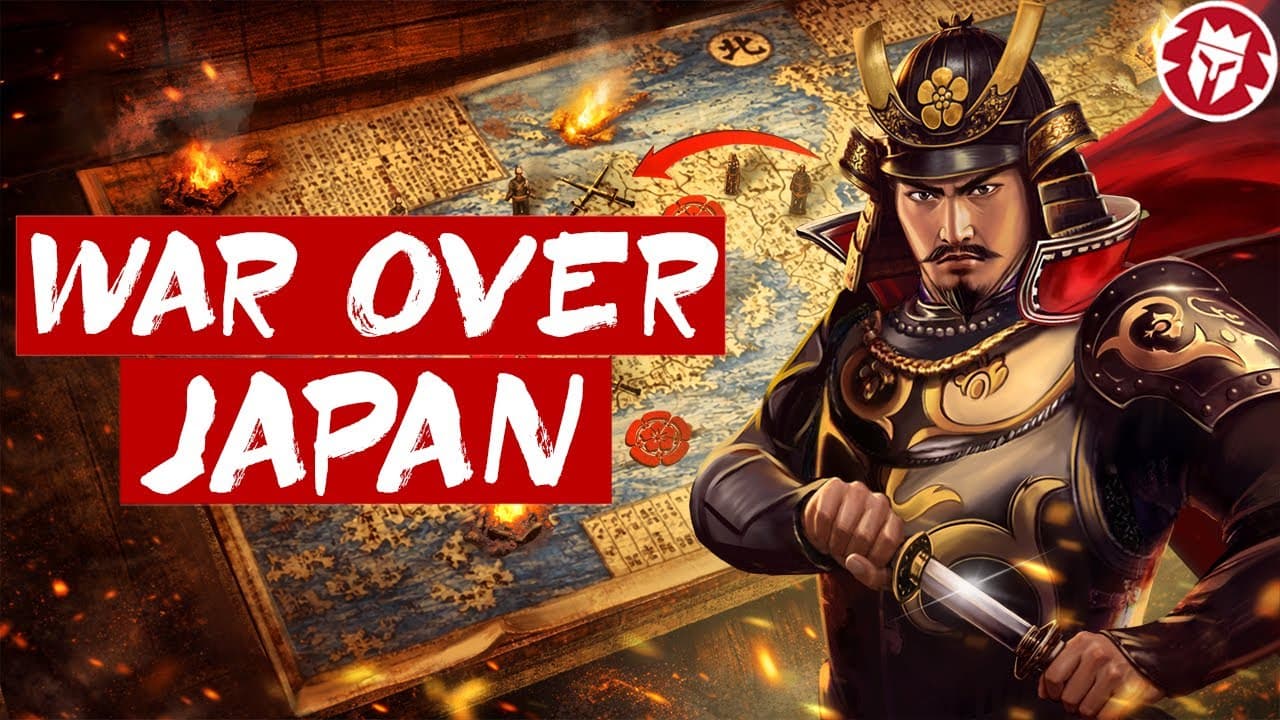
The Sengoku Jidai emerged from a collapse of central authority, peasant unrest, and succession crises that fractured Japan. Key figures built power through shifting alliances, military innovation, and strategic campaigns, culminating in a long period of war before eventual unification. Nobunaga, Hideyoshi, and Ieyasu shaped its course with ruthless ambition and patient tactics.
Transcript
Japan’s age of war was not born in a single battle, nor did it end with a single victory. It began with political paralysis, spread through unresolved feuds and broken successions, and consumed the country as authority collapsed from the center outward. This video traces the Sengoku Jidai in full, from the Ashikaga shogunate’s slow disint... Read More
Key Insights
- The Sengoku Jidai began from central authority decline, not a single battle or victory.
- Power shifted through daimyo-led campaigns, betrayals, and alliances, reshaping political maps across decades.
- The Onin War is a turning point, but causes extend to famines, peasant uprisings, and succession crises.
- Nobunaga, Hideyoshi, and Ieyasu each contributed uniquely to unification through strategy and timing.
- Key campaigns include the Kyotoku incident, Hatakeyama succession, and Bunsho coup, illustrating factional depth.
- The era featured evolving military organization, with castle sieges and unified command structures playing major roles.
- Conflict persisted until exhaustion, not reconciliation, signaling a long consolidation rather than quick peace.
- The documentary style combines battle histories with political drama to explain how Japan moved toward Tokugawa rule.
- More videos from this channel:
- More from this channel: Kings and Generals
Install to Summarize YouTube Videos and Get Transcripts
Explore YouTube Video Summarizer or Get YouTube Transcript Extractor
Questions & Answers
Q: How did the Sengoku Jidai start and what fueled the chaos?
The Sengoku Jidai emerged as central authority waned, with the Ashikaga shogunate losing grip and a series of unresolved feuds, failed successions, and peasant uprisings feeding continuous conflict. This environment created a power vacuum that daimyo exploited through shifting alliances, betrayals, and brutal campaigns, escalating regional fragmentation into a prolonged warring period.
Q: Who were the three central figures named as driving unification, and what roles did they play?
The era centers on Oda Nobunaga, Toyotomi Hideyoshi, and Tokugawa Ieyasu. Nobunaga initiated rapid consolidation with ruthless innovation, Hideyoshi continued expansion and political restructuring, and Ieyasu completed the establishment of centralized power, ultimately guiding Japan into a long peace under Tokugawa rule after years of warfare.
Q: What role did the Onin War play in the Sengoku Jidai, and why is it considered a turning point?
The Onin War marked the collapse of Ashikaga authority and the start of widespread feuding among rival clans. It symbolized a shift from centralized governance to noble-led autonomy across provinces, and its long, protracted fighting set the template for decades of warfare that defined the Sengoku Jidai.
Q: What were the major campaigns or crises that signaled shifts in power during the period?
Major moments include the Kyotoku Incident, the Hatakeyama succession crisis, and the Bunsho coup, each illustrating how rival clans leveraged political intrigue and military force to alter leadership and control. These crises reframed loyalties and alliances, accelerating the fragmentation that characterized the era.
Q: How did technology and battle tactics influence Sengoku warfare?
Military innovations and tactical shifts, such as castle sieges and changing forms of leadership across campaigns, allowed daimyo to sustain power and project influence beyond traditional borders. Firearms and disciplined formations contributed to decisive battles and altered how campaigns were planned and fought.
Q: Why did the era eventually end, and what came after?
The era ended not through a single victory but through exhausted resistance and the steady consolidation of power by the leading figures. This culminated in a centralized rule under the Tokugawa family, transforming decades of war into a long period of relative peace and controlled governance.
Q: What is the relationship between the central authority and regional lords during this era?
Central authority weakened progressively while regional lords, or daimyo, filled the power vacuum, governing from ambitious bases and forming strategic alliances or rivalries. This dynamic drove constant mobility of power and frequent negotiations, shaping the political landscape across provinces.
Q: How are Nobunaga, Hideyoshi, and Ieyasu portrayed in the narrative style of the video?
The video presents them as defining figures who embodied distinct approaches: Nobunaga’s ruthlessness and innovation, Hideyoshi’s improbable ascent and unification strategies, and Ieyasu’s patient consolidation and long-term planning, collectively illustrating how their actions steered the trajectory from civil war to centralized rule.
Summary & Key Takeaways
-
This overview describes how the Sengoku Jidai began with the Ashikaga shogunate’s decline, then intensified through feuds, coups, and wars, driven by ambitious leaders and clan rivalries. It highlights the Onin War as a turning point and names Nobunaga, Hideyoshi, and Ieyasu as the era-defining figures who united the country in the end.
-
The narrative follows major campaigns, such as the Kyotoku and Bunsho episodes, the Hatakeyama succession, and the spread of war from Kyoto outward, showing how successive victories reshaped Japan and led to a centralized rule after decades of fighting.
-
The video frames the era as a long sequence of strategic moves, betrayals, and battlefield innovations, including the rise of daimyo and the pivotal campaigns that replaced a fractured realm with a centralized shogunate under Tokugawa, ending only after exhaustion and absolute rule.
Read in Other Languages (beta)
Share This Summary 📚
Summarize YouTube Videos and Get Video Transcripts with 1-Click
Try YouTube Summary with ChatGPT & Claude or YouTube Transcript Generator
Explore More Summaries from Kings and Generals 📚
Summarize YouTube Videos and Get Video Transcripts with 1-Click
Try YouTube Summary with ChatGPT & Claude or YouTube Transcript Generator