What sparked Germanic tribes' clash with Rome
TL;DR
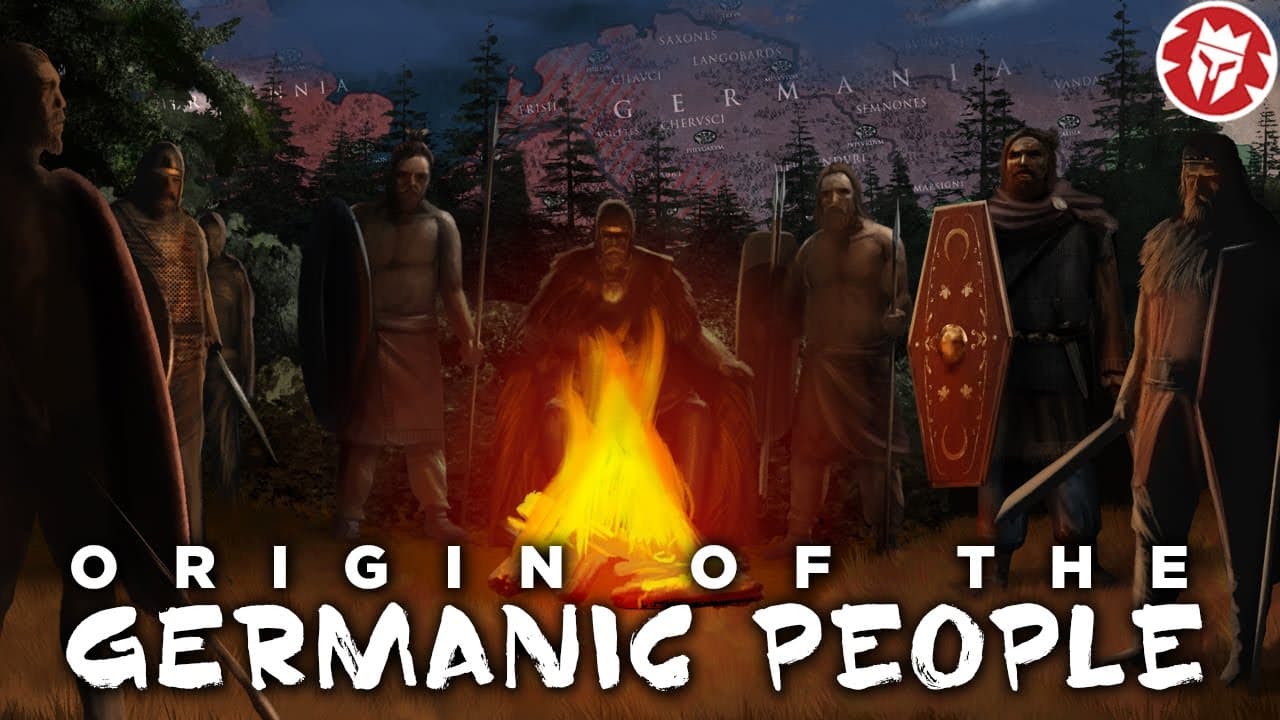
Germanic tribes evolved from Indo-European roots and expanded from the Rhine to the Vistula, engaging in prolonged conflict with Rome. Their society was largely rural, flags of war and diplomacy shaped by assemblies called hustings or the thing, and their religion blended native deities with Greco-Roman parallels. The video traces origins, culture, and military form.
Transcript
Of all the so-called barbarians the Romans did battle with over the centuries, none have made as lasting an impact on the history of Europe as the Germanic peoples. They terrorized the Empire for centuries, before conquering its Western half in 476AD, arguably ending the era of Antiquity, and ushering in the middle ages. In this video, we will ... Read More
Key Insights
- Germanic origins are linked to Indo-European language families, with Proto-Germanic emerging in northern Europe during the Bronze Age.
- Germanic warfare relied on infantry due to limited cavalry, using iron armor for elites and leather or linen for common warriors.
- Tribal leadership was variable, with power tied to battlefield success and the ability to deliver victories for the people.
- Inter-tribal diplomacy occurred through hustings or the thing, where kings spoke and assemblies decided land and resource issues.
- Religious life included Tacitus’s notes on Mercury as Wodanaz, Hercules as Donar, and Mars as Tyr, showing syncretism with Greco-Roman deities.
- Archaeology suggests evidence of human sacrifice in bog bodies, while Tacitus discusses divination through birds, runes, and sacred horses.
- Germanic tribes were not a single nation but many independent groups that could form confederations like the Suebi, Marcomanni, and Alemanni.
- Barbarian groups traded with Rome, sometimes integrated with Roman systems, while also engaging in wars such as those in Teutoburg Forest and the Cimbrian War.
- More videos from this channel:
- More from this channel: Kings and Generals
Install to Summarize YouTube Videos and Get Transcripts
Explore YouTube Video Summarizer or Get YouTube Transcript Extractor
Questions & Answers
Q: How did Proto-Germanic origins influence later Germanic tribes
Proto-Germanic origins are described as emerging as a distinct branch of Indo-European during the Bronze Age, contained to regions around the Rhine, Jutland, and southern Sweden. This origin shaped language development, tribal identities, and the later expansion from the Rhine to the Vistula, influencing warrior culture and social organization across many independent tribes.
Q: What was the role of the thing in Germanic society
The thing, or hustings, served as a key inter-tribal diplomacy mechanism where king and chiefs spoke and the crowd reacted with approval or disapproval. It functioned as a forum to resolve land rights and resource distribution, create political alliances, and mediate conflicts through collective decision making under the mediation of priests who could force obedience.
Q: How did Tacitus depict Germanic religion and its syncretism
Tacitus linked Germanic deities to Greco-Roman counterparts, describing Mercury as the messenger god associated with Wodanaz, Hercules with Donar, and Mars with Tyr. This reflects a form of syncretism where native gods were interpreted through Roman mythological lenses, illustrating cultural contact and reinterpretation rather than direct equivalence.
Q: What was the Germanic military composition and equipment
Germanic armies were predominantly infantry with limited cavalry because horses were scarce and valued by elites. Common warriors wore linen or leather, and weaponry included javelins, lances, and frameae short spears. Shields with iron bosses were common, emphasizing mobility and ferocious frontline combat.
Q: How did geography influence Germanic military strategies
The rugged forests of western and northern Europe shaped decentralized, forest-adapted warfare. The lack of heavy cavalry and abundant natural cover encouraged ambushes and flexible tactics, while rivers and borders helped define tribal territories as they expanded from the Rhine to the Vistula.
Q: What can be inferred about Germanic diplomacy and leadership
Leadership depended on the ability to deliver victories and maintain tribal cohesion. War-leaders rose to power by success and were ousted if they failed, suggesting a dynamic political system where merit and military prowess determined tenure rather than strict hereditary rule.
Q: How did Germanic tribes interact with Rome
Germanic tribes traded with Rome and sometimes integrated culturally or politically, yet remained perpetual adversaries in wars such as in Teutoburg Forest and other conflicts. This dual dynamic of contact and conflict helped shape Roman military responses and influenced later European political landscapes.
Q: Why is the Teutoburg Forest and related conflicts significant
The Teutoburg Forest represents a pivotal moment where Germanic tribes united under Arminius to ambush Roman legions, illustrating the effectiveness of Germanic resistance and the shifting balance of power in early European antiquity. It underscores the long term impact of Germanic resistance on Roman strategy and regional history.
Summary & Key Takeaways
-
Germanic origins are traced to Indo-European roots and the Yamnaya steppe heritage, forming a distinct branch in the Bronze to Iron Age.
-
Germanic society featured rural villages, a strong warrior ethos, and flexible tribal coalitions that could rise or fall with victorious leaders.
-
Religious practices merged with Tacitus described interpretations of gods and rituals, including animal sacrifice and divinations, alongside later Norse influenced elements.
Read in Other Languages (beta)
Share This Summary 📚
Summarize YouTube Videos and Get Video Transcripts with 1-Click
Try YouTube Summary with ChatGPT & Claude or YouTube Transcript Generator
Explore More Summaries from Kings and Generals 📚


Summarize YouTube Videos and Get Video Transcripts with 1-Click
Try YouTube Summary with ChatGPT & Claude or YouTube Transcript Generator