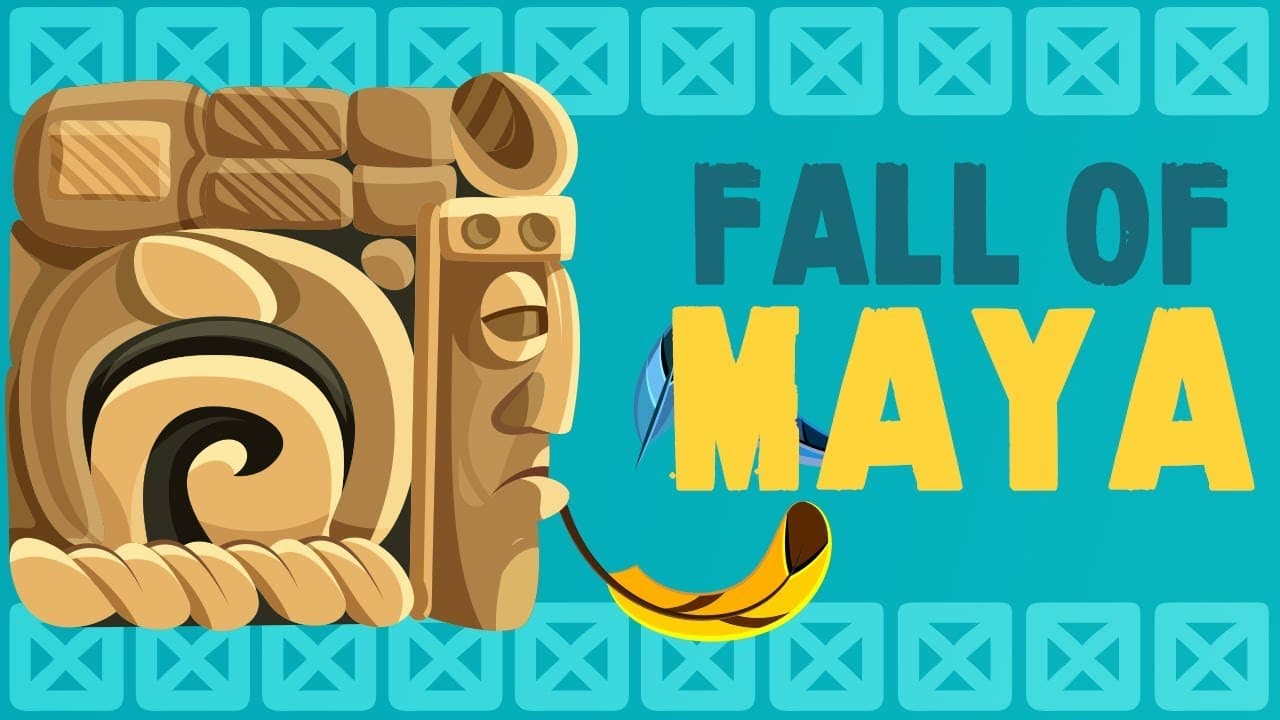
What caused the Maya collapse and how did they rebound?
TL;DR
The Maya collapse stemmed from three major factors: warfare, environmental degradation from deforestation, and prolonged droughts, all occurring together and amplifying each other. Although southern cities fell, northern lowlands cities like Chichen Itza and Uxmal rose to prominence, adopting new political structures and trade networks before Spanish contact.
Transcript
By the early 8th century the Maya civilization was at its zenith. Building and maintaining cities of such scale that future explorers hypothesized that they must have been built by lost tribes of Israel or the Phoenicians. But only 150 years later the flourishing Classic Maya civilization had crumbled, undergoing one of the most devastating social ... Read More
Key Insights
- Warfare intensified in the southern lowlands, leading to destruction of temples and palaces, fortifications, and mass refugee movements, which reduced city cohesion and undermined centralized power.
- Environmental degradation followed aggressive deforestation to fuel cities, increasing soil erosion and reducing agricultural productivity, thereby stressing food supplies and heightening vulnerability to other shocks.
- Prolonged droughts between 800 and 1100 AD created persistent water and crop failures, compounding existing social and political tensions and intensifying unrest and revolts.
- The combination of these factors reduced the capacity of Maya cities to sustain large populations and monumental building programs, signaling a systemic collapse rather than a sudden downfall.
- As southern polities declined, northern lowland cities such as Chichen Itza rose by adapting to new political dynamics and controlling trade routes, showing resilience through reorganization rather than extinction.
- Spanish contact later brought disease and conquest, but preexisting societal shifts in the Maya world shaped how resistance and alignment occurred during the conquest.
- The Itza city of Nojpeten held out until 1697, illustrating a protracted decline where some Maya communities persisted inside and around the region.
- Despite collapse in major centers, Maya culture and identity continues through language, calendar traditions, and ongoing communities across the region.
- More videos from this channel:
- More from this channel: Kings and Generals
Install to Summarize YouTube Videos and Get Transcripts
Explore YouTube Video Summarizer or Get YouTube Transcript Extractor
Questions & Answers
Q: What were the three major factors that led to the Classic Maya collapse?
The Classic Maya collapse was caused by a combination of warfare, environmental collapse due to deforestation and soil erosion, and protracted droughts. Warfare disrupted cities, environmental stress reduced agricultural yields, and droughts caused chronic water and crop shortages, all feeding into social upheaval and urban decline. This trio of factors interacted and amplified each other, making recovery difficult.
Q: How did warfare contribute to the Maya decline?
Warfare intensified in the southern lowlands, with increasing violence and destruction that turned temples and palaces into rubble and led to the construction of defensive walls. City populations swelled with refugees, and many settlements regressed or failed to complete monumental projects, undermining political and economic stability.
Q: What role did deforestation play in Maya environmental stress?
Deforestation was pursued to fuel city expansion and plaster production, which increased soil erosion and reduced soil quality in already thin Yucatán soils. This environmental strain lowered agricultural productivity, making it harder to feed growing urban populations and increasing vulnerability to other shocks such as drought.
Q: How did drought affect Maya society during the collapse?
Droughts between 800 and 1100 AD were severe and prolonged, including a 100-year span with multiple drought periods. These conditions caused crop failures and water scarcity, undermining food security and stability, and triggering social dissent as rulers struggled to maintain the support of their subjects.
Q: What happened to the Maya in the northern lowlands during the collapse?
While the southern lowlands collapsed, the northern lowlands saw cities like Chichen Itza and Uxmal rise, adapting to political changes and dominating regional trade routes, especially salt. They reorganized governance into councils and became regional powers, illustrating resilience through political and economic adaptation.
Q: How did contact with the Spanish influence Maya collapse after internal changes?
Spanish contact brought disease and conquest, accelerating the decline of entrenched Maya polities. The establishment of colonial centers and the conquest of major cities followed, but earlier internal shifts in governance and trade networks shaped the way resistance and accommodation unfolded during the conquest.
Q: What is the lasting impact of the Maya collapse on modern Maya populations?
The collapse did not erase Maya culture. In the centuries that followed, Maya communities persisted, migrating, adapting, and maintaining languages and cultural practices. Today, millions identify as Maya across several regions, preserving traditions while integrating into broader national cultures.
Q: Did the Maya disappear after the collapse?
No, the Maya did not disappear. The southern lowlands saw monumental decline, but northern lowlands flourished, and later Spanish contact led to new political configurations. The Maya identity survived through language, calendars, and cultural traditions that continue in communities today. The civilization transformed rather than vanished.
Summary & Key Takeaways
-
The collapse of Classic Maya civilization was not caused by a single event but by a combination of warfare, environmental strain, and drought, which together overwhelmed urban centers and governance.
-
The southern lowlands saw intensified conflict and destruction, while population shifts and defensive fortifications reflected societal responses to ongoing pressures.
-
The end of classical Maya urban life did not erase Maya culture; northern cities adapted and continued to flourish, eventually falling under different political arrangements and external pressures after the 13th century.
Read in Other Languages (beta)
Share This Summary 📚
Summarize YouTube Videos and Get Video Transcripts with 1-Click
Try YouTube Summary with ChatGPT & Claude or YouTube Transcript Generator
Explore More Summaries from Kings and Generals 📚
Summarize YouTube Videos and Get Video Transcripts with 1-Click
Try YouTube Summary with ChatGPT & Claude or YouTube Transcript Generator