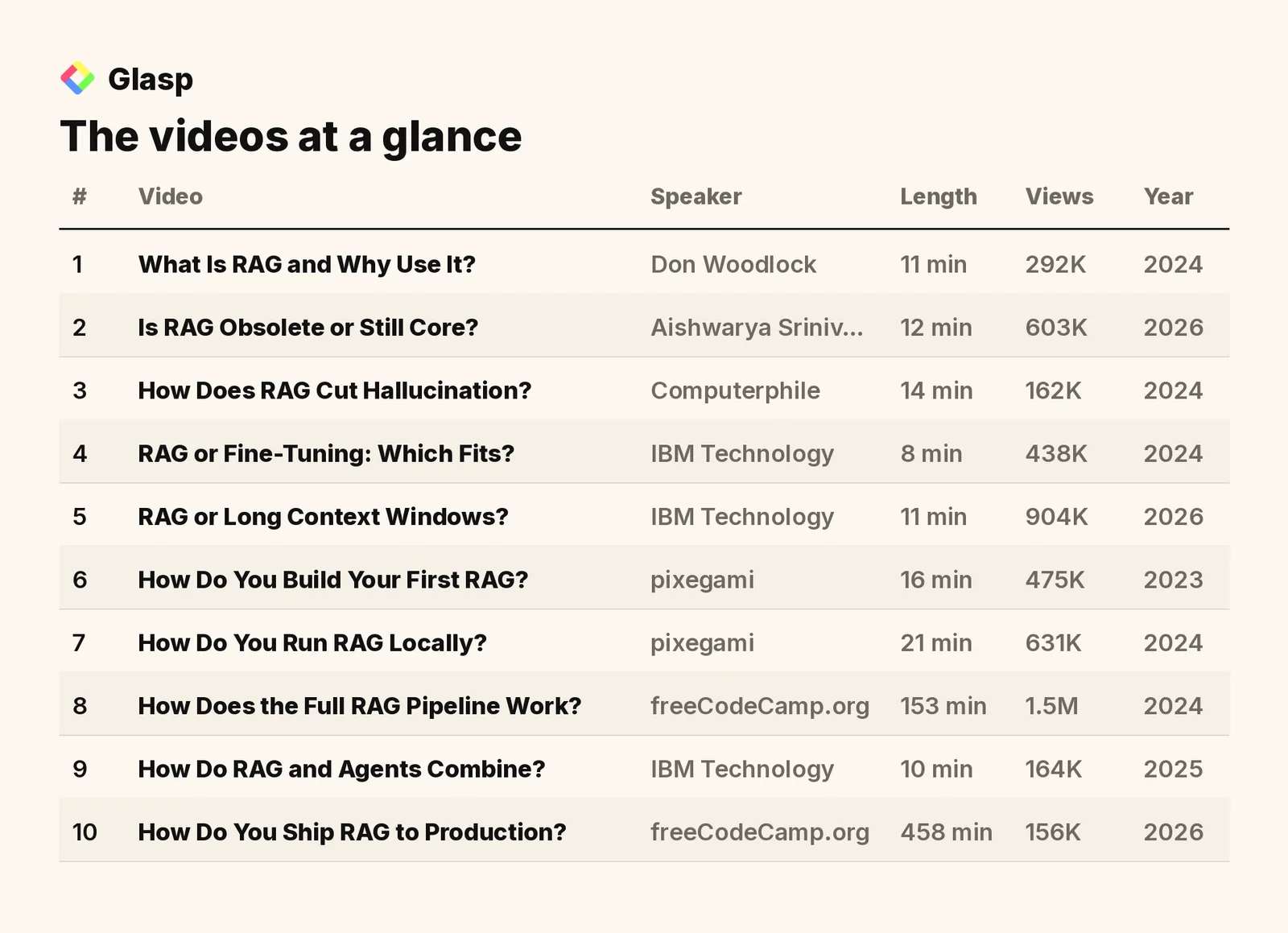
10 Best RAG Videos on YouTube (Retrieval-Augmented Generation)

Aug 02, 2026
10 min read
15 views
Last updated: July 2026
This is a ordered watchlist of 10 videos that take you from what Retrieval-Augmented Generation is to shipping a production RAG system. It is built for founders and builders who want to ground large language models in their own data without guessing which tutorials are worth the time.
The full set runs close to 12 hours, from 8-minute explainers to two full-length freeCodeCamp courses. It is canonical because it pairs plain-language concept videos from IBM, Computerphile, and independent educators with hands-on builds from LangChain and pixegami, covering concept, tradeoffs, code, and deployment.
The videos on this list, in the order to watch them, are:
What Is RAG and Why Use It? (Don Woodlock)
Is RAG Obsolete or Still Core? (Aishwarya Srinivasan)
How Does RAG Cut Hallucination? (Computerphile)
RAG or Fine-Tuning: Which Fits? (IBM Technology)
RAG or Long Context Windows? (IBM Technology)
How Do You Build Your First RAG? (pixegami)
How Do You Run RAG Locally? (pixegami)
How Do RAG and Agents Combine? (IBM Technology)
Total: 10 videos, 714 minutes of watch time (about 12 hours), and 5.3M combined views.
1. What Is RAG and Why Use It?
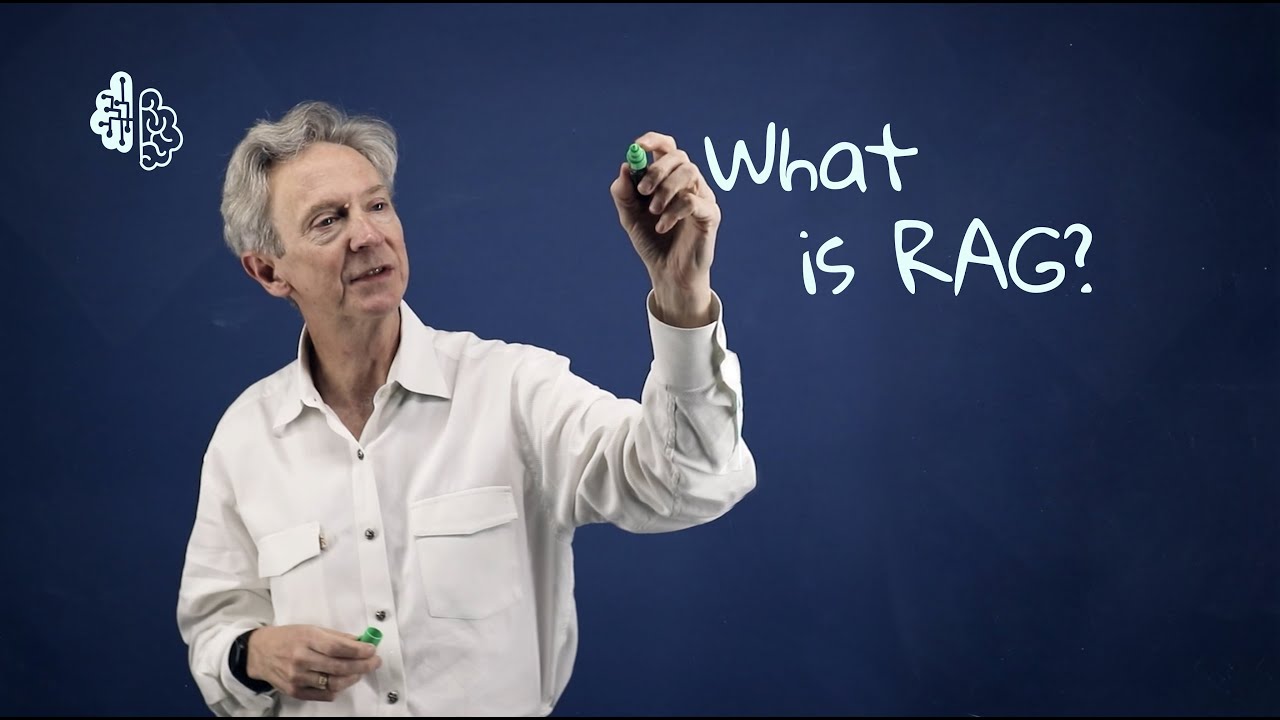
Don Woodlock · 11 min · 292K views · 2024
In short: RAG combines large language models with your own content sources so AI answers stay personalized and grounded in internal documents.
Start here for the clearest plain-language definition. It explains how content is chunked, vectorized, and retrieved to tailor AI answers, and why the pattern shows up in nearly every chatbot project.
Key takeaways
RAG combines retrieval and generation so large language models answer from specific content sources rather than only their training data.
Content is broken into chunks and vectorized, then stored in a vector database that allows quick retrieval at query time.
The architecture is popular in chatbot applications because it delivers tailored answers drawn from an organization's own internal documents.
RAG improves an AI system's ability to generate relevant and accurate responses, making it a widely used solution pattern in LLM projects.
Watch on YouTube · Read the summary and Q&A
2. Is RAG Obsolete or Still Core?
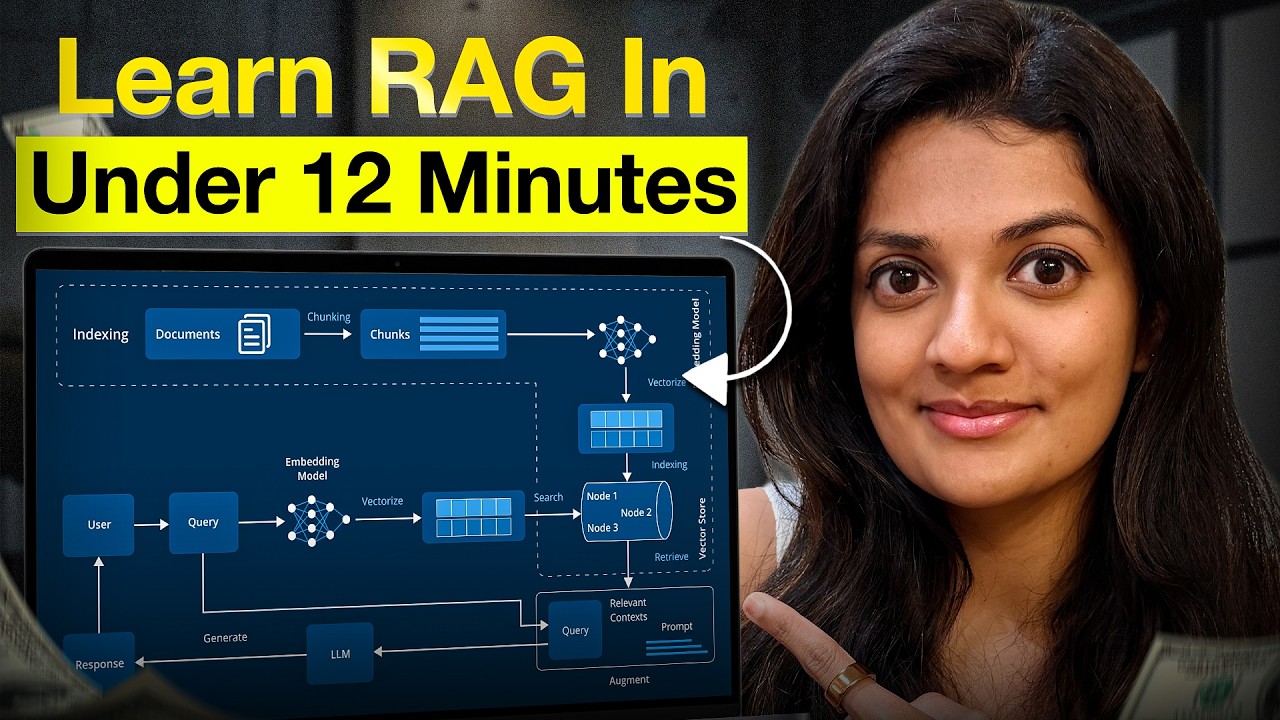
Aishwarya Srinivasan · 12 min · 603K views · 2026
In short: RAG stays foundational: it retrieves external data and generates informed responses, and larger context windows do not make it obsolete.
A tight overview that debunks the myth that RAG is dead. It walks through chunking, embeddings, vector databases, and advanced patterns, giving you the vocabulary before you touch code.
Key takeaways
RAG combines a retrieval system that finds relevant information with a generation system that creates informed responses from it.
A common misconception is that larger context windows make RAG unnecessary, but it stays essential for enterprise AI accuracy and efficiency.
Document chunking matters, and semantic and hierarchical chunking preserve context better than naive splitting when building retrieval systems.
Advanced patterns like agentic RAG and graph RAG handle complex queries and data relationships that basic retrieval cannot address.
Watch on YouTube · Read the summary and Q&A
3. How Does RAG Cut Hallucination?
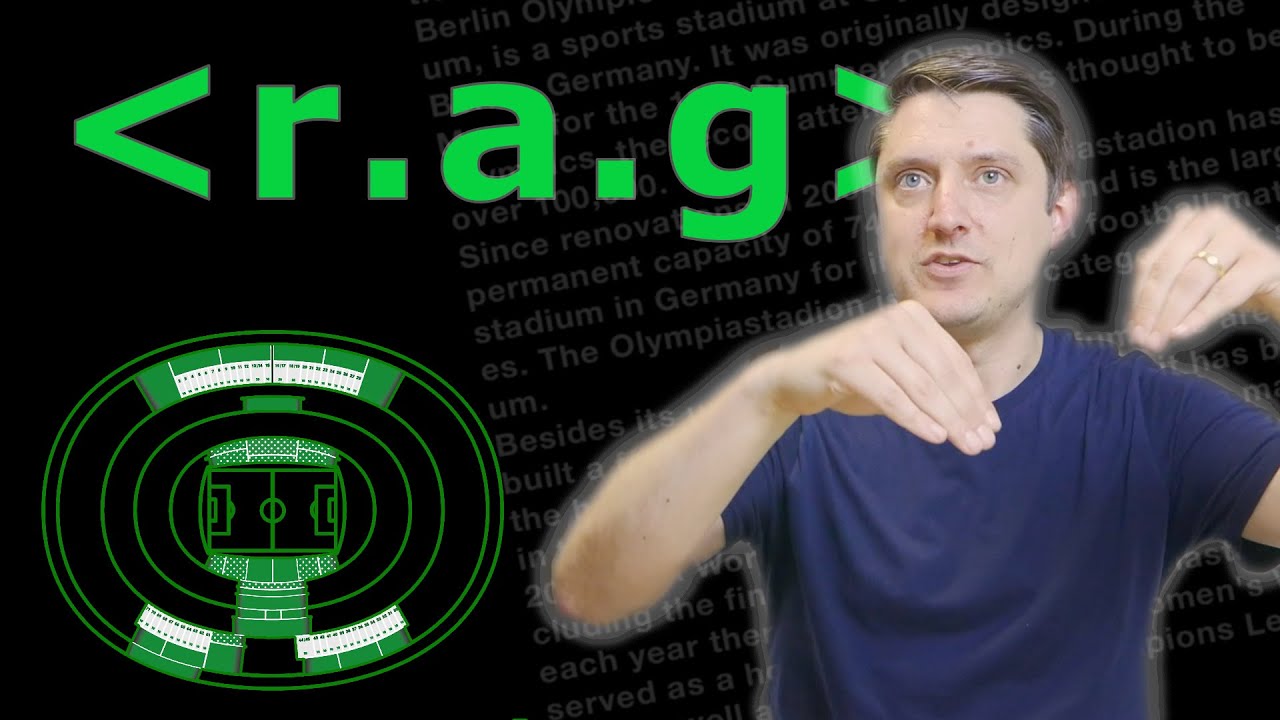
Computerphile · 14 min · 162K views · 2024
In short: RAG supplements a model with retrieved external data and lets it cite sources, which reduces errors and improves transparency.
Computerphile explains the retrieval mechanism at a level that makes the accuracy gains concrete. It shows how citing sources builds trust and why RAG handles niche or proprietary queries well.
Key takeaways
RAG combines a user query with external data so the model returns contextually relevant answers instead of guessing from memory.
Supplementing the model with live data reduces errors and hallucinations, especially for niche or less common queries.
RAG lets language models cite their data sources, which improves transparency and trust in the information provided.
The approach works across data types including PDFs and web content, and it can be implemented with libraries like LangChain.
Watch on YouTube · Read the summary and Q&A
4. RAG or Fine-Tuning: Which Fits?

IBM Technology · 8 min · 438K views · 2024
In short: RAG retrieves up-to-date external information while fine-tuning embeds context into model weights, and the two can be combined for stronger results.
IBM lays out the decision most teams face early. It clarifies when dynamic retrieval beats baking knowledge into weights, and when combining both makes sense for specialized industries.
Key takeaways
RAG retrieves external data and augments prompts, making it effective for dynamic sources such as databases that change often.
Fine-tuning customizes a model with specific data, embedding context directly into its weights for specialized industries and unique terminology.
RAG helps mitigate hallucinations by providing source context, while fine-tuning improves model speed and reduces inference costs.
Choosing between RAG and fine-tuning depends on data dynamics, industry requirements, and application priorities, and the two can be combined.
Watch on YouTube · Read the summary and Q&A
5. RAG or Long Context Windows?
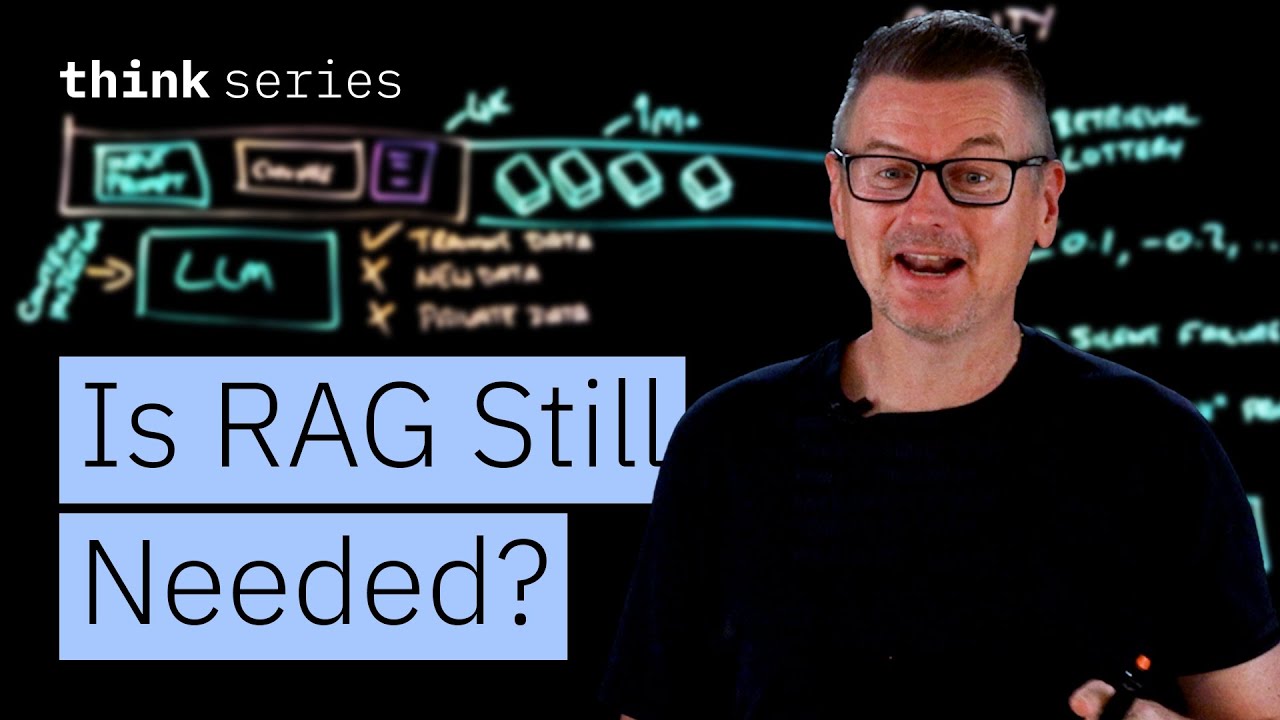
IBM Technology · 11 min · 904K views · 2026
In short: RAG suits large unbounded datasets through efficient retrieval, while long context windows fit bounded data that fits entirely in the window.
As context windows grow, this video answers whether RAG is still worth it. IBM frames the two approaches as complementary and shows when each cuts computational load.
Key takeaways
LLMs cannot access up-to-date or proprietary information on their own, which is why solutions like RAG remain necessary.
RAG is advantageous for large, unbounded datasets because its retrieval mechanism focuses on relevant chunks and avoids unnecessary processing.
Long context windows suit bounded datasets where all information can fit directly into the model for analysis.
Combining RAG with long context approaches can optimize performance depending on the specific needs of the application.
Watch on YouTube · Read the summary and Q&A
6. How Do You Build Your First RAG?
pixegami · 16 min · 475K views · 2023
In short: You prepare data, split it into chunks, store embeddings in a vector database, then query it so answers stay grounded in your docs.
Your first hands-on build. pixegami walks through LangChain and OpenAI in Python to make a chatbot over books or documents, with responses grounded in the source material.
Key takeaways
Building a RAG app involves preparing data, creating a vector database, and querying it for relevant information at answer time.
Data is split into manageable chunks with a text splitter, which improves search relevance during retrieval.
Vector embeddings represent text as numerical vectors, and ChromaDB stores those chunks for efficient similarity querying.
The AI generates responses by combining relevant data chunks, which ensures accuracy and lets it reference the source.
Watch on YouTube · Read the summary and Q&A
7. How Do You Run RAG Locally?
pixegami · 21 min · 631K views · 2024
In short: You index PDFs and run open-source LLMs like Ollama locally, using a vector database so natural language queries return sourced answers.
The next step up: running RAG on your own machine over PDFs. It adds database updates and LLM-based response evaluation, so you learn to test quality, not just build.
Key takeaways
Local execution of RAG apps is possible using open-source LLMs like Ollama, avoiding dependence on hosted model providers.
The app indexes PDFs and returns natural language answers with source references, demonstrated on board game manuals.
ChromaDB supports dynamic database updates with unique chunk identifiers, so the index can be refreshed without full rebuilds.
AI response quality can be evaluated using LLM-based unit tests, and hybrid setups pair online embeddings with local LLMs.
Watch on YouTube · Read the summary and Q&A
8. How Does the Full RAG Pipeline Work?

freeCodeCamp.org · 153 min · 1.5M views · 2024
In short: A full pipeline covers indexing, retrieval, and generation, plus query translation, routing, and adaptive strategies that improve retrieval accuracy.
The comprehensive deep dive, led by a LangChain engineer. It moves from indexing, retrieval, and generation into advanced techniques like query translation and adaptive RAG, building your systems knowledge end to end.
Key takeaways
Indexing converts documents into numerical representations, and retrieval uses vector stores to find relevant chunks by semantic similarity.
Generation feeds retrieved documents into a language model to produce answers grounded in the source context.
Query translation techniques such as multi-query and decomposition improve the accuracy of document retrieval.
Routing directs a query to the appropriate data source, and adaptive RAG adjusts retrieval based on relevance and context.
Watch on YouTube · Read the summary and Q&A
9. How Do RAG and Agents Combine?

IBM Technology · 10 min · 164K views · 2025
In short: Agentic AI automates decision-making while RAG retrieves data through vector databases, and combining them enhances AI applications depending on the use case.
Once you can build RAG, this video shows where it meets agents. IBM explains the offline and online phases of RAG and how agentic workflows layer decision-making on top of retrieval.
Key takeaways
Agentic AI automates decision-making with minimal human intervention through a loop of perception, reasoning, and action.
RAG has offline and online phases covering data ingestion, indexing, and on-demand retrieval and generation from vector databases.
RAG effectiveness can decline with excessive retrieval, since too much data introduces noise and redundancy for the language model.
Data curation and context engineering matter, and combining agentic AI with RAG enhances applications when data is managed well.
Watch on YouTube · Read the summary and Q&A
10. How Do You Ship RAG to Production?

freeCodeCamp.org · 458 min · 156K views · 2026
In short: Production RAG means fixing chunking, embedding mismatches, retrieval noise, context overflow, and hallucination while adding observability, security, and scaling.
The capstone course for moving past prototypes. It covers the five ways RAG fails in production and works through vector database optimization, hybrid search, and advanced architectures for a deployable app.
Key takeaways
RAG systems often fail in production due to bad chunking, embedding mismatches, retrieval noise, context overflow, and hallucination.
Chunking maintains context, and overlap at chunk boundaries prevents losing information that spans two adjacent segments.
Hybrid search combines different retrieval methods to improve the accuracy and relevance of results.
Observability and optimization are key to scaling RAG, and advanced topics include agentic RAG, GraphRAG, and multimodal RAG.
Watch on YouTube · Read the summary and Q&A
Frequently asked questions
What is Retrieval-Augmented Generation?
RAG combines a retrieval system that finds relevant external data with a generation system that uses it, so a language model answers from specific sources rather than only its training data.
Does RAG reduce AI hallucinations?
Yes. By supplementing the model with retrieved data and letting it cite sources, RAG reduces errors and improves transparency, especially for niche or proprietary queries.
Is RAG still needed with large context windows?
Yes. RAG suits large, unbounded datasets through efficient retrieval, while long context windows fit bounded data, and the two can be combined depending on the use case.
Should I use RAG or fine-tuning?
Use RAG for dynamic, up-to-date data and fine-tuning to embed specialized context into model weights. Many robust applications combine both approaches.
Can I run a RAG application locally?
Yes. Open-source LLMs like Ollama with a local vector database such as ChromaDB let you index and query documents entirely on your own machine.
How long does it take to learn RAG from videos?
This watchlist runs about 12 hours in total, or 714 minutes across 10 videos, ranging from 8-minute explainers to two full-length freeCodeCamp courses. Watching in order takes you from the basic definition to a production deployment without gaps.
Where should a beginner start with RAG?
Start with Don Woodlock's 11-minute What Is RAG and Why Use It for the clearest plain-language definition of chunking, vectorizing, and retrieval, then move to pixegami's LangChain project when you are ready to write code.
What tools do you need to build a RAG application?
A basic RAG build uses Python with LangChain and an LLM such as OpenAI, a text splitter to break documents into chunks, and a vector database like ChromaDB to store embeddings and serve similarity queries.
Why do RAG systems fail in production?
RAG systems commonly break in production because of bad chunking, embedding mismatches, retrieval noise, context overflow, and hallucination, so observability, hybrid search, and vector database optimization matter as much as the initial build.
How to use this list
Watch these in order to move from concept to production without gaps: the early explainers give you the vocabulary, the middle videos settle the RAG versus fine-tuning and long-context tradeoffs, and the freeCodeCamp and pixegami builds put it into code. If you only have a few minutes, start with Don Woodlock's What is RAG, then jump to pixegami's LangChain project when you are ready to build.
Related lists
💡 Want summaries and transcripts for any YouTube video? Try YouTube Summary with ChatGPT & Claude.