How Does Retrieval Augmented Generation Work?
TL;DR
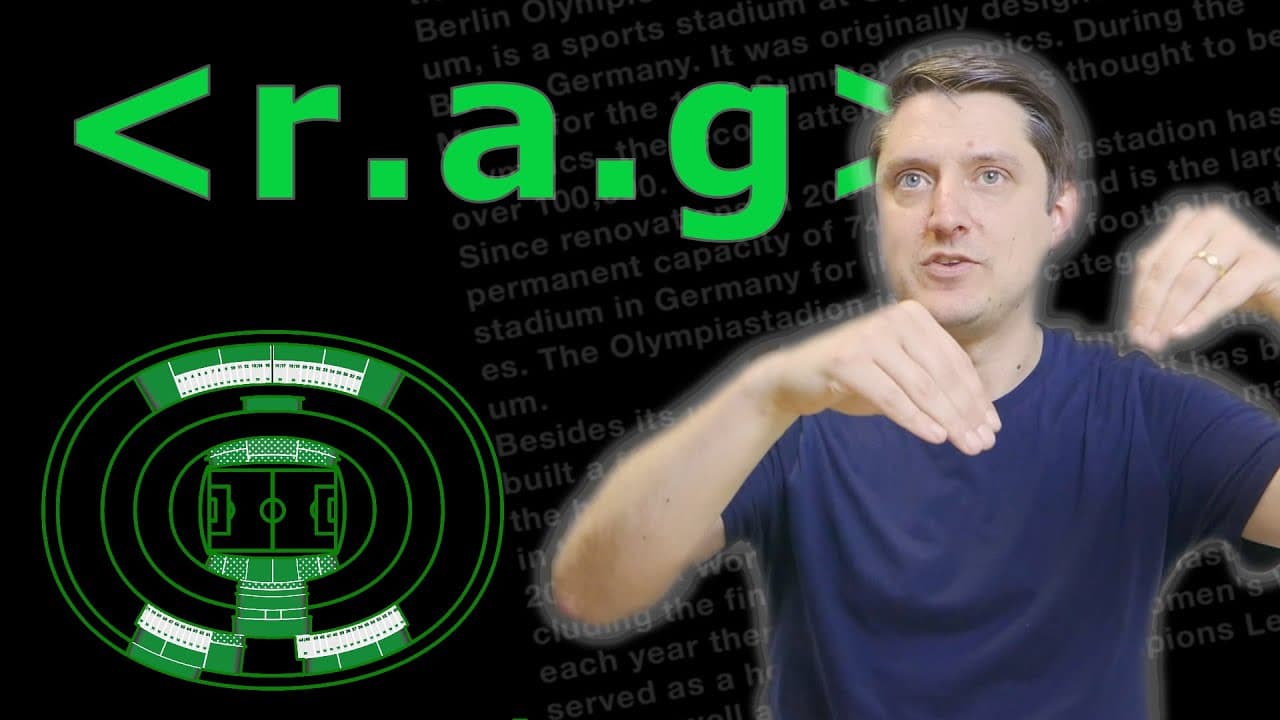
Retrieval Augmented Generation (RAG) enhances the accuracy of large language models by combining user queries with external data sources. This approach allows models to provide more precise and contextually relevant answers, reducing the likelihood of errors. By integrating retrieval processes, RAG enables models to cite sources, improving transparency and verification.
Transcript
In a previous video, we looked at LLMs and whether or not they are going to continue to get way better or they're going to sort of plateau out. We're not going to keep talking about that today, as you'll be pleased to know. But, I was interested in you know, some of the things that LLMs we were talking about that they don't do well. So, you know, m... Read More
Key Insights
- Retrieval Augmented Generation (RAG) combines user queries with external data to improve model accuracy.
- RAG allows language models to provide contextually relevant answers by integrating real-time data retrieval.
- The process helps reduce errors and hallucinations by supplementing model knowledge with live data.
- RAG can be implemented using libraries like LangChain to facilitate prompt templates and data integration.
- Large language models can use RAG to handle niche or less common queries more effectively.
- RAG enables models to cite data sources, enhancing transparency and trust in the provided information.
- The approach can be applied to various data types, including PDFs and web content, through data processing.
- RAG is particularly useful for queries involving specific or proprietary information not present in training data.
Install to Summarize YouTube Videos and Get Transcripts
Explore YouTube Video Summarizer or Get YouTube Transcript Extractor
Questions & Answers
Q: How does Retrieval Augmented Generation improve language model accuracy?
Retrieval Augmented Generation (RAG) improves accuracy by combining user queries with external data sources. This integration allows language models to provide more contextually relevant and precise answers, reducing the likelihood of errors. By retrieving live data, RAG supplements the model's knowledge base, addressing gaps and enhancing overall performance.
Q: What is the role of data retrieval in RAG?
Data retrieval in RAG involves sourcing external information to augment the language model's responses. By incorporating real-time data into the query process, RAG enables models to provide more accurate and context-specific answers. This retrieval process helps bridge knowledge gaps and reduces the incidence of model hallucinations.
Q: Why is source citation important in RAG?
Source citation in RAG is crucial for transparency and verification. By citing data sources, models can provide users with the means to verify the accuracy of the information presented. This practice enhances trust in model outputs and allows users to cross-check facts, improving the reliability of AI-generated responses.
Q: How does RAG handle niche or uncommon queries?
RAG handles niche or uncommon queries by integrating external data sources that contain the necessary information. By retrieving specific data not present in the model's training set, RAG enables models to answer less common questions accurately. This approach enhances the model's ability to address specialized topics effectively.
Q: What libraries support RAG implementation?
Libraries like LangChain support RAG implementation by facilitating the creation of prompt templates and data integration processes. LangChain allows developers to augment user queries with external data, enabling language models to provide more accurate and contextually relevant answers. It streamlines the process of implementing RAG in various applications.
Q: In what ways can RAG be applied to different data types?
RAG can be applied to various data types by employing data processing techniques. For instance, it can retrieve and integrate information from PDFs, web pages, or proprietary databases. By processing these data types, RAG enables models to incorporate diverse information sources, enhancing their ability to answer complex queries accurately.
Q: How does RAG reduce the likelihood of errors in language models?
RAG reduces errors by supplementing language model responses with real-time data retrieval. By incorporating external information, RAG addresses gaps in the model's knowledge base, minimizing the chances of incorrect or fabricated answers. This process enhances the overall accuracy and reliability of model outputs.
Q: What advantages does RAG offer for proprietary information queries?
RAG offers significant advantages for queries involving proprietary information by integrating specific data sources not included in the model's training set. This capability allows models to provide accurate responses to questions about proprietary or specialized content, making RAG a valuable tool for applications requiring precise and context-specific information.
Summary & Key Takeaways
-
Retrieval Augmented Generation (RAG) improves large language model performance by integrating external data with user queries. This method reduces errors and enhances context relevance by using real-time data retrieval. RAG allows models to cite sources, providing transparency and aiding verification of information accuracy.
-
RAG leverages libraries like LangChain to create prompt templates and integrate data sources, enabling models to handle niche queries effectively. By processing various data types, RAG can incorporate proprietary or specific information not included in the model's training set, enhancing its utility.
-
The approach is beneficial for providing precise answers to complex queries, especially those involving uncommon or proprietary data. By allowing models to cite sources, RAG enhances the reliability of responses, making it a valuable tool for applications requiring high accuracy and transparency.
Read in Other Languages (beta)
Share This Summary 📚
Summarize YouTube Videos and Get Video Transcripts with 1-Click
Try YouTube Summary with ChatGPT & Claude or YouTube Transcript Generator
Explore More Summaries from Computerphile 📚




Summarize YouTube Videos and Get Video Transcripts with 1-Click
Try YouTube Summary with ChatGPT & Claude or YouTube Transcript Generator