What Is Retrieval Augmented Generation in AI?
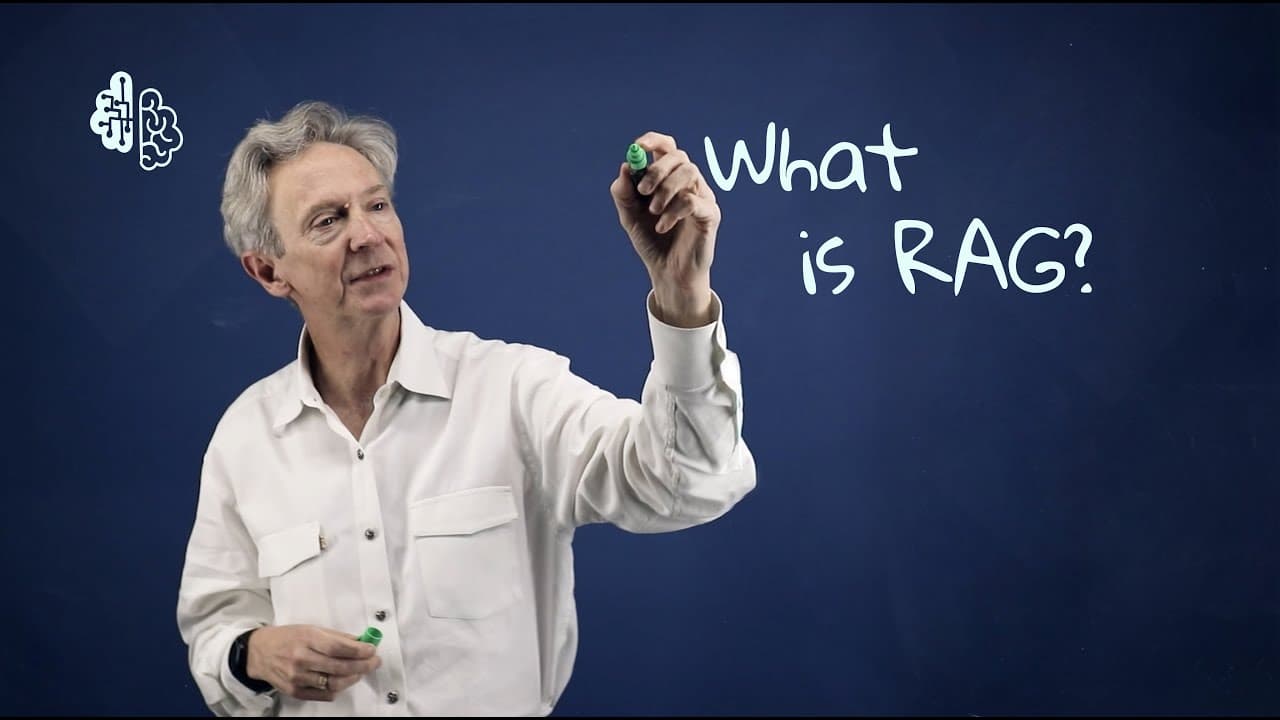
TL;DR
Retrieval Augmented Generation (RAG) combines large language models with specific content sources to create personalized responses. By using RAG, organizations can tailor AI-generated answers using their own data, enhancing user experience. This architecture is increasingly popular for applications like chatbots, allowing AI to deliver precise information from internal documents.
Transcript
hello everyone uh welcome to my code deare uh video series um what I'm doing is I'm rotating through three different types of topics educational topics uh use case topics and then kind of bias ethics safety uh topic so now on the education rotation and today what I wanted to talk about is uh what is retrieval augmented generation or rag uh and you ... Read More
Key Insights
- RAG is a combination of retrieval and generation techniques in AI.
- It allows large language models to use specific content sources for responses.
- RAG is beneficial for creating personalized AI interactions.
- The architecture is popular in chatbot applications for tailored answers.
- Content is broken into chunks and vectorized for efficient retrieval.
- Vector databases store content in numeric form for quick access.
- RAG enhances AI's ability to generate relevant and accurate responses.
- This solution pattern is widely used in LLM projects for customized outputs.
Install to Summarize YouTube Videos and Get Transcripts
Explore YouTube Video Summarizer or Get YouTube Transcript Extractor
Questions & Answers
Q: How does Retrieval Augmented Generation (RAG) work?
Retrieval Augmented Generation (RAG) works by combining large language models with specific content sources to generate personalized responses. It involves breaking content into chunks, vectorizing them, and storing them in a vector database. When a query is made, the system retrieves the most relevant content chunks and uses them to augment the generative AI process, providing accurate and context-specific answers.
Q: What are the benefits of using RAG in AI systems?
The benefits of using RAG in AI systems include the ability to generate personalized and context-specific responses, improved accuracy of AI-generated answers, and enhanced user experience. By leveraging specific content sources, RAG allows AI to provide tailored interactions, such as chatbots that deliver precise information from internal documents, making it a valuable solution for various applications.
Q: How does RAG differ from traditional search engines?
RAG differs from traditional search engines by not only retrieving relevant content but also generating new, personalized responses using large language models. While search engines list links to content, RAG digests and combines information to create context-specific answers. This approach enhances the user experience by providing more accurate and tailored responses compared to traditional search methods.
Q: What role do vector databases play in RAG architecture?
Vector databases play a crucial role in RAG architecture by storing content in a numeric form that allows for efficient retrieval. Content is broken into chunks and vectorized, creating numeric representations that facilitate quick access to relevant information. This enables the RAG system to retrieve and use the most pertinent content chunks for generating accurate and context-specific AI responses.
Q: Why is RAG popular in chatbot applications?
RAG is popular in chatbot applications because it allows for the creation of personalized and accurate responses using specific content sources. By combining retrieval and generation techniques, RAG enables chatbots to deliver tailored interactions, providing precise information from internal documents. This enhances user experience and makes chatbots more effective in delivering context-specific answers.
Q: How does RAG enhance the generative capabilities of AI?
RAG enhances the generative capabilities of AI by augmenting the generation process with specific content sources. It retrieves relevant content chunks based on user queries and uses them to inform the AI's responses. This approach allows AI to generate more accurate and context-specific answers, improving the quality and relevance of the information provided to users.
Q: What is the process of vectorizing content in RAG?
In RAG, vectorizing content involves breaking it into chunks and converting each chunk into a numeric representation, known as a vector. These vectors capture the essence of the content, allowing for efficient retrieval based on user queries. The process ensures that similar content has similar vectors, facilitating quick access to relevant information for generating accurate AI responses.
Q: How can organizations benefit from implementing RAG?
Organizations can benefit from implementing RAG by enhancing their AI systems' ability to provide personalized and context-specific responses. By leveraging their own data, they can improve the accuracy and relevance of AI-generated answers, leading to better user experiences. RAG is particularly valuable in applications like chatbots, where tailored interactions and precise information delivery are crucial.
Summary & Key Takeaways
-
Retrieval Augmented Generation (RAG) enhances AI by using specific content sources to generate personalized responses. This architecture is popular for creating tailored interactions, such as chatbots, that provide precise information from internal documents. RAG combines the power of large language models with the relevance of specific data, improving user experience.
-
In RAG, content is broken into chunks and vectorized, allowing for efficient retrieval based on user queries. Vector databases store this content in a numeric form, enabling quick access to relevant information. By integrating RAG, organizations can leverage their own data to enhance AI capabilities, providing accurate and context-specific answers.
-
RAG architecture is increasingly adopted in LLM projects for its ability to deliver customized outputs. It combines retrieval and generation techniques, allowing AI systems to augment their generative capabilities with specific content. This approach not only improves the accuracy of responses but also personalizes the user experience, making it a valuable solution for various applications.
Read in Other Languages (beta)
Share This Summary 📚
Summarize YouTube Videos and Get Video Transcripts with 1-Click
Try YouTube Summary with ChatGPT & Claude or YouTube Transcript Generator