How to Stop Facebook Ad Campaigns That Kill ROAS
TL;DR
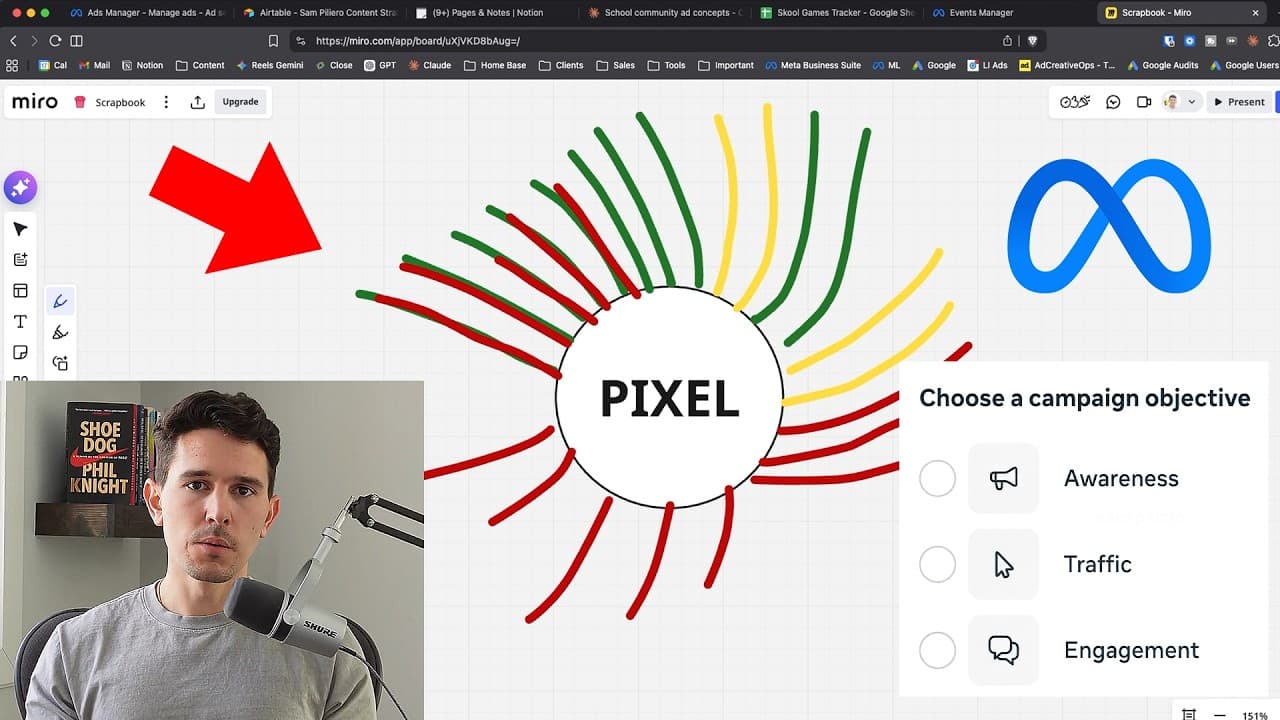
Convert to purchase optimization and drop top of funnel campaigns. The video argues that awareness, traffic, and engagement campaigns harm ROAS by feeding the pixel bad signals and starving it of valuable purchase signals. Use conversion-based campaigns focused on purchases to improve efficiency and long-term results.
Transcript
There are three campaign types on Facebook that are absolutely killing your return on ad spend. And the worst part, Facebook actively pushes you to run them. They're probably running in your ad account right now, burning money while you watch this. At the Moonlighters, we manage over a 100red brands. And this is a mistake that I see constantly. Bra... Read More
Key Insights
- Campaigns focused on awareness, traffic, and engagement hurt ROAS by pushing the pixel toward low-value signals.
- Facebook optimization responds to the objective you choose, so choosing purchase objectives yields better, higher-value purchases.
- Top of funnel campaigns can degrade pixel quality by creating red and yellow signals, reducing future purchase performance.
- Conversion-based campaigns that optimize for purchases drive higher-quality traffic and align with actual business goals.
- Post iOS 14.5 changes increased the importance of using purchase objectives for efficient bidding and customer acquisition.
- Pixels store data over time but rely most on recent data, so bad signals from non-purchase campaigns pollute long-term performance.
- Pixel health depends on consistent high-value signals, not cheap clicks from traffic campaigns.
- Avoid starting new accounts with top funnel campaigns to prevent long-term data damage to performance.
- More videos from this channel:
- More from this channel: Sam Piliero
Install to Summarize YouTube Videos and Get Transcripts
Explore YouTube Video Summarizer or Get YouTube Transcript Extractor
Questions & Answers
Q: A real search query question about the video (e.g. 'How to...', 'What is...', 'Why does...', 'When should...'). Question 1
Why should you stop using awareness, traffic, and engagement campaigns when your goal is to drive sales, and what happens to the Facebook pixel when you do? These campaigns optimize for Facebook's metrics rather than your purchases, leading to lower quality signals such as yellow and red audiences. This misalignment damages long term performance by confusing the pixel and reducing its ability to find high value buyers.
Q: Question 2
What is the recommended campaign objective to improve ROAS, and why is it preferred over top funnel campaigns? The recommended objective is conversion based campaigns optimized for purchases. This aligns Facebook’s optimization with your actual goal, delivering higher quality traffic that is more likely to convert and purchase, thereby increasing ROAS and preserving pixel integrity.
Q: Question 3
How did post IOS 14.5 changes affect how advertisers should bid and campaign structure, according to the video? The changes reduced the usefulness of cheap traffic from traffic campaigns and elevated the value of purchase-based signals, as Facebook evaluates users by likelihood of future actions. This makes top funnel campaigns less effective and purchase campaigns more efficient for acquiring buyers.
Q: Question 4
Why is it a mistake for new ad accounts to rely on top funnel campaigns to build data, and what is the recommended approach instead? Running awareness, traffic, or engagement campaigns in new accounts floods the pixel with bad signals and harms long term performance. Start with conversion campaigns focusing on purchases to build high quality signals and a strong foundation for future optimization.
Q: Question 5
What is the practical implication of telling Facebook to optimize for purchases rather than other events like add to cart? Telling Facebook to optimize for purchases directs the algorithm toward buyers with higher likelihood of completing a purchase, improving efficiency and overall ROAS, because the platform uses recent data to determine intent and value.
Q: Question 6
How does the analogy of green, yellow, and red signals relate to pixel optimization, and what should advertisers strive for? Green signals indicate high value buyers, yellow signals are mid value, and red signals are low value. Advertisers should maximize green signals by using purchase objectives, thereby improving long term performance and preventing the pixel from drifting toward low value audiences.
Q: Question 7
What does the video say about the role of awareness as an actual form of advertising, and how should brands think about it in relation to sales campaigns? The video argues that every conversion event is a form of awareness, and you should avoid funneling budget into top of funnel campaigns that do not directly drive purchases. Instead, focus on high quality traffic that leads to actual sales.
Q: Question 8
What does the speaker offer beyond the core advice, and where can viewers get more in-depth guidance? The speaker invites viewers to join their Skool community for longer form training and sharing alpha changes, with access to resources and live Q&A, providing ongoing support for ad strategy and optimization beyond this video.
Summary & Key Takeaways
-
This video explains that awareness, traffic, and engagement campaigns are misaligned with revenue goals and can damage ad performance by providing poor pixel signals. It advocates removing these campaigns in favor of purchase-focused conversions.
-
It highlights how post iOS 14.5 changes affect bidding, making high quality, purchase-oriented traffic more valuable than cheap traffic from top funnel campaigns. It also argues that Facebook optimizes for the objective you tell it to optimize for, not your broader goals.
-
The speaker emphasizes not to build a funnel with top of funnel campaigns when the aim is to drive sales, and instead to align all spend with direct purchase objectives for better data signals and outcomes.
Read in Other Languages (beta)
Share This Summary 📚
Summarize YouTube Videos and Get Video Transcripts with 1-Click
Try YouTube Summary with ChatGPT & Claude or YouTube Transcript Generator
Explore More Summaries from Sam Piliero 📚
Summarize YouTube Videos and Get Video Transcripts with 1-Click
Try YouTube Summary with ChatGPT & Claude or YouTube Transcript Generator