How to Optimize Facebook Ads for Better ROI 2025
TL;DR
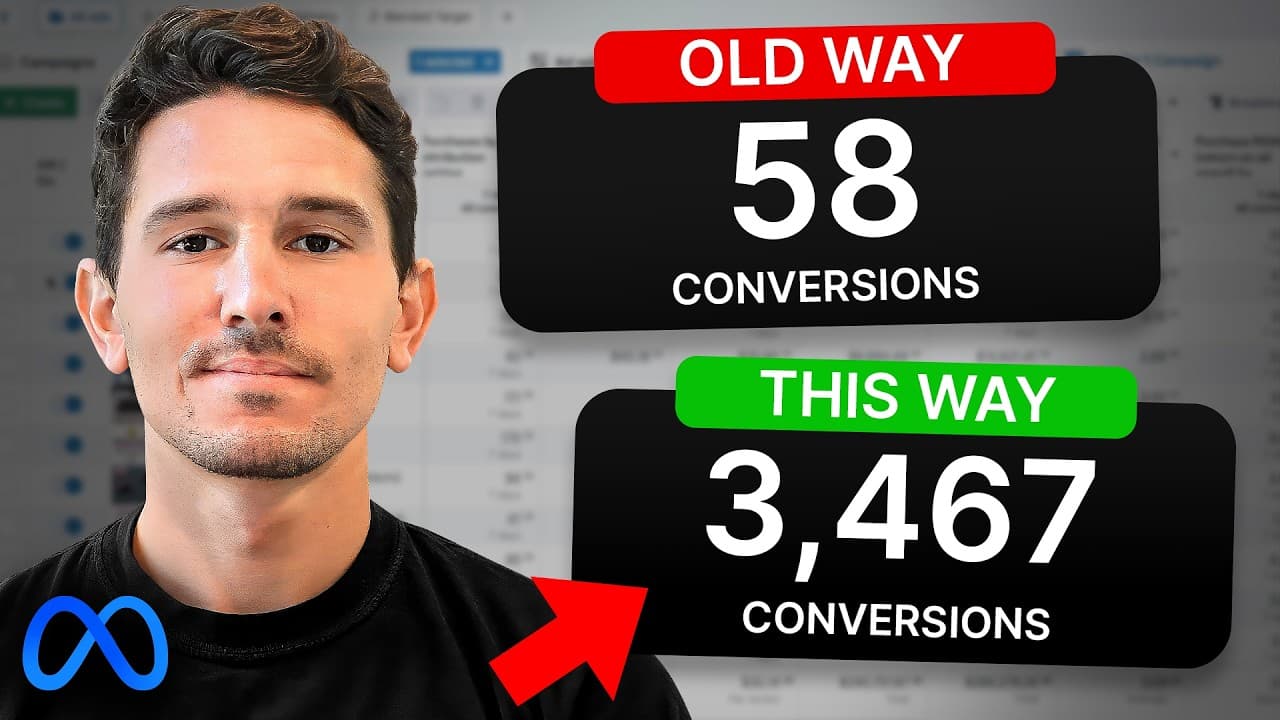
To improve Facebook ad performance, focus on strategic audience segmentation and optimal ad spend timing. Analyze past campaign data to identify high-performing days and adjust spending accordingly. Implement a structured system for scaling, testing, and retargeting to maximize return on ad spend and drive net new acquisition.
Transcript
Have you ever found yourself staring at Facebook Ads Manager thinking, "There has to be a better way to improve my return on ad spend." Most advertisers right now are setting up 100% broad audiences, and they likely have overly complex structures or overly simplified structures. They're not actually understanding how to segment their audiences to n... Read More
Key Insights
- Audience segmentation is crucial for effective Facebook advertising. Differentiate between new, engaged, and existing audiences.
- Broad audience targeting can lead to inefficiencies; a balanced approach using interest groups can enhance targeting precision.
- Analyzing past campaign data helps identify the best performing days, allowing for strategic ad spend allocation.
- A predictable system for scaling ads involves distinct categories: scale, test, retarget, and retain.
- Retargeting should focus on engaging users who have shown interest but haven't yet converted.
- Retention strategies should target existing customers with repeat purchase potential.
- Campaign budget optimization (CBO) is central to managing ad spend effectively across multiple creatives.
- Regularly updating and testing ad creatives is essential for maintaining high performance and avoiding ad fatigue.
Install to Summarize YouTube Videos and Get Transcripts
Explore YouTube Video Summarizer or Get YouTube Transcript Extractor
Questions & Answers
Q: How to improve Facebook ad ROI in 2025?
To enhance Facebook ad ROI in 2025, focus on detailed audience segmentation, distinguishing between new, engaged, and existing users. Use historical data to pinpoint high-performing days and strategically allocate ad spend. Implement a structured system for scaling, testing, and retargeting, ensuring continuous creative updates to maintain engagement and performance.
Q: What is the M3 method in Facebook advertising?
The M3 method in Facebook advertising involves three key components: picking the fastest horse, having a predictable system, and utilizing interest groups to inform broad targeting. This approach emphasizes strategic audience segmentation, optimal ad spend timing, and a structured framework for scaling and testing ads to maximize ROI.
Q: Why is audience segmentation important in Facebook ads?
Audience segmentation is crucial in Facebook ads as it allows advertisers to tailor their strategies to different user groups, such as new, engaged, and existing customers. This differentiation enables more precise targeting, efficient ad spend allocation, and ultimately better performance and higher return on investment.
Q: How can historical data improve Facebook ad performance?
Historical data can improve Facebook ad performance by revealing patterns in campaign success, such as high-performing days and audience segments. By analyzing this data, advertisers can strategically allocate ad spend to the most effective times and audiences, optimizing their campaigns for better results and higher ROI.
Q: What is the role of creative updates in Facebook advertising?
Creative updates play a vital role in Facebook advertising by preventing ad fatigue and maintaining audience engagement. Regularly refreshing ad creatives ensures that campaigns remain visually appealing and relevant, which helps sustain high performance and improves the chances of achieving desired advertising outcomes.
Q: How should ad spend be allocated across different audience segments?
Ad spend should be allocated based on the performance potential of each audience segment. Prioritize spending on new audiences for acquisition, while strategically investing in engaged and existing customer segments to maximize retention and conversion. Use data analysis to guide spend distribution for optimal ROI.
Q: What are the key components of a structured ad system?
A structured ad system includes distinct categories for scaling, testing, retargeting, and retention. This involves setting up campaigns to target new, engaged, and existing customers, regularly updating creatives, and using data-driven insights to adjust strategies and optimize ad spend for maximum performance.
Q: Why is balancing broad and interest-based targeting important?
Balancing broad and interest-based targeting is important because it allows advertisers to reach a wider audience while also targeting specific interest groups for more precise engagement. This dual approach helps inform broad campaigns with insights from interest-based targeting, improving overall ad performance and scalability.
Summary & Key Takeaways
-
To optimize Facebook ads, segment audiences into new, engaged, and existing groups, and tailor strategies accordingly. Analyze historical data to identify high-performing days and adjust spending to maximize ROI. Implement a structured system for scaling and testing ads to ensure effective budget utilization and audience engagement.
-
Effective Facebook advertising requires a balance between broad and interest-based targeting. Use past campaign data to allocate ad spend to the days with the highest performance. Ensure a structured approach to testing and scaling ads, focusing on creative updates and audience segmentation for better results.
-
Maximize Facebook ad performance by segmenting audiences and strategically allocating ad spend. Utilize a predictable system for scaling, testing, and retargeting, and regularly update ad creatives to maintain engagement. Analyze data to identify trends and optimize ad strategies for improved return on investment.
Read in Other Languages (beta)
Share This Summary 📚
Summarize YouTube Videos and Get Video Transcripts with 1-Click
Try YouTube Summary with ChatGPT & Claude or YouTube Transcript Generator
Explore More Summaries from Sam Piliero 📚
Summarize YouTube Videos and Get Video Transcripts with 1-Click
Try YouTube Summary with ChatGPT & Claude or YouTube Transcript Generator