How Do Meta's New Ad Optimization Updates Work?
TL;DR
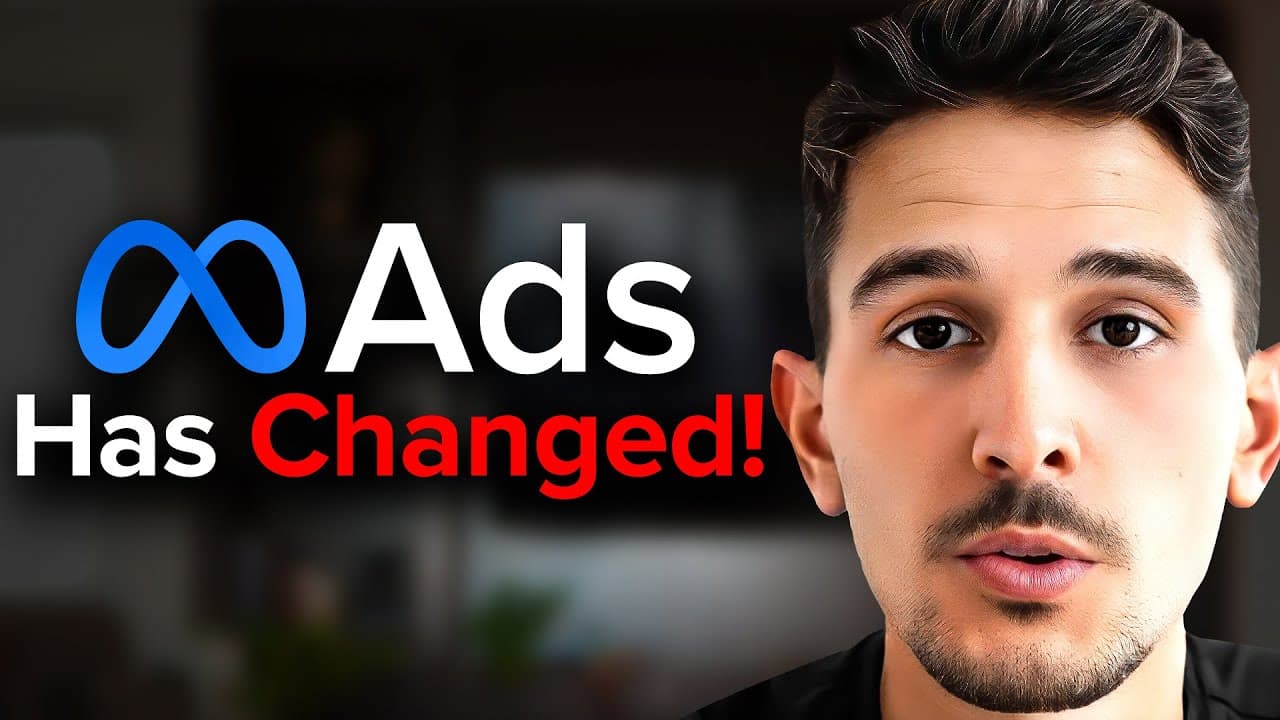
Meta plans to let advertisers optimize campaigns around business-defined value, including profit, predicted lifetime value, and incremental conversions. Conversion value rules, new attribution settings, and direct analytics integrations could improve campaign decisions, but advertisers should validate results before adopting them because Meta's reported 20% incremental-conversion improvement came from only 45 advertisers.
Transcript
Facebook has released one of the biggest campaign optimization updates perhaps since iOS 14.5 the changes that they released today are some of the biggest changes we've seen on the platform in literally years so in today's video I'm going to do two things first I'm going to lay out the entire white paper we're going to read through the most importa... Read More
Key Insights
- Meta's optimization roadmap is organized around three areas: defining the conversions businesses value most, supporting new attribution models, and creating more powerful analytics integrations. Together, these changes are intended to align campaign delivery more closely with advertisers' actual business priorities.
- Value-based optimization is already useful for brands selling products with different values. The maximize value of conversions performance goal helps campaigns pursue more valuable customers, although selecting it prevents the presenter from choosing a view-through attribution setting that the agency values.
- Conversion value rules are planned to let businesses express which audiences or conversions are worth more or less. Meta could then use those assigned values when optimizing delivery, allowing advertisers to provide business knowledge beyond the behavioral information collected through the pixel.
- Multiple actions could potentially receive distinct values within one campaign. An ecommerce advertiser might value an email signup at $1 while valuing a purchase according to its purchase amount, helping Meta identify separate groups likely to complete each action without requiring different objective campaigns.
- Incremental conversion optimization is designed to prioritize conversions that Meta believes would not have occurred without the advertisement. This differs from volume optimization, which seeks as many total attributed conversions as possible, including outcomes that might have happened without ad exposure.
- Meta's incremental conversion experiment reported an average improvement above 20%. The test covered 45 advertisers across 11 verticals in North America and EMEA between January 2024 and June 2024, and Meta explicitly stated that the results illustrate possible performance rather than guaranteed performance.
- Small platform experiments should not be treated as universal proof. The presenter argues that 45 advertisers cannot represent the entire industry and notes that previously advertised performance gains for creative enhancements declined as those features reached more advertisers.
- Direct analytics integrations are planned to connect external measurement with Meta's ad systems through a simple API setup. Google Analytics and Northbeam are identified as the starting integrations, while Triple Whale and Adobe are named as platforms Meta hopes to support afterward.
Install to Summarize YouTube Videos and Get Transcripts
Explore YouTube Video Summarizer or Get YouTube Transcript Extractor
Questions & Answers
Q: What are Meta's three main campaign optimization updates?
Meta divides its campaign optimization roadmap into three parts: defining the conversions that businesses value most, supporting new attribution models, and providing more powerful analytics integration. The planned changes are intended to help advertisers communicate business priorities such as profit and predicted lifetime value, measure incremental outcomes, and connect external analytics information directly with Meta's advertising systems.
Q: How could conversion value rules improve Meta ad campaigns?
Conversion value rules could let an advertiser specify that certain audiences or conversion actions are worth more or less than others. Meta would then use those business-defined values to optimize campaign delivery. This could improve decisions because the algorithm would receive explicit information about commercial importance instead of relying only on conversion counts and behavioral signals collected through the pixel.
Q: How could one Meta campaign optimize for email signups and purchases?
An ecommerce business could assign separate values to an email signup and a purchase within the same campaign. The example gives an email signup a value of $1 while allowing the purchase to retain its purchase value. Meta could identify people likely to complete each action and allocate delivery according to their expected value, potentially reducing the need for separate objective campaigns.
Q: What is incremental conversion optimization in Meta Ads?
Incremental conversion optimization focuses delivery on conversions that Meta believes would not have happened unless the advertisement was shown. It contrasts with volume optimization, which aims to generate as many attributed conversions as possible. The setting is planned as an opt-in option, so advertisers could choose whether to optimize specifically for causal impact rather than total reported conversion volume.
Q: What results did Meta report for incremental conversion optimization?
Meta reported an average improvement of more than 20% in incremental conversions during an experiment conducted between January 2024 and June 2024. The comparison involved 45 advertisers across 11 verticals in North America and EMEA and used conversion lift studies from the first half of the year. Meta also cautioned that the findings represented possible performance and were not guaranteed.
Q: Why should advertisers be cautious about Meta's reported improvement?
The presenter considers a test involving 45 advertisers too small to represent an industry containing many active advertisers and varied campaign conditions. Earlier platform claims also weakened as features reached broader audiences. One cited creative enhancement claim moved from a 16% lower cost per result to 3%, suggesting that initial test participants may have produced unusually strong outcomes.
Q: Which external analytics tools does Meta plan to integrate?
Meta plans to let businesses connect analytics tools directly to its advertising systems through a simple API setup. The announced starting integrations are Google Analytics and Northbeam. Meta also expressed hope of expanding support to Triple Whale and Adobe. These connections are intended to help Meta understand how businesses judge performance across platforms and their broader marketing mix.
Q: What should advertisers do before adopting the new Meta features?
Advertisers should evaluate each feature with their own campaign data instead of assuming that Meta's early averages will apply to every account. They can compare click, view, engaged-view, and third-party attribution reporting, select conversion counting that matches their business, and test new optimization settings carefully. The presenter specifically advises against becoming an early testing subject without evidence that a feature works.
Summary & Key Takeaways
-
Meta's optimization roadmap focuses on helping advertisers define the outcomes they value most. Planned options include profit and predicted lifetime value, while conversion value rules could assign different importance to audiences and actions. This would give the delivery algorithm richer business information than it currently receives from pixel activity alone.
-
An opt-in attribution setting is planned to optimize for incremental conversions, meaning conversions Meta believes would not have happened without an ad. Meta reported an average improvement above 20% in an experiment involving 45 advertisers across 11 verticals, but the presenter argues that this sample is too limited for broad conclusions.
-
Meta also plans to connect external analytics tools directly with its advertising systems through an API setup. Google Analytics and Northbeam are named as initial integrations, with Triple Whale and Adobe mentioned as hoped-for additions. Advertisers should use these capabilities cautiously, compare attribution views, and adopt features only after testing their own results.
Read in Other Languages (beta)
Share This Summary 📚
Summarize YouTube Videos and Get Video Transcripts with 1-Click
Try YouTube Summary with ChatGPT & Claude or YouTube Transcript Generator
Explore More Summaries from Sam Piliero 📚





Summarize YouTube Videos and Get Video Transcripts with 1-Click
Try YouTube Summary with ChatGPT & Claude or YouTube Transcript Generator