How Should You Adapt Facebook Ads After Andromeda in 2026?
TL;DR
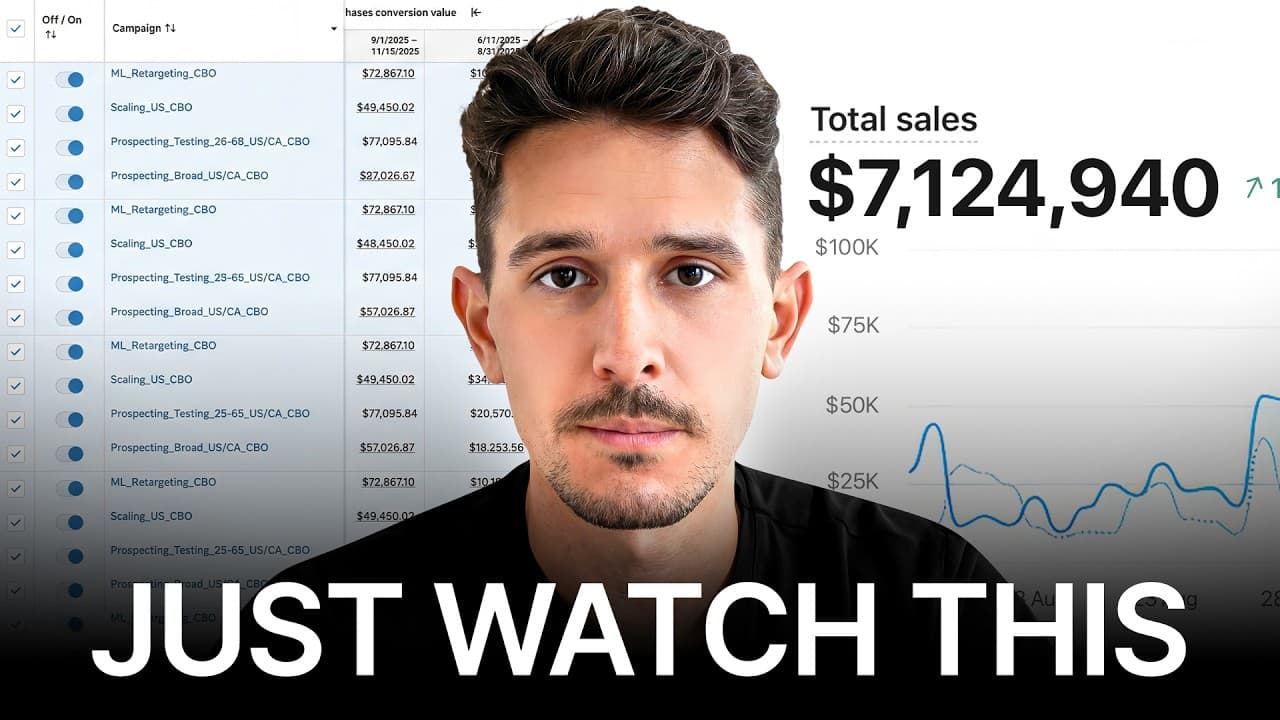
Adapt Facebook ads after Andromeda by building each concept from a customer avatar and creative template, then letting profitable concepts serve distinct or partially overlapping audiences. The approach uses concept-based packs, seven-day minimum budgets, and 7–14 days of observation before incremental attribution analysis. Because efficiency and spending capacity differ, a 7x concept may spend $100 daily while a 2x concept may spend $1,500, read on to learn how to preserve profitable scale.
Transcript
This is how Facebook ads used to work and this is how it works now. And this is one of the most successful brands actually executing it the way it needs to be done. Here's another brand doing it exactly right. So in this video, I'm going to show you what changed in Facebook and how you need to adapt your entire approach in 2026. First off, let's st... Read More
Key Insights
- The Andromeda updates changed Facebook advertising by shifting the focus from manually selected audiences to creative concepts that the platform matches with audiences. The transcript places this change at the end of July 2025 and bases the recommended strategy on roughly six months of observed data.
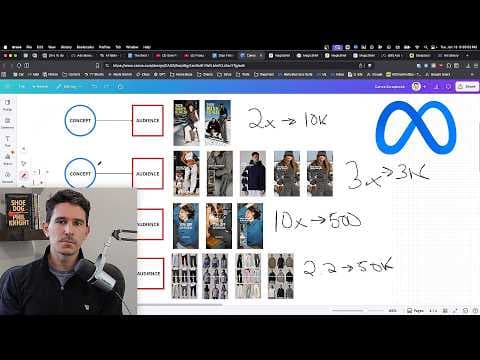
- A Facebook ad concept is the combination of a customer avatar and a creative template. Changing either component can form another concept, such as pairing one avatar with black, green, or orange templates to reach different or partially overlapping audience groups.
- Efficiency and scale are separate dimensions of ad performance. Return on ad spend or cost per acquisition measures efficiency, while spend, revenue, and eventually profit measure scale, so the highest-return concept is not automatically the largest total business opportunity.
- Each profitable concept can have a different natural spending limit. The example assigns $100 daily capacity to a 7x concept, $300 to a 4x concept, $500 to a 3x concept, and $1,500 to a 2x concept, showing why several concepts can contribute incrementally.
- Cutting every ad except the highest-return winner can reduce overall scale. Lower-return ads may create top-of-funnel demand that supports the strongest performer, which explains why account-level return can improve briefly after cuts and then decline several days later.
- Seven-day ad set minimum budgets provide new ads with enough initial spending to reveal their potential. After seven days, the minimum is paused, allowing successful ads to scale naturally toward a plateau while unsuccessful ads decline without continued forced support.
- The creative flywheel runs through repeated launch, observation, analysis, and development. New ads receive approximately 7–14 days before incremental attribution analysis, after which winning ideas produce new concepts and competitor advertisements supply additional creative inputs worth testing.
- High-quality creative helps the pixel optimize toward better purchasers. Concepts aimed at appropriate avatars can generate customers with higher average order value, higher lifetime value, fewer returns, and stronger repeat behavior, while poor targeting can train optimization toward low-quality, one-time purchasers.
Install to Summarize YouTube Videos and Get Transcripts
Explore YouTube Video Summarizer or Get YouTube Transcript Extractor
Questions & Answers
Q: How should advertisers adapt Facebook ads after Andromeda in 2026?
Advertisers should move away from selecting audiences first and creating ads for them. Instead, they should build concept-based packs grouped by avatar and concept, use seven-day minimum budgets for initial delivery, and let Facebook match those concepts to audiences. After approximately 7–14 days, they can analyze incremental performance and develop more variations of the winning concepts.
Q: How did the Andromeda updates change Facebook advertising?
The Andromeda updates arrived at the end of July 2025 and shifted the focus from manual audience selection to concepts that Facebook matches with audiences. The recommended strategy is based on around six months of data following that change. Interest groups and lookalikes are therefore no longer the starting point described for building ads.
Q: What is a Facebook ad concept after Andromeda?
A concept combines a customer avatar with a creative template rather than merely introducing a different-looking ad. Pairing one avatar with black, green, and orange templates creates separate concepts that may reach unique or partially overlapping audiences. Advertisers can identify their concepts by arranging screenshots of existing ads on a board and grouping similar avatars and templates.
Q: Why should profitable lower-ROAS Facebook ads remain active?
Lower-return concepts may provide profitable incremental scale and build the top of the funnel that supports more efficient ads. The example gives a 7x concept a capacity of $100 per day and a 2x concept a potential capacity of $1,500 per day. If the 2x concept remains above the business’s efficiency target, cutting it can sacrifice scale and eventually weaken overall return.
Q: How should advertisers balance efficiency and scale?
Efficiency and scale should be evaluated separately because they describe different aspects of performance. Return on ad spend and cost per acquisition measure efficiency, while spend, revenue, and eventually profit measure scale. The goal is to stack profitable concepts at their natural spending capacities instead of directing the entire budget to the highest-return concept.
Q: How do seven-day ad set minimum budgets work?
A seven-day minimum budget gives newly launched ads enough initial delivery to reveal their potential. After seven days, the minimum is paused so successful ads can scale naturally toward a plateau while unsuccessful ads decline. This may involve some initial wasted spending, but it prevents potentially useful ads from receiving too little delivery to evaluate.
Q: Why can cutting lower-performing Facebook ads hurt account results?
Cutting ads can make return on ad spend look better for two or three days before it declines. The transcript attributes this pattern to lower-return ads building top-of-funnel demand that helps the 7x ad function. Removing every concept except the most efficient one can therefore crush scale even when the remaining ad initially appears stronger.
Q: How should advertisers build a Facebook ad creative flywheel?
The flywheel begins by launching new ads and observing them for approximately 7–14 days. Advertisers then use incremental attribution to identify winners and create further concepts and iterations from what performed. Useful ideas from competitor advertisements can also become inputs for the next testing cycle.
Summary & Key Takeaways
-
Facebook advertising shifted after the Andromeda updates at the end of July 2025. Instead of selecting audiences first and making ads for them, advertisers should create concepts that Facebook can match with audiences. Each concept combines a customer avatar with a creative template, producing distinct or partially overlapping audience opportunities.
-
Concepts have different combinations of efficiency and spending capacity. A concept producing a 7x return might spend only $100 daily, while a 2x concept could potentially spend $1,500. Cutting every lower-return concept can destroy scale and weaken the top-of-funnel activity that helps the most efficient ads continue performing.
-
The recommended operating system combines concept-based packs, seven-day ad set minimum budgets, and a creative flywheel. Advertisers launch ads, wait 7–14 days, analyze incremental performance, expand winning concepts through varied iterations, and incorporate useful competitor ideas. High-quality creative also helps train the pixel toward customers with stronger business value.
Read in Other Languages (beta)
Share This Summary 📚
Summarize YouTube Videos and Get Video Transcripts with 1-Click
Try YouTube Summary with ChatGPT & Claude or YouTube Transcript Generator
Explore More Summaries from Sam Piliero 📚


Summarize YouTube Videos and Get Video Transcripts with 1-Click
Try YouTube Summary with ChatGPT & Claude or YouTube Transcript Generator