How to Scale Facebook Ads With Creative Avatars
TL;DR
Scale Facebook ads by creating distinct concepts for specific customer avatars, then producing many iterations of the concepts that meet your required efficiency target. Meta's Andromeda algorithm increasingly uses an ad's people, problems, language, and creative context to match it with viewers, so broad creative variety and hyper-specific messaging matter more than relying primarily on interest-based targeting.
Transcript
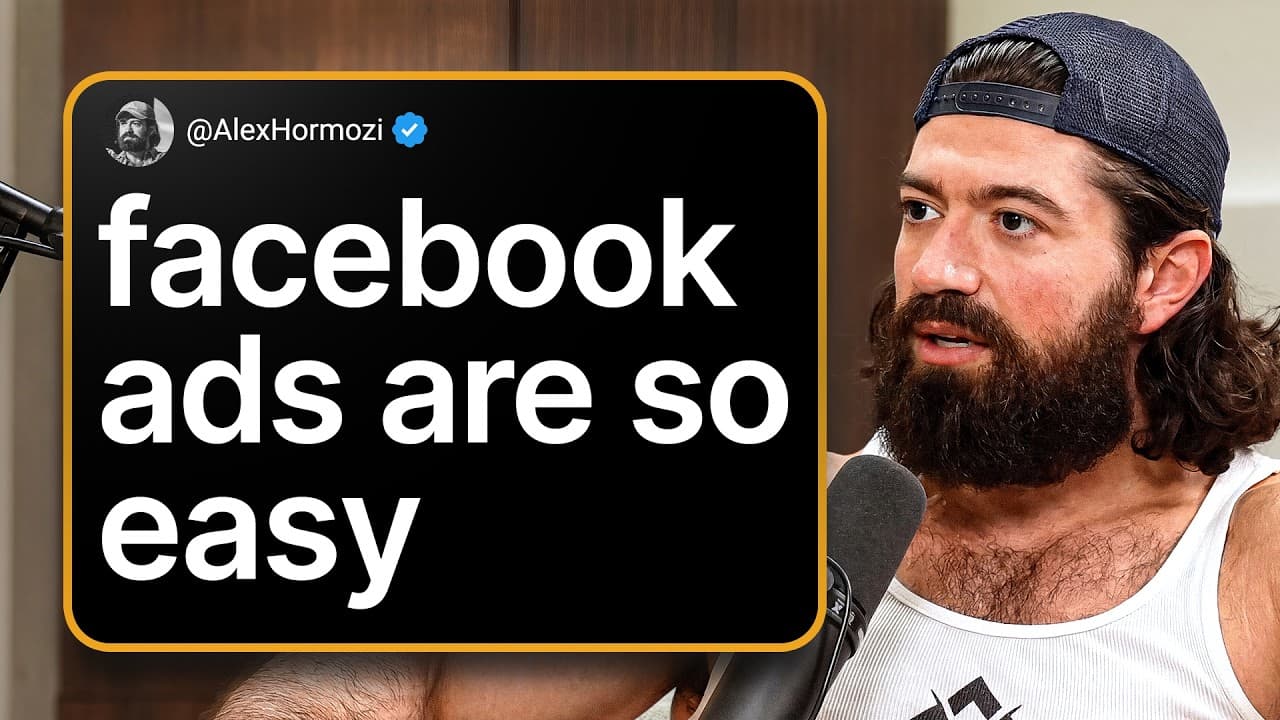
Alex Hormozi runs a portfolio of companies that drives over $200 million per year. And whether you agree with everything the guy says or not, his Facebook ad strategy is something that should be studied. Because the principles that he teaches and executes behind the scenes are the same ones that you should be applying to your Facebook ad strategy i... Read More
Key Insights
- Meta's Andromeda system is described as a recommendation algorithm that matches niche-specific ads with relevant people by interpreting their content. The individuals shown, problems discussed, language used, and surrounding context can therefore function as signals that help determine which viewers receive an ad.
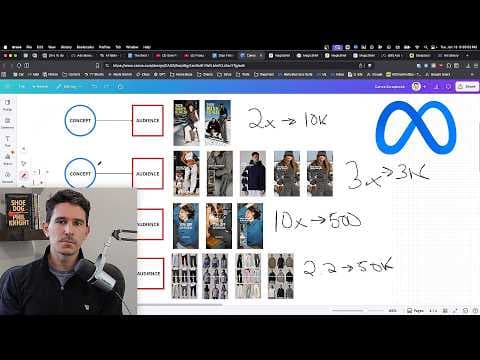
- An effective ad concept is the combination of a customer avatar and a creative template or angle. Each avatar has a particular problem, the advertised product provides a proposed solution, and the product mechanism explains why that solution should work for the person being addressed.
- Creative targeting is increasingly important because the message itself helps identify the intended prospect. Showing and explicitly discussing plumbers, older people, women, men, or other defined groups makes the ad more specific, reducing the need to depend as heavily on traditional interest-based audience targeting.
- The recommended creative process starts horizontally and then moves vertically. Advertisers first test multiple avatars, problems, and angles to discover promising opportunities, then produce many deeper iterations around each winner instead of merely changing a headline while leaving the underlying creative idea untouched.
- Different advertising angles can support different combinations of spending capacity and return on ad spend. A small angle may deliver a higher return but have limited scale, while another can absorb substantially more daily spending at a lower return that still meets the business's efficiency requirement.
- Profitable concepts should remain active when their collective performance stays above the business's required efficiency metric. The strategy treats avatars and angles as separate opportunities, allowing advertisers to stack multiple acceptable concepts instead of directing the entire budget toward the single ad with the highest reported return.
- Organic content provides a source of semi-proven advertising ideas because platform engagement reveals which pieces audiences find interesting. Hormozi's described process takes successful organic content, adds a simple action-oriented banner, runs it as an ad, analyzes paid results, and develops additional winners from the findings.
- Controlled testing is necessary when introducing many creatives into an ad account. Minimum and maximum spending controls can give each ad adequate testing spend while preventing viral organic material from consuming excessive paid budget when it fails to produce the return required by the business.
- More videos from this channel:
- More from this channel: Sam Piliero
Install to Summarize YouTube Videos and Get Transcripts
Explore YouTube Video Summarizer or Get YouTube Transcript Extractor
Questions & Answers
Q: How does Meta's Andromeda algorithm affect Facebook ad targeting?
Meta's Andromeda algorithm is presented as a recommendation system that curates feed content for specific people. It interprets an ad's subject, people, language, imagery, and problem to identify a likely audience. Advertisers should therefore create ads that visibly and verbally match a defined customer avatar instead of depending primarily on manually selected interest-based targeting.
Q: How should advertisers define a Facebook ad concept?
A Facebook ad concept should combine a clearly defined customer avatar with a template or marketing angle. The advertiser identifies the avatar's problem, explains the product's mechanism, and presents the product as the solution. Specific language, people, settings, and proof should reinforce that match so the algorithm can connect the concept with relevant viewers.
Q: How can a brand target different customer avatars with one product?
A brand can connect the same product to different customer avatars by building separate concepts around distinct problems and desired outcomes. The transcript gives an example of one product advertised through a digestion angle and a separate healthy-hair angle. Each concept needs its own messaging and creative execution, even though the underlying product remains unchanged.
Q: What is the horizontal and vertical approach to Facebook ad creative?
The horizontal stage tests different avatars, problems, angles, and concepts to identify which directions produce useful results. The vertical stage goes deeper into a successful direction by creating numerous meaningful iterations. Those versions can change the person shown, proof, format, tone, or presentation while retaining the core element believed to make the original concept effective.
Q: When should a Facebook ad angle remain active?
An angle should remain active when its combined performance stays above the efficiency threshold required by the business. The transcript uses a required return on ad spend as an example. An angle with a lower return than another may still deserve budget if it can absorb more spending, remain efficient, and add incremental scale without replacing other profitable avatars.
Q: Why should advertisers run many niche-specific ad variations?
Many niche-specific variations allow the account to reach distinct avatars and smaller audience segments with messages tailored to their circumstances. The strategy argues that modern targeting can reduce cost per result, but advertisers may exhaust individual creatives more quickly. Producing more variations creates additional opportunities to find scalable concepts and maintain efficiency while increasing overall spending.
Q: How can organic content be converted into Facebook ads?
Advertisers can monitor organic publishing to identify posts that audiences already find interesting, then place those winners into the paid account. Hormozi describes adding a simple overlay or banner that asks viewers to take an action. The paid results must still be measured because strong organic engagement does not guarantee that the content will deliver the business's required return.
Q: How should spending be controlled when testing organic winners as ads?
Advertisers should use minimum and maximum spending controls so each creative receives enough budget for a meaningful test without allowing one piece to dominate prematurely. This is especially important for content that performed well organically, since virality can attract spending without producing the required paid return. Continued allocation should depend on advertising efficiency, not organic popularity alone.
Summary & Key Takeaways
-
The strategy begins by defining each customer avatar, the problem that person wants solved, and the mechanism explaining why the product works. Advertisers then combine an avatar with a creative template or angle to form a concept whose imagery, language, and context help Meta identify the most relevant audience.
-
Creative development should move horizontally across many avatars and angles before going vertically into numerous iterations of proven concepts. Iteration means preserving the meaningful elements behind an ad's success while varying formats, people, proof, tone, or execution. Scaling therefore requires substantially more niche-specific creative than maintaining a stable account does.
-
Organic content can strengthen the advertising flywheel because audience response identifies potentially compelling material before paid testing. Strong organic posts can be converted into ads with a direct call-to-action overlay, tested alongside ideas derived from competitors and existing winners, and expanded when results satisfy the business's required return efficiency metric.
Read in Other Languages (beta)
Share This Summary 📚
Summarize YouTube Videos and Get Video Transcripts with 1-Click
Try YouTube Summary with ChatGPT & Claude or YouTube Transcript Generator
Explore More Summaries from Sam Piliero 📚



Summarize YouTube Videos and Get Video Transcripts with 1-Click
Try YouTube Summary with ChatGPT & Claude or YouTube Transcript Generator