How to run Facebook Ads in 2025 effectively
TL;DR
Advantage Plus campaigns are reworked to include both campaign and adset budgets, and budgets are no longer limited by existing customer caps. You can add exclusions to broad audiences and choose between suggested or traditional audiences. The setup changes require adapting to the new hybrid audience and placement options while leveraging expanded inventory for reach.
Transcript
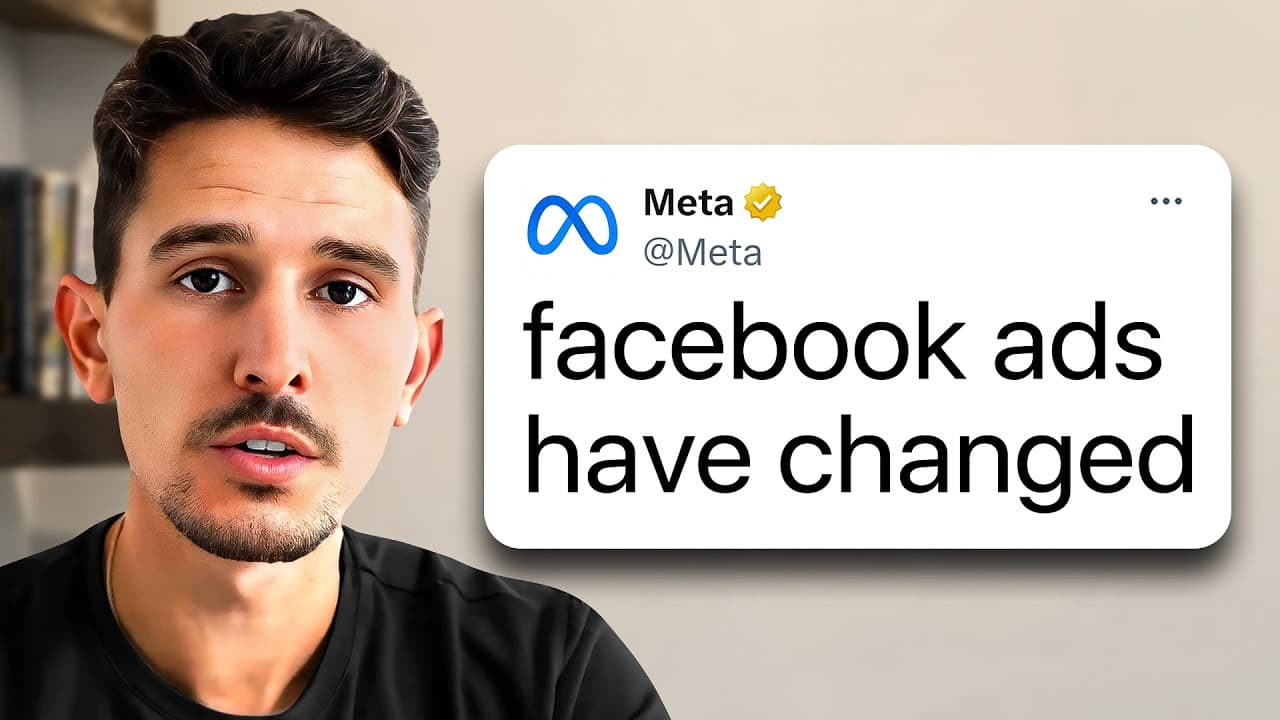
meta has made some massive changes to Facebook ads in just the last 30 days and they are going to be rolling out these changes across all accounts over the next 3 months these changes are so big that they fundamentally change the way that we're going to be setting up our campaigns organizing our accounts and ultimately scaling businesses if over th... Read More
Key Insights
- Advantage Plus is now defined by campaign setup choices rather than a fixed toggle, integrating campaign and adset budgets as part of the new structure.
- Campaign level budget changes remove fixed existing customer budget caps and allow more flexible allocation across adsets within the same campaign.
- The audience section introduces exclusions to Advantage Plus, enabling removal of specific audiences from broad targeting to refine reach and control waste.
- Suggest an audience option lets you seed demographics and interests which then expands, but it can diverge from traditional targeting if not managed carefully.
- The traditional audience builder is available as a switch from suggestions, returning to core targeting where selections directly shape who is reached.
- Placements are now editable within Advantage Plus, including devices and brand safety filters, expanding beyond automatic all placements.
- Expanded inventory is enabled by default, potentially increasing reach but requiring attention to content quality and alignment with brand safety.
- The budgeting and targeting changes are substantial and require revisiting past workflows, graduation logic, and scaling strategies to avoid misalignment with Meta's new rules.
- More videos from this channel:
- More from this channel: Sam Piliero
Install to Summarize YouTube Videos and Get Transcripts
Explore YouTube Video Summarizer or Get YouTube Transcript Extractor
Questions & Answers
Q: A real search query question about the video (e.g. 'How to...', 'What is...'). Question 1
How does the new Advantage Plus structure affect budgeting and scaling in 2025, and what should advertisers do first when setting up a campaign? The new system removes the old one size fits all Advantage Plus approach and instead ties Advantage Plus eligibility to campaign setup choices. Advertisers should decide between campaign budget and adset budget early, assess how many adsets will be used in the campaign, and prepare to adjust budgets at both levels. This shift means testing different configurations to find which setup yields efficient spend and scalable results.
Q: Question 2
What is the significance of being able to apply exclusions in Advantage Plus campaigns, and how does it change optimization? Exclusions allow marketers to remove specific audiences from a broad pool, enabling more precise control over who is seen by the ads. This can turn a broad, prospecting oriented campaign into a more focused effort by excluding retargeting or other segments. The capability to exclude audiences helps reduce wasted impressions and costs, and it supports a more intentional approach to scaling with improved cost efficiency.
Q: Question 3
What is the difference between suggested audiences and the traditional audience builder in the new setup, and why does it matter? Suggested audiences provide seed demographics and interests that Facebook expands from, potentially widening reach but risking drift from core targets. The traditional audience builder uses precise selections that directly shape who is targeted. The choice affects optimization because seed based expansion can pull in users beyond the intended niche, whereas precise targeting keeps the focus tight.
Q: Question 4
How do placements and inventory filters change under the new framework, and what should advertisers consider? Advertisers can now edit placements, devices, and platforms within Advantage Plus and can use expanded inventory filters. This expands reach but requires brand safety awareness and content alignment. Advertisers should test placements to understand where their creative performs best while ensuring they meet brand safety standards and avoid mismatched contexts.
Q: Question 5
Why is the removal of existing customer budget caps considered a potential win, and what should brands monitor after this change? Removing existing customer budget caps allows for more flexible spending across audiences, enabling experimentation and scale without hard caps. Brands should monitor spend balance between new customer acquisition and existing customer reengagement, ensuring that budget allocation still supports both growth and retention goals.
Q: Question 6
What practical steps should an advertiser take when transitioning to the new Advantage Plus setup to avoid mistakes? Start by deciding campaign level budget strategy, determine how many adsets will be used, and enable audience exclusions to refine reach. Next, choose between suggested audiences and traditional targeting, then experiment with placements and expanded inventory while watching for cost per result and ROAS. Document changes and compare performance to baseline metrics.
Q: Question 7
How does the hybrid audience approach impact scaling strategies in 2025, and what should marketers test first? The hybrid approach blends broad audience reach with targeted exclusions and seed suggestions. For scaling, marketers should test different degrees of audience exclusion, compare performance with and without suggested audiences, and track how changes in budget allocation between campaign and adset levels affect efficiency and growth.
Q: Question 8
What role do brand safety and inventory quality play in the new Advantage Plus system, and how should campaigns be monitored? With expanded inventory, brand safety becomes more critical as ads can appear in more contexts. Advertisers should establish clear safety filters, review placements regularly, and set up performance monitoring to detect context misalignment early. Continuous optimization based on contextual performance will help maintain quality while expanding reach.
Summary & Key Takeaways
-
The video explains that Advantage Plus is no longer a single adset campaign and that campaigns can use both campaign and adset budgets. It highlights the shift away from traditional Advantage Plus prompts to a new setup where the feature is determined by how you configure the campaign.
-
A key change is the ability to add exclusions to an Advantage Plus setup, allowing you to exclude existing or retargeting audiences. The video also discusses the distinction between suggested audiences and the traditional audience builder, as well as the impact on optimization and reach.
-
The speaker covers placements and inventory filters, noting that expanded inventory is now available and that you can adjust devices, platforms, and safety filters. The overall message is to rethink budgeting, audience targeting, and inventory in the new framework.
Read in Other Languages (beta)
Share This Summary 📚
Summarize YouTube Videos and Get Video Transcripts with 1-Click
Try YouTube Summary with ChatGPT & Claude or YouTube Transcript Generator
Explore More Summaries from Sam Piliero 📚


Summarize YouTube Videos and Get Video Transcripts with 1-Click
Try YouTube Summary with ChatGPT & Claude or YouTube Transcript Generator