How to boost Facebook ROAS with the fastest horse approach
TL;DR
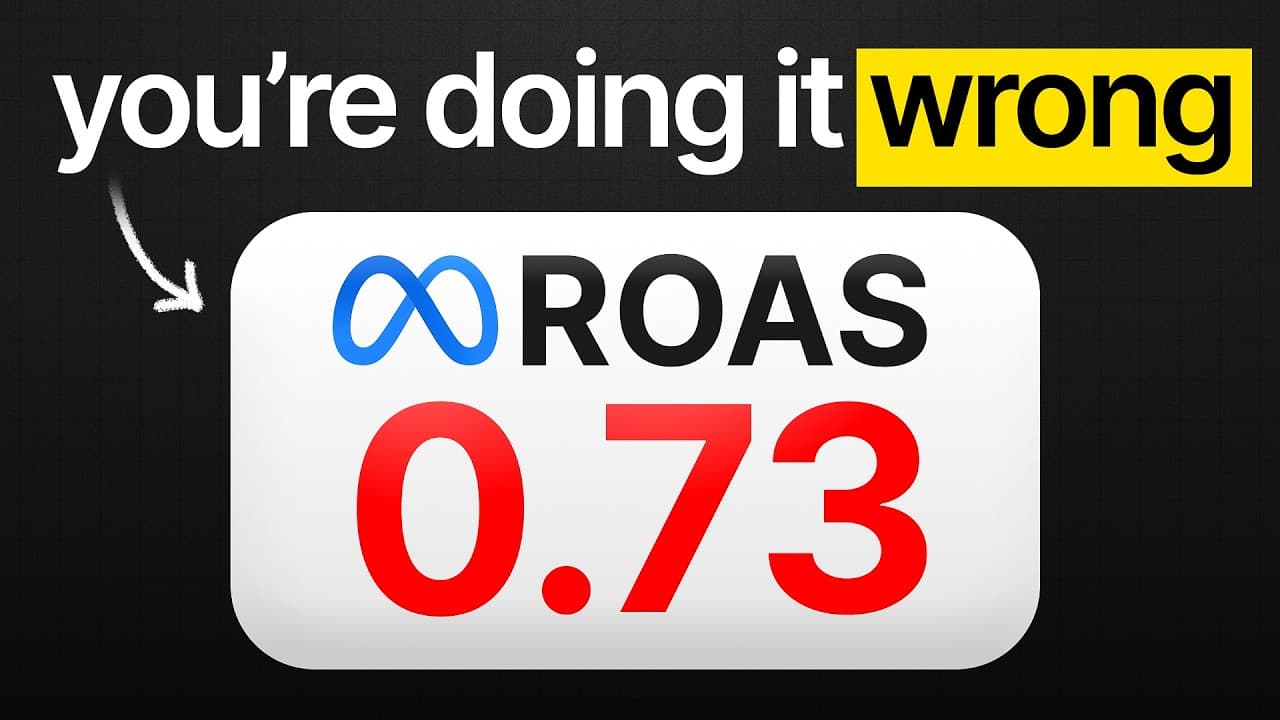
The key is to bet only on the fastest performing segments. Start by breaking down campaigns by age, gender, and placement to identify underperforming groups, then isolate the best audiences into dedicated ad sets. Maintain a steady creative rotation and structured campaigns to let the algorithm learn and scale efficiently.
Transcript
If you're running Facebook ads and you're barely breaking even, here are some things you can do to fix that. In this video, I'll be breaking down four proven and tested methods that you can use to improve your rorowaz immediately. The very first thing that we're going to be focusing on is called betting on the fastest horse. The concept here is ver... Read More
Key Insights
- Analytics-driven betting on the fastest horse guides ad spend toward the best performing audiences
- Age breakdowns reveal overspent segments such as 65 plus with low ROAS and should be isolated
- Gender and placement data help confirm where spend should be concentrated for a beauty product
- Create new ad sets to exclude certain age thresholds and test changes without full removal
- A scaling campaign should only rise once top ads prove consistently strong
- Prospecting CBO is the central backbone through which most ads funnel, followed by retargeting
- Retention campaigns should balance value with spend to avoid wasted impressions
- Creative rotation is essential, with multiple packs and broad placement coverage to find winning formats
- More videos from this channel:
- More from this channel: Sam Piliero
Install to Summarize YouTube Videos and Get Transcripts
Explore YouTube Video Summarizer or Get YouTube Transcript Extractor
Questions & Answers
Q: A real search query question about the video (e.g. 'How to...', 'What is...'). Question 1
How can I identify the fastest horse in my Facebook Ad account and use it to improve ROAS? The method starts with breaking down performance by age, gender, and placement to spot where spend is wasted. Then you create new ad sets that exclude underperforming segments, such as the 65 plus group, while keeping the rest of the audience intact. This isolating of variables lets you test changes without disrupting the entire account, and helps you focus budget on the highest returning groups.
Q: Question 2
What role does the age breakdown play in optimizing ad spend and ROAS? Age breakdown shows which age groups drive more revenue relative to spend. If an age group like 65 plus underperforms, you create a new ad set that excludes that group to see if results improve. This approach prevents irrational decisions based on small percentage swings and directs budget toward faster horses.
Q: Question 3
How should I structure campaigns after identifying the fastest horse? Start with a scaling campaign for top performers, a prospecting CBO as the central hub, a retargeting campaign to recapture interest, and a retention campaign to keep customers returning. Each piece should be aligned with the insights from audience breakdowns to maintain efficient learning and growth.
Q: Question 4
Why is a prospecting CBO considered the most important campaign in the account? It acts as the core funnel that drives initial reach and learning for broad audiences, with additional ad sets and interests. By routing most activity through this central campaign, you ensure broad exploration while maintaining control via exclusions and deliberate testing.
Q: Question 5
How can I use creative testing efficiently without wasting budget? Use multiple packs of creative, with some packs receiving less spend and others driving most of the purchases. If a creative shows high engagement, push it into more spend. Maintain a steady rotation across images and videos and ensure all placements are tested to capture different audience preferences.
Q: Question 6
What is the purpose of the retention campaign and how should it be balanced? Retention campaigns aim to keep existing customers returning while avoiding overexposure. The goal is high ROAS without overspending on people who may not convert again. It requires careful pacing and relevant offers to maintain value for customers.
Q: Question 7
What is the recommended approach to testing and risk when changing age or placement? Do not rely on a single metric swing to justify a big change. Create a new ad set to test the adjusted audience, keep the original as a control, and monitor performance over time. This careful testing prevents misinterpretation of short-term fluctuations and protects overall ROI.
Q: Question 8
What does the video say about a larger program launch and how to access it? The creator mentions a full comprehensive program and provides links to join a wait list for early access. The launch promises detailed systems, strategies, and trainings, with a limited window for enrollment. Interested viewers are encouraged to follow the description links to learn more and secure priority access.
Summary & Key Takeaways
-
A structured method is used to improve ROAS by isolating high performing audience segments and removing low value ones, then organizing campaigns into scale, prospecting, retargeting, and retention. The approach emphasizes data breakdown and cautious spending to protect ROI.
-
Creative rotation and multiple ad packs help discover which creatives perform best, while not overreacting to small 5 percent swings in ROAS. The strategy relies on isolating variables and testing younger audiences before scaling.
-
The program promotes a comprehensive system with reports, a swim lane structure, and a free flowchart, plus an invitation to join a launch wait list for a larger training product. It stresses testing, incremental improvements, and disciplined budgeting.
Read in Other Languages (beta)
Share This Summary 📚
Summarize YouTube Videos and Get Video Transcripts with 1-Click
Try YouTube Summary with ChatGPT & Claude or YouTube Transcript Generator
Explore More Summaries from Sam Piliero 📚




Summarize YouTube Videos and Get Video Transcripts with 1-Click
Try YouTube Summary with ChatGPT & Claude or YouTube Transcript Generator