How to use the three-act ad structure for higher ROAS
TL;DR
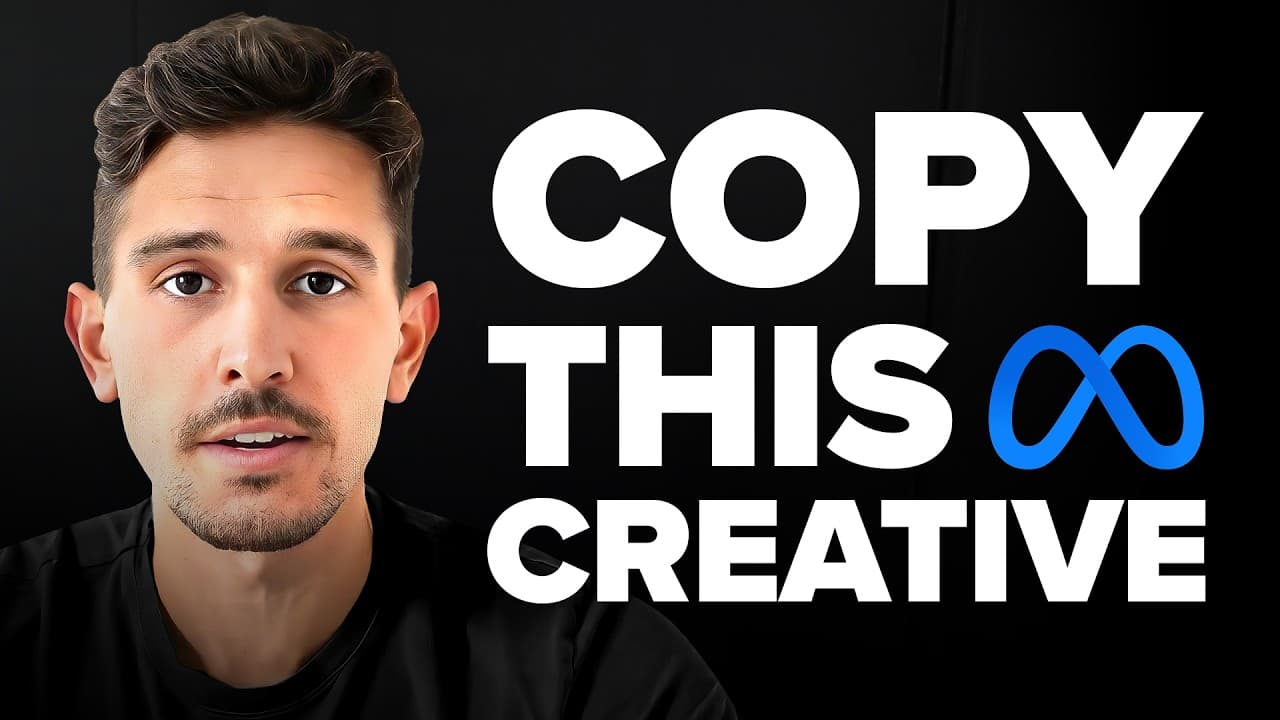
The video teaches using a three-act structure as the backbone of advertising to boost performance. It emphasizes a fast micro hook, a strong hook, a lead-in, the body, and a payoff, followed by a clear call to action. It also covers creating multiple hooks and iterations to scale ads efficiently.
Transcript
There is a new creative approach that is absolutely dominating right now. And I know this because my agency is managing nearly 100 ad accounts right now. And this creative approach is outperforming everything. This creative approach is the path right now to decreasing your CAC, increasing your return on ad spent, and most importantly scaling as you... Read More
Key Insights
- The ad framework is built on the three-act structure consisting of setup, confrontation, and payoff, adapted to short-form advertising to maintain audience engagement.
- The micro hook is a first-second attention grab that makes the ad feel real, such as a casual action, to boost initial interest.
- The hook clarifies what viewers will gain and helps qualify or disqualify them as potential customers based on continued watching.
- The lead-in provides a simple bridge from the hook to the main body, using a relatable storytelling cue that sets the tone.
- The body delivers the core message with juice and details about the product, benefits, and social proof, moving the viewer toward the payoff.
- The payoff delivers the promised result or outcome, providing a concrete reason to trust the product and anticipate a positive end result.
- Open loops are essential, with each segment hinting at what comes next to encourage completion of the story.
- Batch creating multiple hooks and variations allows testing and rapid scaling when a version proves effective.
- More videos from this channel:
- More from this channel: Sam Piliero
Install to Summarize YouTube Videos and Get Transcripts
Explore YouTube Video Summarizer or Get YouTube Transcript Extractor
Questions & Answers
Q: How does the three-act structure apply to a short-form ad script?
The three-act structure in a short-form ad script translates to a quick setup, a confrontation that introduces a problem or desire, and a payoff that reveals the solution or result. The micro hook grabs attention in the first moment, followed by a hook that explains why the viewer should keep watching. The lead-in introduces the story, the body delivers specifics about benefits or proof, and the payoff delivers the outcome with a clear CTA. This structure keeps viewers engaged while guiding them toward a purchase decision, even in a compressed format.
Q: What is the purpose of a micro hook in this framework?
The micro hook serves as an interruption state that feels real and immediate, such as a casual action or a small, relatable moment. Its purpose is to capture attention in the first second, reduce perceived hype, and create an authentic tone. By grounding the ad in a relatable moment, the micro hook lowers resistance and increases the likelihood that viewers will continue to watch, which is crucial for the rest of the three-act progression.
Q: Why are open loops important in ad storytelling?
Open loops create anticipation by hinting at information that will be revealed later in the ad and in future content. They keep viewers curious and invested, which increases watch time and engagement. If every loop is closed too quickly, the viewer may feel missed opportunities, but if loops are opened and closed strategically, it sustains interest across multiple scenes or iterations, improving overall performance and recall.
Q: How should a lead-in function in an ad narrative?
The lead-in serves as a bridge that connects the hook to the main content. It should be a simple, relatable line or image that sets a context for the body, creating a smooth transition while maintaining momentum. A good lead-in helps the viewer understand how the story relates to the hook and what to expect next, keeping them engaged without feeling misled.
Q: What role do multiple hooks and iterations play in scaling ads?
Multiple hooks and iterations allow testing of different angles to identify which narrative resonates best with different audiences. Once a hook proves effective, it can be replicated across various creators and formats, creating an efficient scaling mechanism. This approach reduces risk, accelerates learning, and increases the usable output of successful creative assets, ultimately driving higher ROAS.
Q: What should the body of the ad emphasize to persuade viewers?
The body should deliver the core message with concrete details, benefits, testimonials, pricing information, and contextual proof. It should maintain narrative momentum, staying on topic while progressively building toward the payoff. The aim is to inform and persuade without overwhelming, using a natural storytelling pace that aligns with the viewer’s needs and interests.
Q: How is the payoff connected to the hook in this framework?
The payoff is the direct result or outcome promised by the hook, providing tangible evidence or demonstration of value. It closes the loop by delivering what was teased earlier, which reinforces trust and credibility. A strong payoff makes the CTA credible and compelling, increasing the likelihood of conversion.
Q: What is the recommended sequence for scripting an ad using this structure?
Start with a micro hook to grab attention, followed by a clear hook that explains the value proposition. Add a lead-in to transition into the body, then present the body with benefits and social proof, and finish with a payoff that delivers the result and a strong call to action. Throughout, include open loops to maintain interest and consider creating variations to test performance. Focus on authenticity and relevance to the audience.
Summary & Key Takeaways
-
This video explains that the three-act structure is the core framework for effective ads, starting with a micro hook and a larger hook to keep viewers engaged. It emphasizes building open loops and ensuring every segment leads to the payoff and CTA. The speaker demonstrates how to apply this to scripts and videos.
-
A key tactic is creating multiple hooks and variations, then batch deploying them so successful hooks can be scaled across different products and formats. The approach includes a structured lead-in, a compelling body, and a payoff that ties back to the CTA, increasing ROAS.
-
The overall lesson is to treat ads as stories with loops that invite continued watching and iterative testing. By combining storytelling with tactical ad structure, brands can reduce CAC and improve ROAS while maintaining viewer trust and engagement.
Read in Other Languages (beta)
Share This Summary 📚
Summarize YouTube Videos and Get Video Transcripts with 1-Click
Try YouTube Summary with ChatGPT & Claude or YouTube Transcript Generator
Explore More Summaries from Sam Piliero 📚


Summarize YouTube Videos and Get Video Transcripts with 1-Click
Try YouTube Summary with ChatGPT & Claude or YouTube Transcript Generator