How did the Protestant Reformation begin and spread across Europe
TL;DR
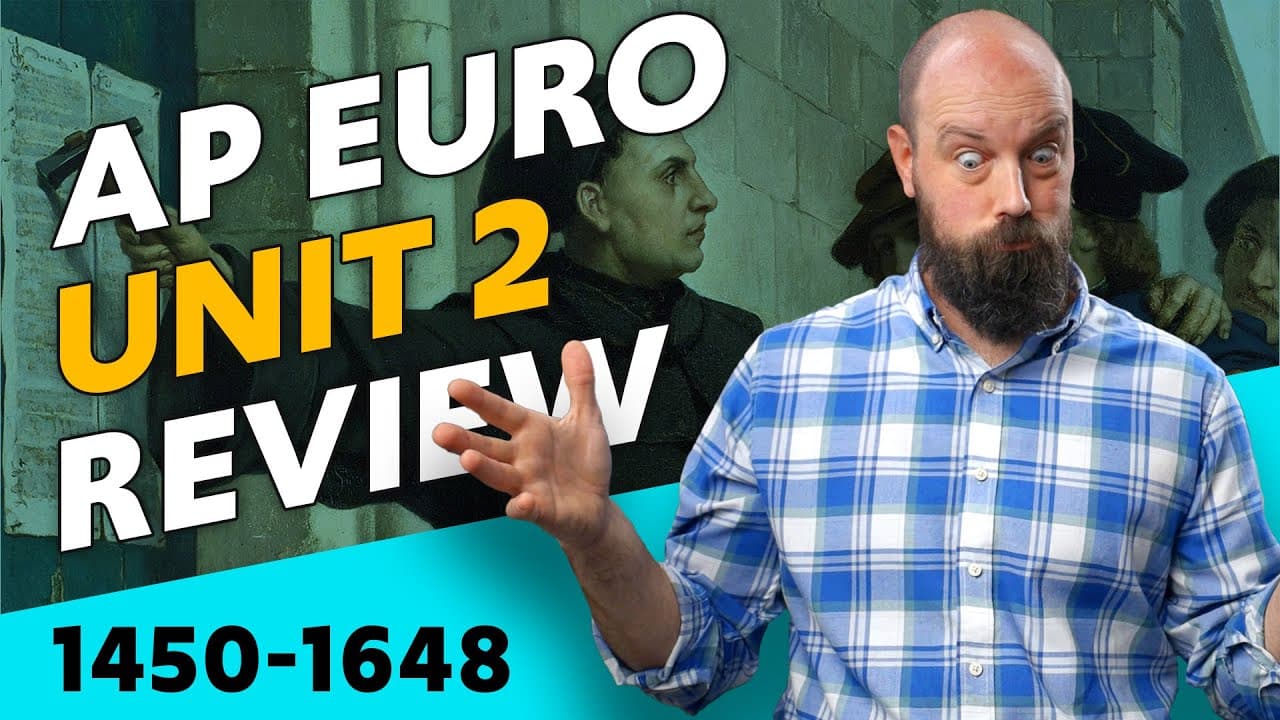
The Protestant Reformation began when Martin Luther challenged church corruption and indulgences in 1517, aided by the printing press which spread his ideas. Luther’s stance on grace, faith, and scripture promoted vernacular learning and the priesthood of all believers, while Calvin and other reformers extended reforms into Geneva and beyond. The movement fractured the Catholic Church and led to broader political and religious realignments in Europe.
Transcript
unit two of the ap european history curriculum is so important to understand if you want an a in your class and a five on your exam in may you have to know what happened in the protestant reformation and the wars of religion that follow and guess what that's exactly what i'm about to review for you so if you're ready to get that brain cows milked l... Read More
Key Insights
- The first major church split occurred in 1054 between the Roman Catholic and Eastern Orthodox churches.
- The Catholic Church's abuses included simony, nepotism, and the sale of indulgences, fueling reformist critique.
- Martin Luther argued salvation by grace through faith and scripture alone, not by church works or indulgences.
- Luther nailed the 95 theses to the Wittenberg door in 1517, triggering wider discussion and reform.
- The printing press amplified reformist ideas by enabling rapid distribution of pamphlets and vernacular Bibles.
- Luther’s vernacular Bible helped popularize the priesthood of all believers and challenged clerical authority.
- John Calvin refined Protestant doctrine with predestination and the elect, shaping a theocratic Geneva.
- Calvinism spread across Europe, giving rise to Presbyterians, Huguenots, and Puritans while maintaining doctrinal distinctives.
- More videos from this channel:
- More from this channel: Heimler's History
Install to Summarize YouTube Videos and Get Transcripts
Explore YouTube Video Summarizer or Get YouTube Transcript Extractor
Questions & Answers
Q: What caused the Protestant Reformation to begin in Europe
The Protestant Reformation began because reformers criticized church corruption and practices like the sale of indulgences, which were seen as undermining genuine salvation by faith. Luther’s emphasis on grace and scripture alone challenged papal authority and sparked widespread discussion once the ideas were disseminated through pamphlets and translations of the Bible.
Q: How did Luther’s 95 theses influence the spread of reform
Luther’s 95 theses criticized church abuses and called for reform, but the real spread came from the printing press which allowed rapid distribution of pamphlets and vernacular Bibles. This accessibility helped ordinary people understand Luther’s arguments, reducing clerical gatekeeping and accelerating a broader movement across German lands and beyond.
Q: What role did the printing press play in the Reformation
The printing press acted as a catalyst by enabling the mass production of books, pamphlets, and broadsides that disseminated reformist ideas widely and quickly. Luther’s vernacular German Bible and his pamphlets reached audiences across the Holy Roman Empire, helping to unify diverse reform movements under shared critiques of Catholic practices.
Q: Who was John Calvin and what did he contribute to the Reformation
John Calvin was a reformer who developed doctrines such as predestination and the elect, arguing that salvation is determined by God and evidenced by good works in those chosen. He also established a theocratic framework in Geneva, where church and state were closely linked and participation in religious life was mandated.
Q: How did Calvinism influence European religious groups
Calvinism influenced Europe by spreading through institutes like Calvin’s Institutes of the Christian Religion, leading to the formation of Presbyterians, Huguenots, and Puritans. It provided doctrinal order for Protestant churches and supported social structures that emphasized moral discipline, wealth as a sign of election, and welfare for the community.
Q: What were the key doctrinal differences between Luther and Calvin
Luther taught salvation by faith alone and the priesthood of all believers, emphasizing scripture as the ultimate authority. Calvin emphasized predestination and the elect, asserting that salvation is divinely determined and that true believers will demonstrate their election through good works, influencing church governance and social norms.
Q: What is the significance of the term elect in Calvinist thought
In Calvinist thought, the elect are those whom God has chosen for salvation before the foundation of the world. Election is not earned by human effort, but visible through a life of faith and good works. Thus, prosperity or moral behavior was interpreted as signs of being among the elect.
Q: How did the Reformation affect governance in cities like Geneva
In Geneva, the reform movement led to a theocracy where the Bible became law and church attendance was mandated. The church exercised substantial control over daily life, including moral conduct, with excommunication or punishment used to enforce conformity, illustrating how reform ideas reshaped city governance.
Q: What were the major social and political outcomes of the Reformation
The Reformation fractured the Catholic Church and altered political alliances, as state rulers gained leverage by supporting reformers. It sparked wars of religion and produced new Protestant denominations, which in turn influenced education, governance, and cultural development across Europe, shaping religious and secular life for centuries to come.
Summary & Key Takeaways
-
Lutheran ideas sparked a reform movement that challenged papal authority and the sale of indulgences, using vernacular language and the printing press to reach ordinary people.
-
Calvin introduced predestination and the elect, establishing a theocratic Geneva and spreading reform through Europe via his Institutes and the spread of Calvinism.
-
The broader wars of religion and the rise of various Protestant groups followed, with factions forming around different doctrinal commitments and state structures across the continent.
Read in Other Languages (beta)
Share This Summary 📚
Summarize YouTube Videos and Get Video Transcripts with 1-Click
Try YouTube Summary with ChatGPT & Claude or YouTube Transcript Generator
Explore More Summaries from Heimler's History 📚

Summarize YouTube Videos and Get Video Transcripts with 1-Click
Try YouTube Summary with ChatGPT & Claude or YouTube Transcript Generator