What Is Washington's Cabinet and Two-Term Legacy?
TL;DR
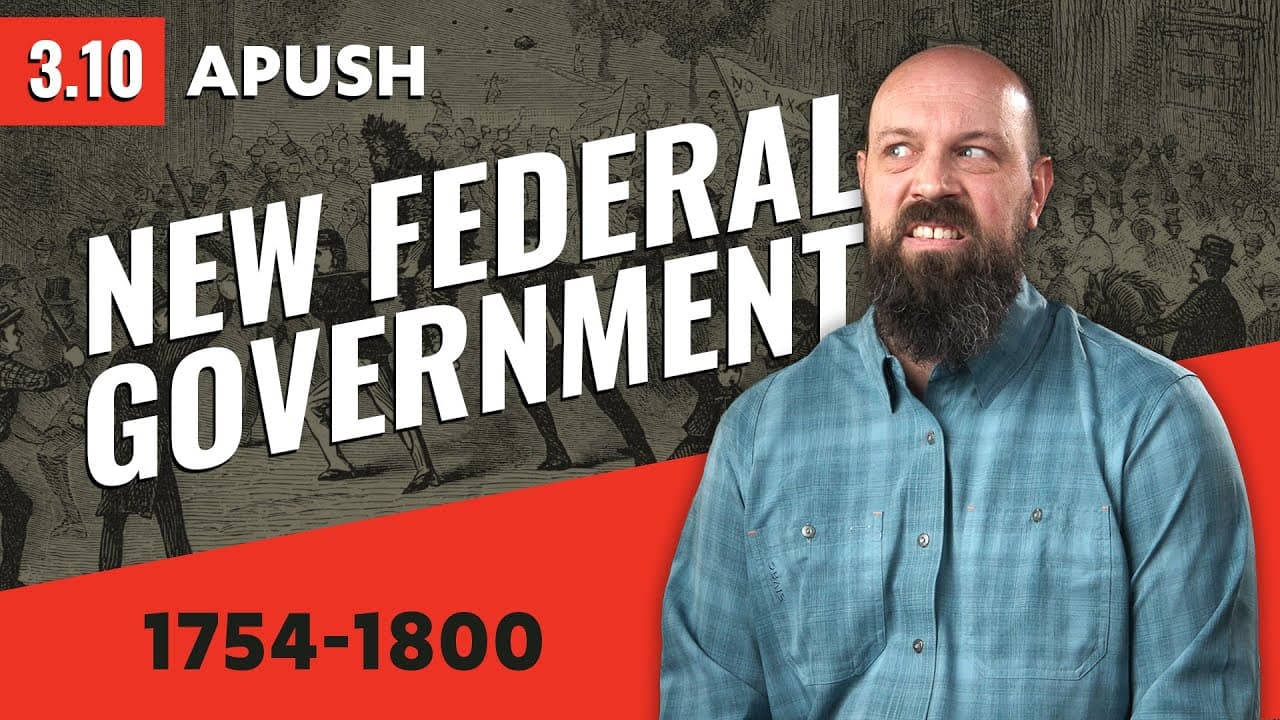
Washington created a presidential cabinet of advisers and four executive departments to help run the new government. He also established a two term precedent, shaping future leadership and inspiring the 22nd amendment. The video explains how these choices, plus an early federal judiciary, influenced party formation and the balance of federal and state power.
Transcript
Well, okay. We got ourselves a new constitution and a new threebranched, checked and balanced federal government. Now, I reckon it's time to throw this new government in the deep end and see how well it can swim. So, if you're ready to get them brain cows milked, let's get to it. Okay, as I said, the Constitution formed a brand spanking new federal... Read More
Key Insights
- Washington created a cabinet of advisers to organize the executive branch and carry out duties explicitly mentioned in the Constitution.
- Four departments—State, War, Treasury, and Justice—were established to support the president and were subject to Senate approval as a check and balance.
- Washington voluntarily served eight years, establishing a two term tradition that guided future presidents and influenced later legal limits.
- The farewell address warned against entangling alliances and political parties, foreshadowing isolationist tendencies and the rise of organized factions in American politics.
- The Constitution’s vague language led to flexible governmental structures, allowing interpretation as the nation grew.
- The Judiciary Act of 1789 created a three-tier federal court system with district courts, circuit courts, and a Supreme Court, centralizing constitutional interpretation.
- The first political parties, Federalists and Democratic Republicans, emerged over economic policy and the balance of liberty and order, shaping early federal politics.
- Hamilton’s national bank proposal illustrated how implied powers and the elastic clause could justify federal economic initiatives despite opposition.
- More videos from this channel:
- More from this channel: Heimler's History
Install to Summarize YouTube Videos and Get Transcripts
Explore YouTube Video Summarizer or Get YouTube Transcript Extractor
Questions & Answers
Q: A real search query question about the video (e.g. 'How to...', 'What is...', 'Why does...', 'When should...'). Question 1
What did Washington do to organize the executive branch and why did he choose to create a cabinet of advisers? Washington established a cabinet to help discharge executive duties more effectively, choosing four departments—State, War, Treasury, and Justice—led by Jefferson, Knox, Hamilton, and Randolph respectively. This arrangement provided expertise and a mechanism for Senate confirmation, highlighting checks and balances within the new government.
Q: Question 2
How did the four executive departments relate to the Constitution and what constitutional flexibility did this demonstrate? The Constitution is vague about executive details, but Washington used this flexibility to create departments to support executing laws. The cabinet system illustrated how the young nation could adapt constitutional power to practical needs, with Senate approval reinforcing legislative oversight.
Q: Question 3
Why is Washington's two-term limit significant and how did it influence later governance? Washington voluntarily served two terms and stepped down, setting a norm that shaped expectations for presidential tenure. This precedent remained influential until 1940 when a third term occurred, prompting later formal limits and the eventual 22nd Amendment, illustrating gradual constitutional evolution.
Q: Question 4
What role did Washington emphasize in his farewell address regarding foreign and domestic politics? In the farewell address, Washington warned against entangling foreign alliances and political parties, arguing these could threaten national unity and the republic. This guidance helped frame early American isolationist tendencies and cautions about factionalism in governance.
Q: Question 5
How did the Judiciary Act of 1789 shape the US government structure? The Act created a three-tier system with district courts, circuit courts, and the Supreme Court, establishing final constitutional authority and a lasting framework for judicial review. This act was pivotal in giving the judiciary a defined role within the federal government.
Q: Question 6
What caused the formation of the first political parties in this period? The Federalists and Democratic Republicans formed due to disagreements over economic policy and the balance between liberty and order, particularly surrounding national banking and states rights. These factions reflected evolving interpretations of how power should be distributed between the federal government and states.
Q: Question 7
What was the core disagreement over a national bank in the early republic? Hamilton proposed assuming state debts to boost credibility and secure loans, supporting a national bank. Democratic Republicans opposed it as a federal power grab not explicitly granted by the Constitution, prompting a debate over necessary and proper powers and federal authority.
Q: Question 8
How did the creation of executive departments illustrate the flexibility of the Constitution? Washington’s choice to form departments demonstrates that constitutional design allowed practical adaptation. This flexibility helped the new government address unforeseen challenges and laid a lasting precedent for executive organization and interbranch collaboration.
Summary & Key Takeaways
-
Washington formed a cabinet of advisers and four executive departments to aid the executive branch, illustrating the flexible interpretation of the Constitution.
-
The two term limit established by Washington set a precedent followed until 1940 and later enshrined in law, shaping presidential leadership.
-
The early federal judiciary was created by the Judiciary Act of 1789, laying the groundwork for a three-tier court system and the balance of power among branches.
Read in Other Languages (beta)
Share This Summary 📚
Summarize YouTube Videos and Get Video Transcripts with 1-Click
Try YouTube Summary with ChatGPT & Claude or YouTube Transcript Generator
Explore More Summaries from Heimler's History 📚


Summarize YouTube Videos and Get Video Transcripts with 1-Click
Try YouTube Summary with ChatGPT & Claude or YouTube Transcript Generator