How Did East Asia Develop from 1200 to 1450?
TL;DR
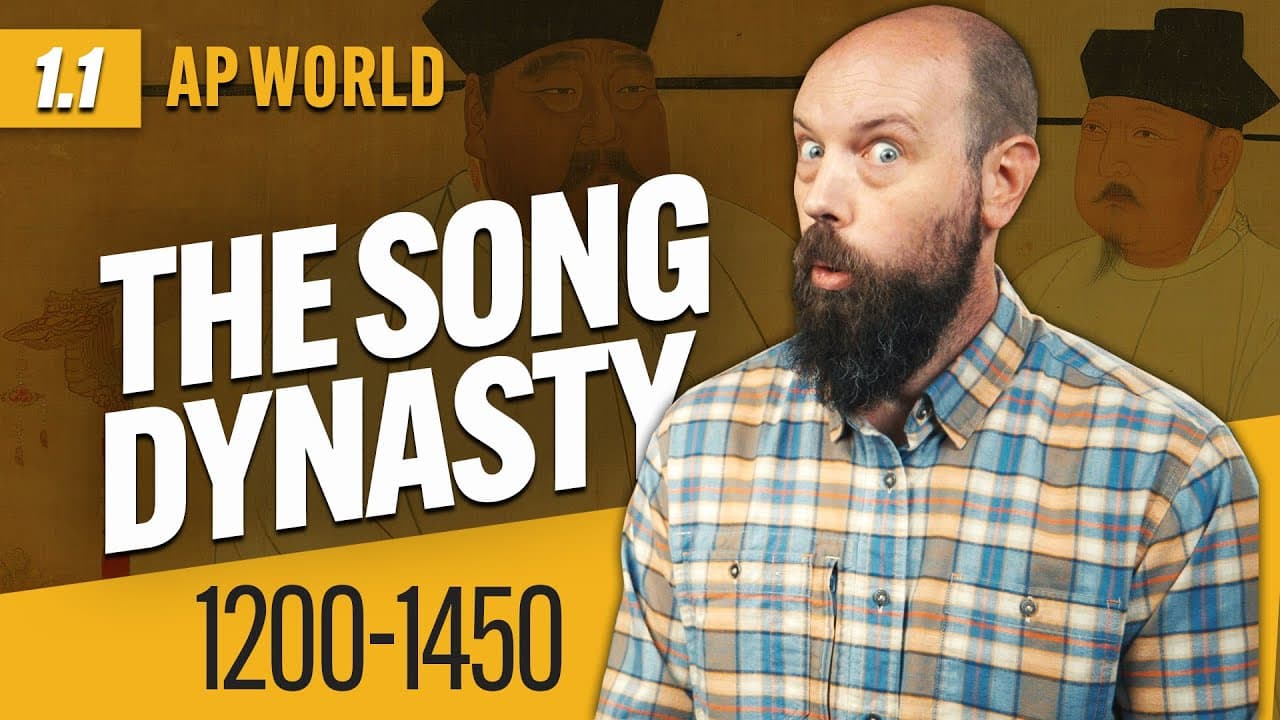
Song China maintained power through Neo-Confucian hierarchy and an expanding imperial bureaucracy staffed through civil service examinations. Its political systems, philosophies, religion, and writing influenced Korea, Japan, and Vietnam, but each society adopted Chinese traditions differently, particularly regarding tributary relations and the status of women.
Transcript
welcome to AP World History my dear pupils we're going to begin right in the beginning and talk about developments in East Asia from 1200 to 1450 and it was China who arguably possessed the biggest popsicle of power in that time and oh baby it was a tasty one so if you're ready to get them brain cows milked Song Dynasty style well let's get to it s... Read More
Key Insights
- Song China was a major center of political and cultural power in East Asia between 1200 and 1450. Its rulers relied especially on a revived Confucian philosophy and an enlarged imperial bureaucracy to maintain control and justify their authority.
- Neo-Confucianism was a renewed form of Confucianism carried from the Tang Dynasty into the Song period. It demonstrated continuity with ancient Chinese traditions while also representing innovation because it incorporated influences from Buddhist and Taoist philosophical ideas.
- Confucian society was organized around unequal hierarchical relationships, including fathers over sons, husbands over wives, and rulers over subjects. Superiors were expected to act with concern and benevolence, while subordinates were expected to obey and fulfill their assigned roles.
- Filial piety was the practice of honoring parents and ancestors. Chinese rulers emphasized it because learning to respect family authorities and deceased ancestors also prepared people to honor the emperor and accept the broader political hierarchy.
- Women in Song China were placed in a subordinate social and legal position. Their property became their husband's, widowed or divorced women could not remarry, and foot binding became a status symbol particularly among elite families.
- The Song bureaucracy was a governmental organization that carried out the emperor's will across China's extensive territory. Tens of thousands of officials helped enforce imperial directives, while its growing scope strengthened the dynasty's ability to administer society.
- Civil service examinations were based heavily on Confucian classics and determined access to desirable bureaucratic positions for eligible men. This merit-based approach placed qualified candidates in government, improving the competency and efficiency of bureaucratic tasks while reinforcing Confucian values.
- Chinese influence was adapted differently across Korea, Japan, and Vietnam. Korea and Vietnam maintained tributary relationships with China, while Japan borrowed voluntarily across the ocean. All adopted selected Chinese traditions, but Vietnam retained a higher status for women and rejected foot binding.
Install to Summarize YouTube Videos and Get Transcripts
Explore YouTube Video Summarizer or Get YouTube Transcript Extractor
Questions & Answers
Q: How did Song rulers maintain and justify their power?
Song rulers maintained and justified their power through Neo-Confucianism and an expanding imperial bureaucracy. Neo-Confucian hierarchy portrayed rulers as legitimate superiors whose subjects should obey them. The bureaucracy extended imperial directives throughout China's large territory, while civil service examinations selected qualified men who could administer the government competently and efficiently.
Q: What was Neo-Confucianism during the Song Dynasty?
Neo-Confucianism was the revived form of Confucianism carried from the Tang Dynasty into Song rule. It preserved older Confucian ideas about hierarchy, social roles, and proper relationships, demonstrating continuity with ancient China. It was also an innovation because Buddhist and Taoist philosophical ideas influenced this renewed version of the tradition.
Q: How did Confucian hierarchy organize Song society?
Confucian hierarchy taught that human society naturally consisted of unequal relationships. Fathers ranked above sons, husbands above wives, and rulers above subjects. The superior party was expected to behave with concern and benevolence, while the subordinate party was expected to obey. Song rulers used this structure to support their claim to rightful leadership.
Q: Why was filial piety important to Chinese rulers?
Filial piety required people to honor their living parents and deceased ancestors. Chinese rulers promoted the practice because respect within the family could prepare subjects to respect political authority. By learning to obey parents and preserve ancestral honor, people also learned habits that reinforced the emperor's elevated position within the larger social hierarchy.
Q: How were women treated in Song China?
Women occupied a subordinate position under Song Confucian hierarchy. A woman's property became her husband's, and a woman who was widowed or divorced was forbidden to remarry. Foot binding, especially among elite families, could make walking difficult or impossible and signaled that a household was wealthy enough to avoid relying on women's labor.
Q: How did civil service examinations strengthen Song government?
Civil service examinations helped staff the Song bureaucracy with qualified eligible men rather than awarding positions primarily through personal connections. Because the examinations were based heavily on Confucian classics, successful officials also understood the philosophy supporting imperial authority. This merit-based system increased administrative competency and helped the government carry out the emperor's directives across China.
Q: How did Chinese culture influence Korea, Japan, and Vietnam?
Chinese culture influenced Korea, Japan, and Vietnam through political relationships and selective borrowing. Korea and Vietnam participated in a tributary system while remaining basically independent. Their elites adopted several Chinese traditions. Japan borrowed voluntarily, adopting useful elements such as bureaucratic organization, Buddhism, and writing without facing the same nearby threat of invasion described for Korea.
Q: How did East Asian societies differ in adopting Chinese traditions?
Korea adopted civil service examinations and Confucian family principles, with Chinese influence concentrated largely among elites. Japan voluntarily selected useful Chinese political, religious, and writing practices. Vietnamese elites adopted Confucianism, Buddhism, literary techniques, and examinations, but Vietnamese women were less marginalized, female deities existed, and Vietnam never adopted foot binding.
Summary & Key Takeaways
-
Song rulers strengthened their authority by reviving Confucianism in a modified form called Neo-Confucianism, which incorporated Buddhist and Taoist ideas. Its hierarchical worldview encouraged subjects to defer to rulers, children to honor parents, and people to fulfill unequal social roles, creating an ideological justification for imperial government.
-
The Song imperial bureaucracy consisted of tens of thousands of officials who carried out the emperor's directives across China. Eligible men competed for government positions through civil service examinations based heavily on Confucian classics. Awarding positions by merit helped improve administrative competency and reinforced the philosophy supporting Song authority.
-
China influenced Korea, Japan, and Vietnam through different political and cultural relationships. Korea and Vietnam remained basically independent while participating in China's tributary system. Japan adopted useful Chinese practices voluntarily. These societies borrowed elements such as Confucianism, Buddhism, writing, bureaucracy, and examinations, but adapted or rejected them selectively.
Read in Other Languages (beta)
Share This Summary 📚
Summarize YouTube Videos and Get Video Transcripts with 1-Click
Try YouTube Summary with ChatGPT & Claude or YouTube Transcript Generator
Explore More Summaries from Heimler's History 📚


Summarize YouTube Videos and Get Video Transcripts with 1-Click
Try YouTube Summary with ChatGPT & Claude or YouTube Transcript Generator