How Europeans, Native Americans, and Africans Shaped Each Other?
TL;DR
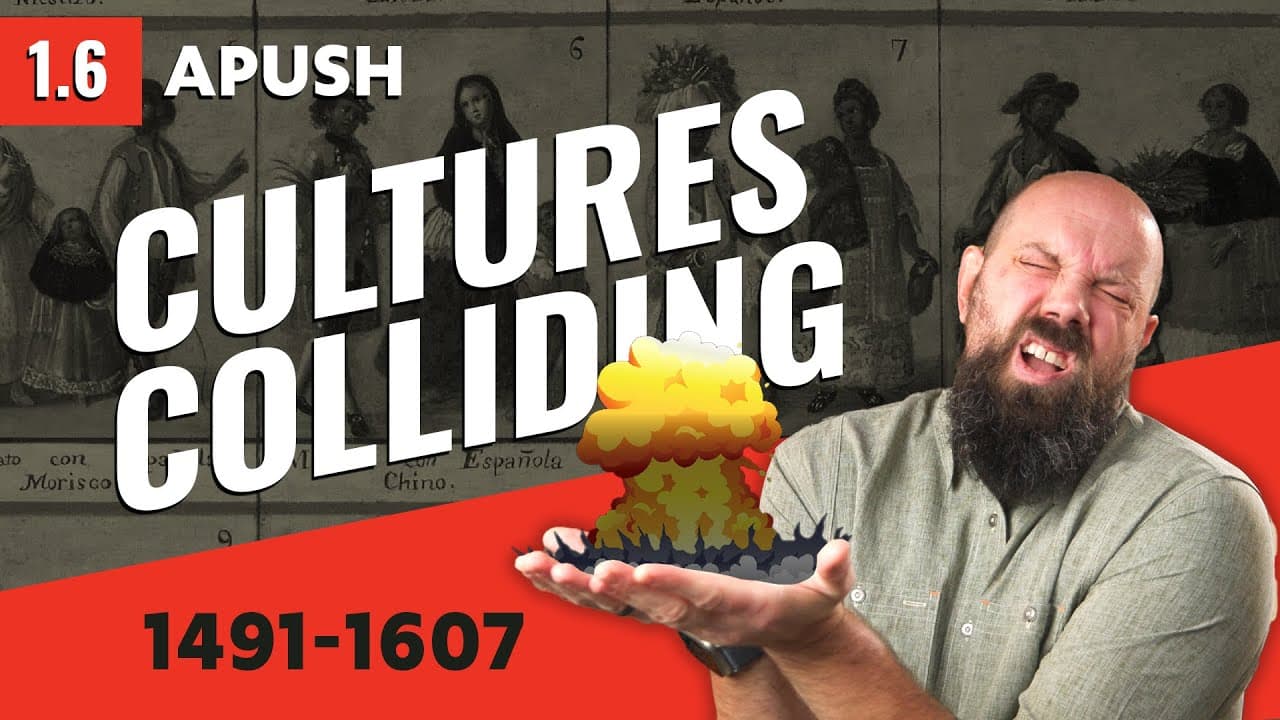
Worldviews clashed and mixed as Europeans, Native Americans, and Africans met in the Americas. Some exchange occurred, including adaptation of beliefs and practices, but domination and conflict often persisted through coercive systems, debates about humanity, and efforts to convert or manage land and labor. These dynamics helped form early colonial societies.
Transcript
Okay, so we've got indigenous Americans, enslaved Africans, and Europeans all mixed together in the Americas like a stanky colonial stew. And I bet you're here to learn about how those interactions affected or changed the perspectives of all those involved. If that's true, then I hope you're ready to get them brain cows milked because I stand at th... Read More
Key Insights
- Worldviews differed fundamentally between Europeans and indigenous peoples.
- Land use formed a core frontier that highlighted ownership versus communal stewardship.
- Religion and belief systems created tensions as Christian and indigenous practices clashed and blended.
- Gender roles and family structures varied, shaping social organization and power dynamics.
- Indigenous and European groups exchanged cultural elements through syncretism and adaptation.
- Indigenous people taught Europeans agricultural techniques and Europeans influenced native religious practices.
- Conflict arose frequently, from diplomacy and alliances to violent uprisings like the Tina Rebellion.
- European debates in Spain questioned the morality of colonization and slavery, influencing policy and perception.
- More videos from this channel:
- More from this channel: Heimler's History
Install to Summarize YouTube Videos and Get Transcripts
Explore YouTube Video Summarizer or Get YouTube Transcript Extractor
Questions & Answers
Q: What caused Europeans and Indigenous peoples to clash over land use in the Americas?
The clash over land use arose because Europeans believed land could be owned by individuals while many Indigenous groups held land as a communal good with spiritual significance. This fundamental difference in how land was valued and managed created immediate friction when Europeans began claiming territory and imposing their legal and economic systems, which ignored Indigenous conceptions of land binding communities together.
Q: How did religion influence interactions between these groups?
Religion shaped interactions by introducing a Christian framework that often positioned Indigenous beliefs as pagan or inferior. Yet some Indigenous people adopted Christian elements and blended them with their own practices in syncretism. The result was a complex religious landscape where conversion occurred alongside ongoing Indigenous spiritual traditions, sometimes facilitated by the spread of missions and the social consequences of intermingling faiths.
Q: What role did gender and family structures play in these encounters?
Gender roles and family structures dictated who held authority and how resources were managed. Europeans tended toward patriarchal systems and nuclear families, while some Indigenous groups emphasized matrilineal or extended family networks. These differences affectedDiplomatic negotiations, inheritance, and leadership, influencing how alliances formed and how groups navigated power during periods of contact and coercion.
Q: In what ways did cultural exchange occur between these groups?
Cultural exchange occurred through mutual observation and adaptation. Indigenous agricultural techniques helped European settlers survive, while Europeans introduced new tools and crops. Some Indigenous communities also incorporated Christian elements, creating blended practices. These exchanges were often uneven and contingent on coercive power, yet they produced lasting changes in language, religion, and daily life.
Q: What was the Tina Rebellion and why is it significant?
The Tina Rebellion was a Native uprising in Puerto Rico against Spanish intrusion and the Encomienda system. It showed Indigenous resistance to domination and highlighted the brutal conditions imposed by colonizers. Although quickly suppressed due to superior weaponry, the rebellion underscored the persistent tensions between colonizers and Indigenous populations and the demand for autonomy.
Q: What were the viodal debates and why did they matter?
The viodal debates in Spain debated the humanity of Indigenous peoples and the morality of subjugation and slavery. Proponents argued Indigenous people were fully human and deserving of humane treatment, while others claimed they were lesser and then needed civilizing. These debates influenced colonial policy, shaping how European powers justified or contested their actions in the Americas.
Q: How did Christianity influence Indigenous practices and European policy?
Christianity influenced Indigenous practices through conversion and adaptation, sometimes leading to new forms of worship that incorporated Indigenous beliefs. For European policy, religious considerations underpinned justifications for missions and conquest, and debates about proper treatment and conversion guided legal and moral arguments about colonial governance and labor systems.
Q: What long term impacts did these encounters have on colonial societies?
These encounters produced hybrid cultures and altered social, religious, and political landscapes. Mutual borrowing occurred alongside coercive domination, leading to enduring tensions over land, sovereignty, and identity. The interactions also seeded significant debates about humanity and rights that would echo through later policies, reform efforts, and the shaping of early colonial institutions.
Summary & Key Takeaways
-
Worldviews collided as Europeans, Native Americans, and Africans interacted, leading to a mix of cultural exchange and conflict.
-
Some groups adopted aspects of others, such as Christianity and agricultural techniques, while power imbalances and violence shaped the outcomes of these encounters.
-
Over time debates in Europe, such as the viodal debates, influenced how colonizers justified or questioned their treatment of indigenous peoples and enslaved Africans.
Read in Other Languages (beta)
Share This Summary 📚
Summarize YouTube Videos and Get Video Transcripts with 1-Click
Try YouTube Summary with ChatGPT & Claude or YouTube Transcript Generator
Explore More Summaries from Heimler's History 📚
Summarize YouTube Videos and Get Video Transcripts with 1-Click
Try YouTube Summary with ChatGPT & Claude or YouTube Transcript Generator