How Did America Win the Revolutionary War Against Britain?
TL;DR
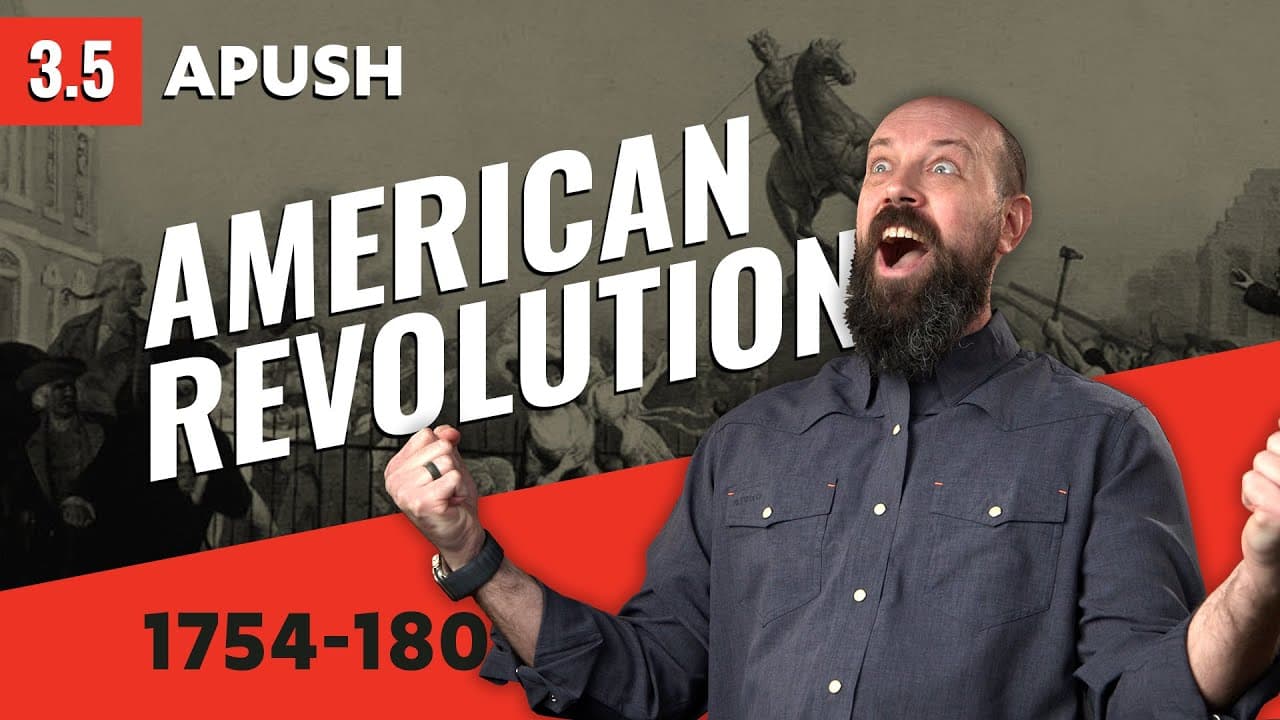
America won due to four key factors: Washington’s leadership and morale boosting victories, a decisive alliance with France aided by Saratoga, the decisive Yorktown defeat of British reinforcements, and strong colonial commitment to liberty. Loyalists and superior British forces could not overcome the political and military advantages built by American militias, the continental army, and foreign support.
Transcript
Oh my goodness. It is time at long last to talk about the American Revolution, baby. So, excuse me while I high five a bald eagle. Oh, that felt good. All right, if you're ready to get them brain cows milked Revolution style, then let's get to it. So, let me begin by stating what may not be obvious. Namely, that on paper, the American should not ha... Read More
Key Insights
- The patriots faced a numerically stronger Great Britain but relied on key strategic advantages for victory.
- Washington led a learning curve in military discipline, turning early failures into later advantages.
- The Battle of Trenton and Princeton boosted morale and proved British overconfidence could be broken.
- The alliance with France, prompted by Saratoga, provided critical resources and naval support.
- France and Spain joined the conflict to curb British power and protect their own territories.
- Loyalists comprised a significant minority, complicating patriot efforts but not enough to defeat independence.
- Ideological motivation, liberty narratives, and Enlightenment ideas sustained colonial resolve.
- Yorktown proved decisive by cutting off British relief and forcing surrender, leading to Paris negotiations.
- More videos from this channel:
- More from this channel: Heimler's History
Install to Summarize YouTube Videos and Get Transcripts
Explore YouTube Video Summarizer or Get YouTube Transcript Extractor
Questions & Answers
Q: How did Washington turn early defeats into later victories at Trenton and Princeton
Washington faced a tough start with a Continental Army that was poorly equipped and trained. He capitalized on strategic timing and surprise attacks during the Christmas crossing to Trenton and subsequent operations at Princeton, turning morale around and demonstrating that American forces could defeat British troops. These wins provided a foundation for continued resistance and helped sustain support for the war effort among colonists and allies alike.
Q: What role did the French alliance play after Saratoga
The decisive victory at Saratoga convinced France that the American cause could prevail, leading to formal French support. French troops were sent to reinforce the Continental Army, driven by mutual strategic interests and the promise of safeguarding France’s Caribbean holdings. This alliance brought essential military resources, naval power, and broader international legitimacy to the American struggle.
Q: Why was Yorktown pivotal in ending major fighting
Yorktown was pivotal because Washington and allied French forces blocked British reinforcements from arriving, forcing a surrender that effectively ended major combat operations. The siege demonstrated coordinated land and naval power and shifted the momentum of the war toward the Patriots, allowing negotiations that culminated in a formal peace agreement.
Q: How did Loyalists affect the revolution and how were they managed
Loyalists, estimated around 15 to 20 percent of the population, opposed independence for various reasons including loyalty to Britain and economic interests. Their presence created internal opposition and complicating factors for revolutionary leadership. Patriots used a mix of political persuasion, military strategy, and social pressure to counter Loyalist influence and maintain momentum toward independence.
Q: What were the four main factors cited as contributors to American victory
The four main factors were the actions and discipline of the Continental Army and local militias, the leadership of George Washington, the alliance with France (and later Spain), and the colonists' ideological commitment to liberty and self government. Together these elements created a strategic, diplomatic, and moral framework that outweighed British numerical advantages.
Q: How did the Treaty of Paris influence American territory
The Treaty of Paris in 1783 ended the war and effectively doubled the land holdings of the United States, extending from Canada to Florida and to the Mississippi River. This territorial expansion established the geographic basis for the new nation’s growth and provided a physical manifestation of the revolutionary victory.
Q: What was the strategic importance of the Battle of Saratoga
The Battle of Saratoga in 1777 was a turning point because it yielded a decisive American victory against British forces, with higher British casualties and a significant American victory in battlefield terms. This success altered international perceptions, encouraged foreign support, including French alliance negotiations, and shifted momentum toward American independence.
Q: How did colonial ideology sustain the war effort
Colonial ideology, centered on liberty, natural rights, and opposition to tyranny, sustained morale during difficult times. Pamphlets, sermons, and writings helped galvanize support, making independence feel like a principled cause worth pursuing despite hardships. This ideological backbone provided the emotional and philosophical justification for continuing the fight.
Summary & Key Takeaways
-
The American victory rested on multiple pillars including military leadership, alliance building, and enduring ideological motivation. Washington’s disciplined leadership blended with early setbacks and later victories to sustain the revolution. External alliances provided critical resources and strategic leverage that the patriots could not have achieved alone.
-
French and Spanish support transformed the balance of power, enabling key campaigns and siege successes. The war effort benefited from Union across the colonies, effective use of militia and continental forces, and a resilient commitment to liberty that outlasted brutal winters and war weariness.
-
Yorktown and the Treaty of Paris formalized a political victory that expanded the new nation’s territorial claims and set the stage for the United States to begin a broader world role. The story emphasizes the interplay of military technique, diplomacy, and enduring revolutionary ideals.
Read in Other Languages (beta)
Share This Summary 📚
Summarize YouTube Videos and Get Video Transcripts with 1-Click
Try YouTube Summary with ChatGPT & Claude or YouTube Transcript Generator
Explore More Summaries from Heimler's History 📚




Summarize YouTube Videos and Get Video Transcripts with 1-Click
Try YouTube Summary with ChatGPT & Claude or YouTube Transcript Generator