How to Understand AP Gov Unit 2: Branches and Bureaucracy
TL;DR
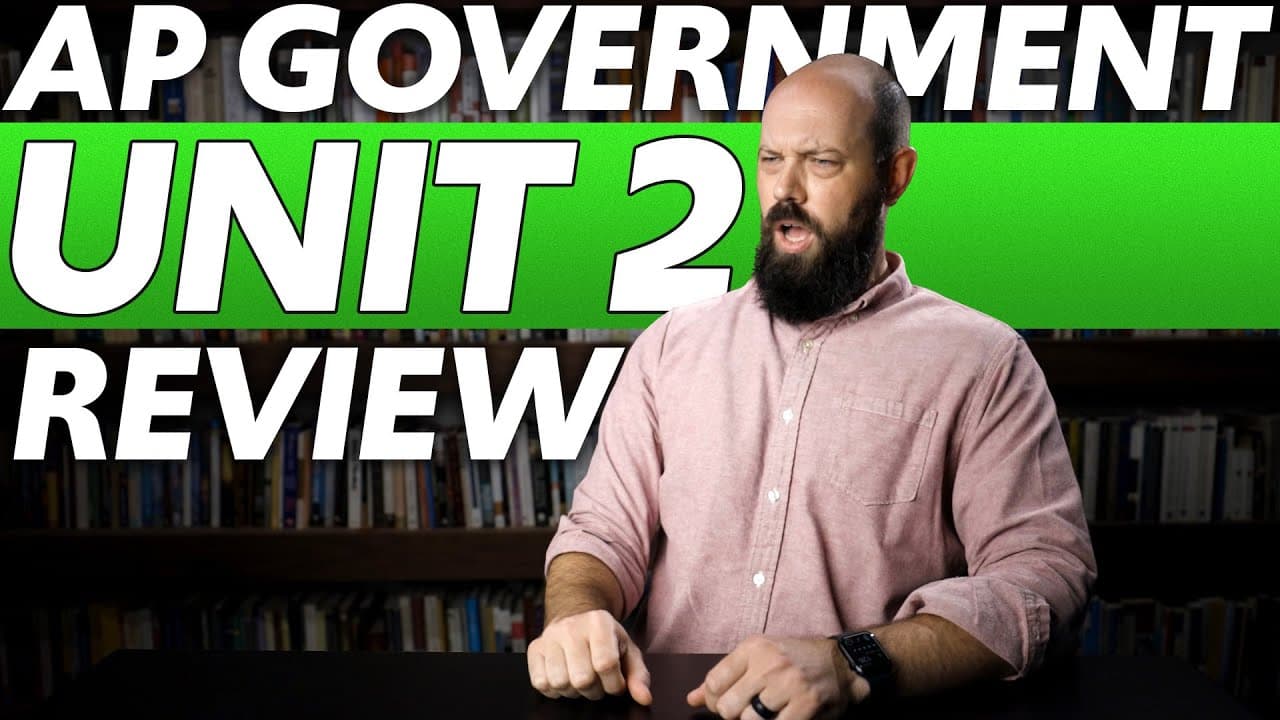
Unit 2 covers the three branches of government, the unofficial bureaucracy, and how they interact. The House is bicameral with 435 representatives, while the Senate has 100 members. Congress has enumerated and implied powers, with the necessary and proper clause expanding regulatory reach. Leadership, committees, and rules shape how legislation moves from idea to law.
Transcript
hey there and welcome back to heimlich's history now in this video i'm going to take you through everything you need to know about unit 2 of ap government and oh baby is this one a beast so get them brain cows ready for milking because we have no time to waste let's get to it so unit 2 is all about the three branches of government and how they inte... Read More
Key Insights
- The three branches of government and the bureaucracy are analyzed as an integrated system that checks and balances power.
- The House is composed of 435 representatives, while the Senate has 100 members, reflecting bicameral representation.
- Enumerated powers are explicitly listed in Article 1 Section 8, guiding federal authority.
- Implied powers arise from the necessary and proper clause, enabling flexible governance.
- The House emphasizes limited debate, a powerful rules committee, and the concept of the Committee of the Whole.
- The Senate features a more robust leadership structure with the Vice President as President of the Senate and a strong Senate Majority Leader.
- Committees are essential for drafting and refining legislation, with standing, joint, select, and conference types.
- Discharge petitions provide a pathway to move stalled bills out of committees and to floor consideration.
- More videos from this channel:
- More from this channel: Heimler's History
Install to Summarize YouTube Videos and Get Transcripts
Explore YouTube Video Summarizer or Get YouTube Transcript Extractor
Questions & Answers
Q: What is Unit 2 about in AP Gov, and why is it important for exams?
Unit 2 covers the three branches of government, their interactions, and the unofficial fourth branch, the bureaucracy. It explains how Congress, the presidency, and the courts work together, checks and balances, and the powers they hold. This foundation is crucial for understanding how laws are made, how authority is distributed, and how accountability is maintained on the exam and in real government functioning.
Q: How many representatives and senators are in Congress, and what does this imply about their connection to constituents?
There are 435 representatives and 100 senators. Representatives serve two-year terms and represent smaller districts, making them highly responsive to local concerns. Senators represent entire states and serve six-year terms, which tends to create broader, less district-specific connections but allows longer-term national perspectives.
Q: What are enumerated powers and where are they listed?
Enumerated powers are those explicitly listed in Article 1 Section 8 of the Constitution. They include powers such as raising revenue, coining money, and foreign policy and military legislation. These powers form the core legal authority for Congress to action on national matters and fund government activities.
Q: What is the necessary and proper clause, and how does it relate to implied powers?
The necessary and proper clause, also known as the elastic clause, justifies implied powers. It allows Congress to pass laws needed to execute its enumerated powers, even if not explicitly stated. This broad interpretation enables Congress to address economic, environmental, and social issues through legislation that is considered appropriate and necessary.
Q: Who is the Speaker of the House, and what powers do they have?
The Speaker of the House is the leader elected by the majority party and is typically a member of that party. The Speaker has significant authority, including recognizing speakers, assigning members to committees, and guiding debates and policy direction. This role is pivotal for shaping which bills move forward and how party priorities are advanced.
Q: How does the Senate leadership structure differ from the House, and who can vote in the Senate?
In the Senate, the Vice President serves as President of the Senate and only votes to break a tie. The President pro tempore acts when the Vice President is absent, and the Senate Majority Leader sets the legislative agenda. Unlike the House, the Senate allows extended debate and requires a broader consensus for action, often leading to more collaborative processes.
Q: What is the role of committees in Congress, and what types exist?
Committees are essential for drafting and refining legislation because they break work into manageable parts. There are standing committees, which are permanent; joint committees with members from both houses; select committees created for specific purposes; and conference committees that resolve differences between House and Senate versions of a bill. Majority party control shapes committee leadership and outcomes.
Q: What is a discharge petition, and when is it used?
A discharge petition is a procedural tool that allows the majority to move a bill out of a committee and onto the floor for consideration, even if the committee has not reported it. This mechanism helps advance legislation that is stalled or blocked in committee, ensuring that majority support can override committee inaction and bring bills to a vote.
Summary & Key Takeaways
-
In Unit 2, the three branches are introduced with emphasis on legislative structure, powers, and interaction, plus the bureaucracy as a fourth branch. The House and Senate have distinct leadership and rules, affecting how bills are debated and passed. Committees and governance procedures drive legislative work and outcomes.
-
The unit highlights enumerated and implied powers, including the necessary and proper clause, and explains how they justify broad federal authority. It also explains the role of leadership figures and party discipline in advancing or blocking legislation.
-
Students learn how committees, rules, and procedures like discharge petitions shape the lifecycle of a bill from proposal to signed law.
Read in Other Languages (beta)
Share This Summary 📚
Summarize YouTube Videos and Get Video Transcripts with 1-Click
Try YouTube Summary with ChatGPT & Claude or YouTube Transcript Generator
Explore More Summaries from Heimler's History 📚



Summarize YouTube Videos and Get Video Transcripts with 1-Click
Try YouTube Summary with ChatGPT & Claude or YouTube Transcript Generator