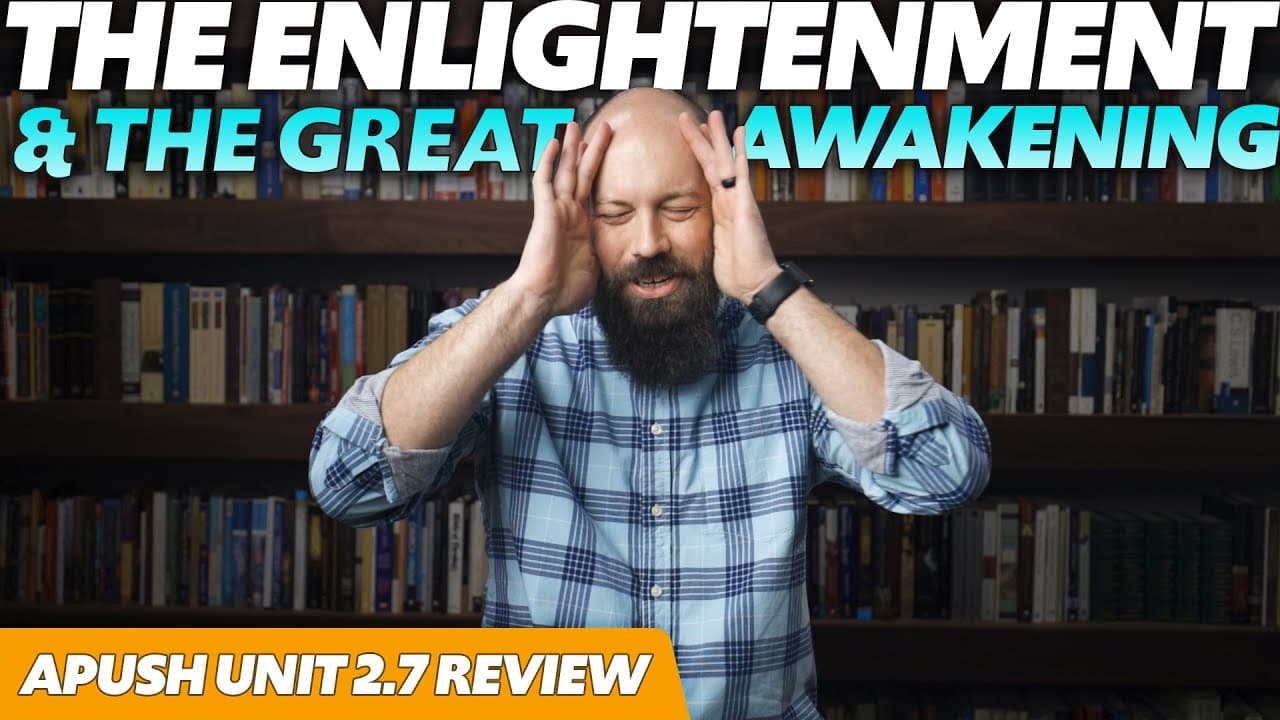
How did Enlightenment ideas shape colonial American culture?
TL;DR
Enlightenment thought spread to British North America through a strong transatlantic print culture, shaping notions of natural rights and government. Colonists adopted Locke-like ideas of life, liberty, and property and a social contract while embracing Great Awakening revival that reinforced religious enthusiasm and democratized religious authority. Together these forces widened resistance to British authority.
Transcript
hey there and welcome back to heimler's history now we've been going through unit two of the ap us history curriculum and in this video we come to the last topic colonial society and structure from 1607 to 1754. and yes i know it sounds bland but oh baby is there some tasty sauce in this one so let's get to it okay so in this video we need to try t... Read More
Key Insights
- Enlightenment ideas arrived in the colonies through a robust transatlantic print culture that circulated thinkers like Locke, Rousseau, Voltaire, and Kant.
- The theory of natural rights asserted that life, liberty, and property came from a creator and not a monarch.
- The social contract concept placed power in the hands of the people who consent to government for protecting rights.
- Three-branch government and checks and balances were popularized as ideals among colonists.
- Biblical revelation faced challenges as Enlightenment thinking claimed knowledge through senses and reason.
- The Great Awakening emerged as a major religious revival under New Light clergy and Pietist influence.
- Jonathan Edwards and George Whitefield were pivotal figures in spreading the Great Awakening across colonies.
- The revival aided democratic tendencies by stressing equality before God and empowering common people against wealthy officials.
- More videos from this channel:
- More from this channel: Heimler's History
Install to Summarize YouTube Videos and Get Transcripts
Explore YouTube Video Summarizer or Get YouTube Transcript Extractor
Questions & Answers
Q: What is the main way Enlightenment ideas reached colonists in America?
Enlightenment ideas reached colonists primarily through a robust transatlantic print culture that carried writings from European thinkers like John Locke, Rousseau, Voltaire, and Kant to British American audiences. This print culture helped disseminate concepts such as natural rights, social contracts, and the possibility of governmental checks and balances, laying intellectual groundwork for colonial political thought.
Q: What rights did Locke say people possess, and how do they relate to colonial thinking?
Locke argued that people have natural rights to life, liberty, and property created by the creator, not by a monarch. This idea influenced colonial thinking by framing government as a protector of inherent rights rather than a holder of absolute power. Colonists used this framework to critique imperial authority and justify resistance when rights were perceived as violated.
Q: How did the Enlightenment influence views on government in the colonies?
The Enlightenment contributed to a vision of government where power is balanced through three branches and where legitimacy stems from the people via a social contract. Colonists adopted these ideas to argue for representative, accountable governance and to resist autocratic rule, contributing to a growing sense of political self-governance in the colonies.
Q: What role did the Great Awakening play in colonial society?
The Great Awakening revived religious devotion across the colonies and provided biblical ballast that empowered common people against wealthy officials. It fostered democratic tendencies by emphasizing equality before God, encouraging participation in religious life, and reinforcing resistance to perceived tyranny, thus reinforcing wider social and political changes in colonial society.
Q: Who were the two key figures in the Great Awakening and what did they contribute?
Jonathan Edwards, a New England minister, fused Enlightenment ideas with deep religious fervor, sparking revival through his sermons, including those from Northampton. George Whitefield traveled the eastern seaboard preaching salvation by grace, drawing large crowds in churches, streets, and fields. Together they popularized revivalism and broadened its social reach.
Q: What is impressment and why did it provoke colonial reaction?
Impressment was the practice of forcibly seizing men to serve in the royal navy. It provoked colonial reaction because it violated perceived natural rights and individual freedom, especially given the dangerous conditions aboard ships. News of impressment sparked riots in American ports, illustrating growing colonial resentment toward imperial overreach.
Q: How did the interplay of Enlightenment and the Great Awakening shift colonial attitudes toward authority?
The Enlightenment sharpened critical views of centralized authority by emphasizing reason and rights, while the Great Awakening reinforced democratic norms within religious life and supported resistance to wealthy officials. Together they nurtured a culture that valued both rational governance and popular participation, laying groundwork for future colonial dissent against British rule.
Q: What future topics does this video set up for the next unit or video in the series?
The video foreshadows further exploration of colonial resistance to Britain, including more detailed studies of impressment and the broader implications of Enlightenment and Great Awakening ideas on colonial governance. It signals a transition to how these currents influenced relationships with Parliament, broadened participation in colonial governance, and set the stage for later conflicts.
Summary & Key Takeaways
-
Enlightenment ideas filtered into the colonies via print culture and education, promoting natural rights and republican government.
-
The Great Awakening revived religious devotion and empowered common people within colonial communities.
-
Impressment and colonial resistance highlighted growing tensions that foreshadowed future conflicts with Britain.
Read in Other Languages (beta)
Share This Summary 📚
Summarize YouTube Videos and Get Video Transcripts with 1-Click
Try YouTube Summary with ChatGPT & Claude or YouTube Transcript Generator
Explore More Summaries from Heimler's History 📚



Summarize YouTube Videos and Get Video Transcripts with 1-Click
Try YouTube Summary with ChatGPT & Claude or YouTube Transcript Generator