How did land-based empires legitimize and consolidate power
TL;DR
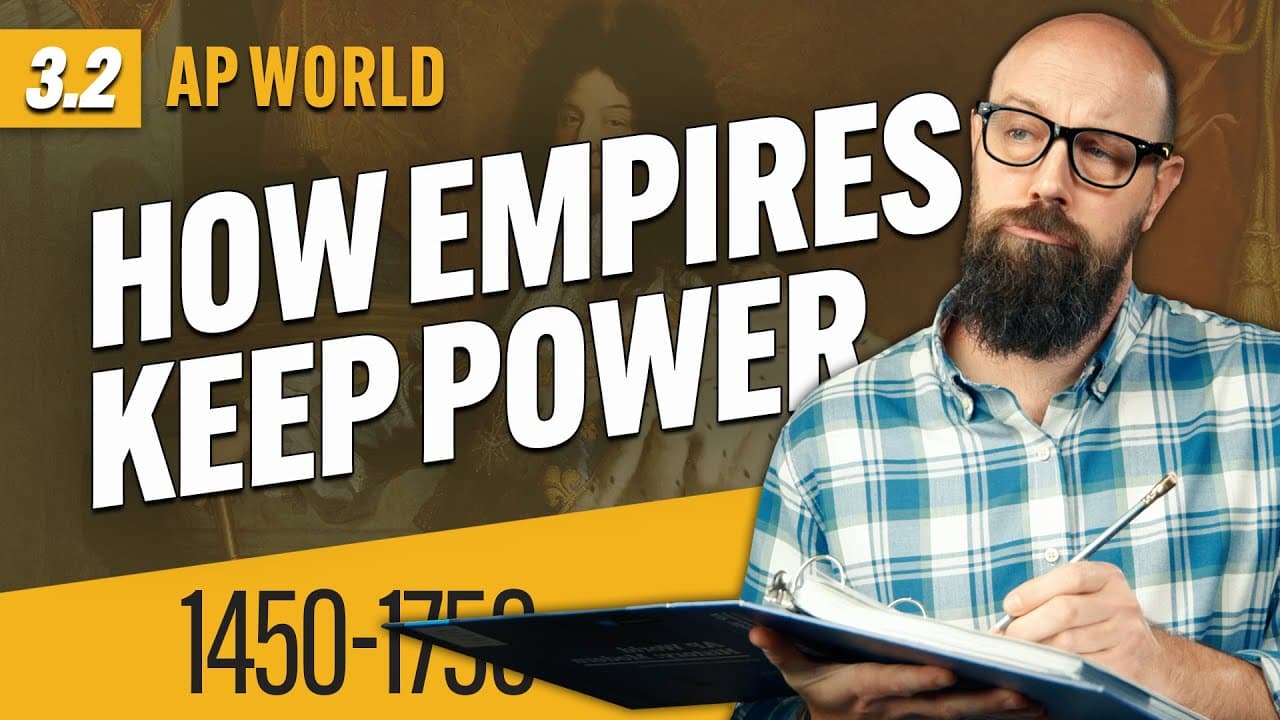
Rulers legitimize power by building large bureaucracies, expanding militaries, and using religion, art, and architecture. They finance these efforts through tax systems like zamindars and tax farming, ensuring a steady revenue stream to support imperial ambitions. The combined strategies helped maintain control over diverse populations from 1450 to 1750.
Transcript
the rulers of land-based Empires from 1450 to 1750 had to figure out how to keep power and how to administer their Empires and baby that's what this video is all about so if you're ready to get them brain cows milked bureaucratically then let's get to it okay now right here at the beginning I need to explain two very important terms that will proba... Read More
Key Insights
- A bureaucracy expands as empires grow, ensuring laws are applied across vast areas and that administrators coordinate governance. This system centralizes authority and enables efficient management of diverse populations.
- The creation of elite military cadres, such as the janissaries, strengthens the ruler’s grip by providing loyal, professionally trained forces necessary to defend and expand the empire.
- Religious justifications and sacred artistry legitimize rule by linking sovereign authority to divinity or divine approval, making resistance feel like opposition to a higher power.
- Royal portraits and Confucian style depictions reinforce legitimacy by aligning rulers with traditional values and trusted cultural norms, boosting acceptance among subjects.
- Architecture acts as a tangible symbol of power, with grand buildings signaling the ruler’s capability and intent to govern, while simultaneously discouraging dissent among rivals and nobles.
- Tax systems like zamindars and tax farming create predictable revenue streams, enabling sustained military campaigns and large public works without constant financial instability.
- Rulers use religious rituals and ceremonial sites to integrate religious authority with political power, reinforcing obedience and social cohesion across diverse communities.
- Administrative tools and fiscal strategies are designed to distribute imperial authority through local intermediaries, reducing direct control burdens on the center while maintaining overall sovereignty.
- More videos from this channel:
- More from this channel: Heimler's History
Install to Summarize YouTube Videos and Get Transcripts
Explore YouTube Video Summarizer or Get YouTube Transcript Extractor
Questions & Answers
Q: What is the Devshirme system and how did it help the Ottoman Empire?
The Devshirme system was a way to staff the Ottoman Imperial bureaucracy and army by selecting enslaved Christian boys who were educated, trained, and placed into elite positions. These boys learned languages, received Islamic education, and could rise to high administrative or military roles, such as the elite janissaries. This created a professional, loyal cadre that strengthened central authority and contributed to a capable governance and military structure.
Q: How did religion contribute to legitimizing rulers in this period?
Religion served as a powerful legitimizing force by linking rulers to divine right or sacred authority. European monarchs claimed rule by Divine Right, suggesting monarchs ruled with God’s approval, which discouraged opposition. In other regions, religious practices like Aztec human sacrifice were used to demonstrate rulers’ control over sacred rites and social order, signaling the ruler’s central role in religious ceremonies and destiny.
Q: What role did architecture play in consolidating power?
Architecture functioned as a public display of power and order. The Palace of Versailles, for example, symbolized royal control and social hierarchy, forcing nobles to reside there part-time and centralizing power under the king. In contrast, monumental religious or civic buildings in other empires reinforced legitimacy by associating rulers with cultural and cosmic ideals, visibly embedding authority into the landscape.
Q: Why were tax systems important for imperial power?
Tax systems provided reliable, recurring revenue to fund military forces, bureaucracies, and grand projects. Zamindars in the Mughal Empire extended imperial reach by collecting taxes from landowners, while Ottoman tax farming created annual income by auctioning the right to collect taxes. These mechanisms reduced direct administrative costs and offered predictable funding to sustain imperial power.
Q: How did elites contribute to legitimizing and maintaining control?
Elites such as local landowners or military officers were integrated into governance structures to extend imperial reach and legitimacy. By incorporating them into taxation systems or formal administration, rulers secured loyalty and reduced resistance. The presence of trusted elites within the bureaucratic and military hierarchies helped stabilize rule over diverse populations.
Q: What is meant by consolidating power through expansion of the military?
Consolidating power involved creating professional, sizeable military forces that could deter rivals, enforce laws, and project authority across vast territories. Elite corps, trained through systems like Devshirme, supplied a reliable core of soldiers who remained loyal to the central ruler and enabled sustained expansion or defense during peacetime and conflict.
Q: How did portraits and visual representations support legitimacy?
Imperial portraits and carefully crafted imagery presented rulers in a manner aligned with cultural values and political legitimacy. By depicting rulers in line with Confucian norms or other cherished traditions, these portraits reinforced the perception of rightful rule, obedience, and moral authority, helping subjects accept governance and reducing calls for rebellion.
Q: What challenges did these strategies aim to address in multiethnic empires?
These strategies aimed to balance centralized sovereignty with local autonomy across diverse populations. Bureaucratic expansion, elite military structures, religious and cultural symbolism, and tax-based revenue all worked together to create a coherent governance framework. The goal was to minimize resistance, maximize administrative efficiency, and sustain long-term control over sprawling, multiethnic realms.
Summary & Key Takeaways
-
The video explains three main methods rulers used to legitimize and consolidate power, focusing on bureaucratic expansion, elite military forces, and ideological or cultural displays of authority. It uses examples from the Ottoman, Ming, and Inca contexts to illustrate how legitimacy is communicated and maintained. It also highlights how taxation systems underpinned imperial finance.
-
The Imperial bureaucracy grew with empire size, enabling centralized control across vast territories. Elite groups such as janissaries anchored military power, while religious and architectural projects projected divine favor and stable governance. Tax collection mechanisms ensured consistent funding for government functions and military expenditures.
-
Rulers leveraged architecture, religion, and portraits to reinforce legitimacy, ensuring subordinates perceived them as rightful rulers. By integrating local elites through taxation or tenant systems, they extended authority and reduced the risk of rebellion. This combination created a durable administrative framework for multiethnic realms.
Read in Other Languages (beta)
Share This Summary 📚
Summarize YouTube Videos and Get Video Transcripts with 1-Click
Try YouTube Summary with ChatGPT & Claude or YouTube Transcript Generator
Explore More Summaries from Heimler's History 📚


Summarize YouTube Videos and Get Video Transcripts with 1-Click
Try YouTube Summary with ChatGPT & Claude or YouTube Transcript Generator