How to stop depressive rumination and overthinking
TL;DR
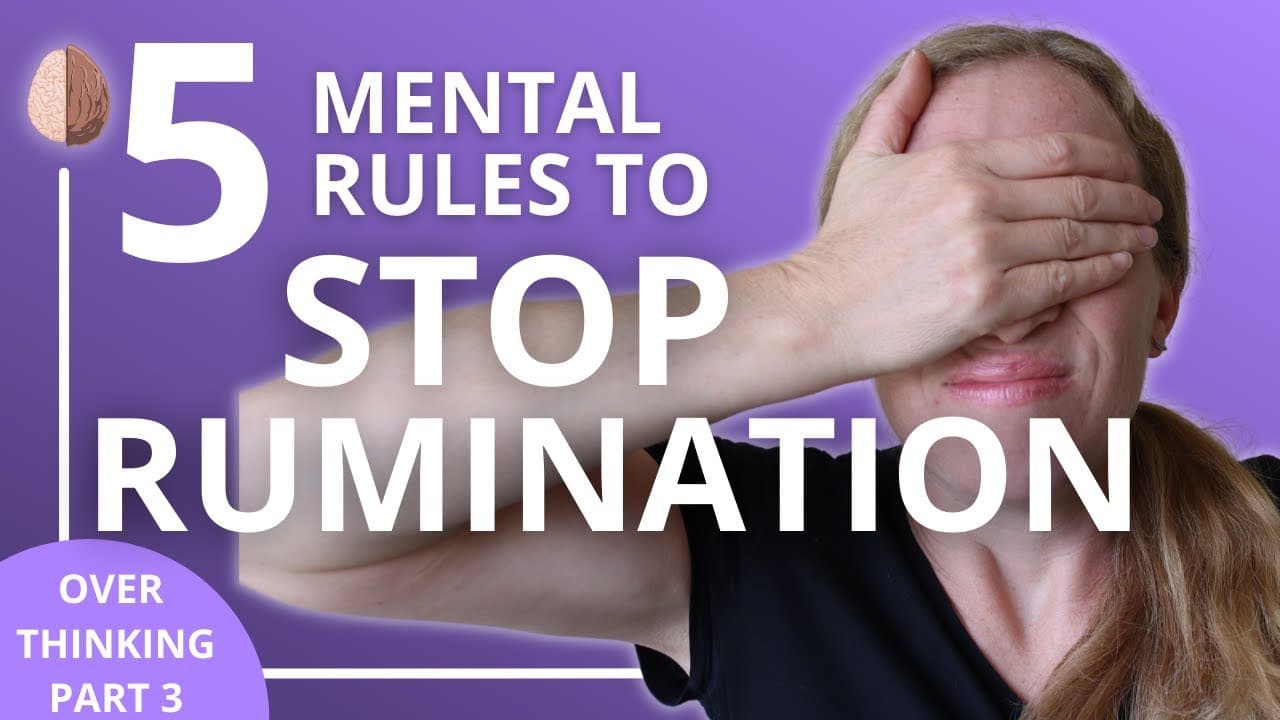
Depressive rumination can be stopped by making thoughts obvious and replacing them with action. Use the five rules to shift from why to what, avoid generalizations, act on values, and counterbalance negatives with positives. Implement small, specific steps daily to break the negative thinking cycle and build healthier habits.
Transcript
Seneca said, "We suffer more in imagination than in reality," and that is often the case with a very specific type of overthinking: depressive rumination. Depressive rumination is a type of overthinking where you create the habit of dwelling on the past. You rehash all of the terrible things you can think of over and over and over. Uh depressiv... Read More
Key Insights
- Rumination is a habit of dwelling on past regrets that keeps you stuck in a negative loop and worsens mood, making it harder to act on present situations.
- Awareness is the first practical step; recognizing when you ruminate allows you to intervene before the cycle deepens and becomes more automatic.
- Rule one shifts thinking from why to what, guiding you toward concrete, small changes rather than abstract self-blame.
- Rule two discourages vague statements by replacing generalizations with specific, actionable examples and future-oriented planning.
- Rule three enforces no thinking without action, tying values directly to measurable steps you can take in the moment.
- Rule four eliminates self-labeling by reframing statements as behaviors instead of global traits, reducing identity-related rumination.
- Rule five requires balancing negatives with at least two positives to foster a more balanced view of situations and outcomes.
- Practice of these five rules helps you build new neural pathways that support healthier responses and reduce the habit of dwelling on the past.
- More videos from this channel:
- More from this channel: Therapy in a Nutshell
Install to Summarize YouTube Videos and Get Transcripts
Explore YouTube Video Summarizer or Get YouTube Transcript Extractor
Questions & Answers
Q: What is depressive rumination and how does it affect mood and behavior?
Depressive rumination is a type of overthinking where you repeatedly dwell on past mistakes, regrets, or perceived failures. It creates a negative feedback loop that deepens mood dysregulation and discourages action. By focusing on past hurt and potential future suffering, you may feel hopeless and unmotivated, making it harder to engage in present life or pursue change, which can perpetuate the cycle.
Q: What is the first practical step to stop rumination according to the video?
The first practical step is to make your thoughts obvious and track when you ruminate. This can involve asking someone to point out when you are ruminating or using a mindfulness timer to check in with your thoughts. By noticing rumination in real time, you create the opportunity to intervene before the pattern becomes automatic and entrenched.
Q: What is Rule number one for stopping rumination?
Rule number one is to avoid why questions and replace them with what questions. Instead of asking why something happened, ask what small change you can make to improve your situation. This reframing shifts the focus from existential blame to actionable steps, increasing the likelihood of taking constructive action.
Q: How does Rule number two help reduce rumination?
Rule number two discourages vague statements and over-generalizations. It encourages focusing on a single concrete event and a specific solution rather than broad self-labels like never or always. This specificity makes it easier to identify practical steps, such as visiting a different dealer next time and bringing someone with you to avoid pressure.
Q: What does Rule number three advise about action and thinking?
Rule number three advises no thinking without action. For any bothersome situation, identify the core value at stake and choose one concrete action. This rule ties beliefs to behavior, ensuring thinking leads to tangible progress rather than endless analysis that stalls improvement.
Q: What does Rule number four suggest about self-labels?
Rule number four suggests eliminating self-labels by phrasing thoughts as behaviors. Instead of saying I am a failure, you would say I made a mistake in that relationship, or I will try a different approach next time. This helps reduce fixed negative self-identity that fuels rumination.
Q: How does Rule number five encourage balanced thinking?
Rule number five requires counterbalancing negative thoughts with at least two positives. This practice prevents skewed pessimism and helps you acknowledge strengths or past successes, fostering a fuller emotional picture and supporting resilience against rumination in future challenges.
Q: Why is awareness alone not sufficient to stop rumination?
Awareness is essential to identify rumination, but it must be followed by deliberate action guided by the five rules. Without transforming awareness into concrete steps, the brain remains in the same patterns, maintaining rumination habits. Combining awareness with disciplined action helps rewire thought processes and reduce the habit over time.
Summary & Key Takeaways
-
The first summary point explains how rumination harms mental health by trapping you in past regrets and negative thought cycles, and emphasizes the importance of awareness as the initial step toward change.
-
The second summary point outlines concrete strategies, including turning thoughts into questions about actionable steps and applying five behavioral rules to reduce ruminative thinking.
-
The third summary point highlights the long-term benefit of consistent practice, noting that building new pathways in the brain helps decrease the frequency and intensity of depressive rumination.
Read in Other Languages (beta)
Share This Summary 📚
Summarize YouTube Videos and Get Video Transcripts with 1-Click
Try YouTube Summary with ChatGPT & Claude or YouTube Transcript Generator
Explore More Summaries from Therapy in a Nutshell 📚



Summarize YouTube Videos and Get Video Transcripts with 1-Click
Try YouTube Summary with ChatGPT & Claude or YouTube Transcript Generator