How to Activate the Parasympathetic Nervous System and Calm Anxiety
TL;DR
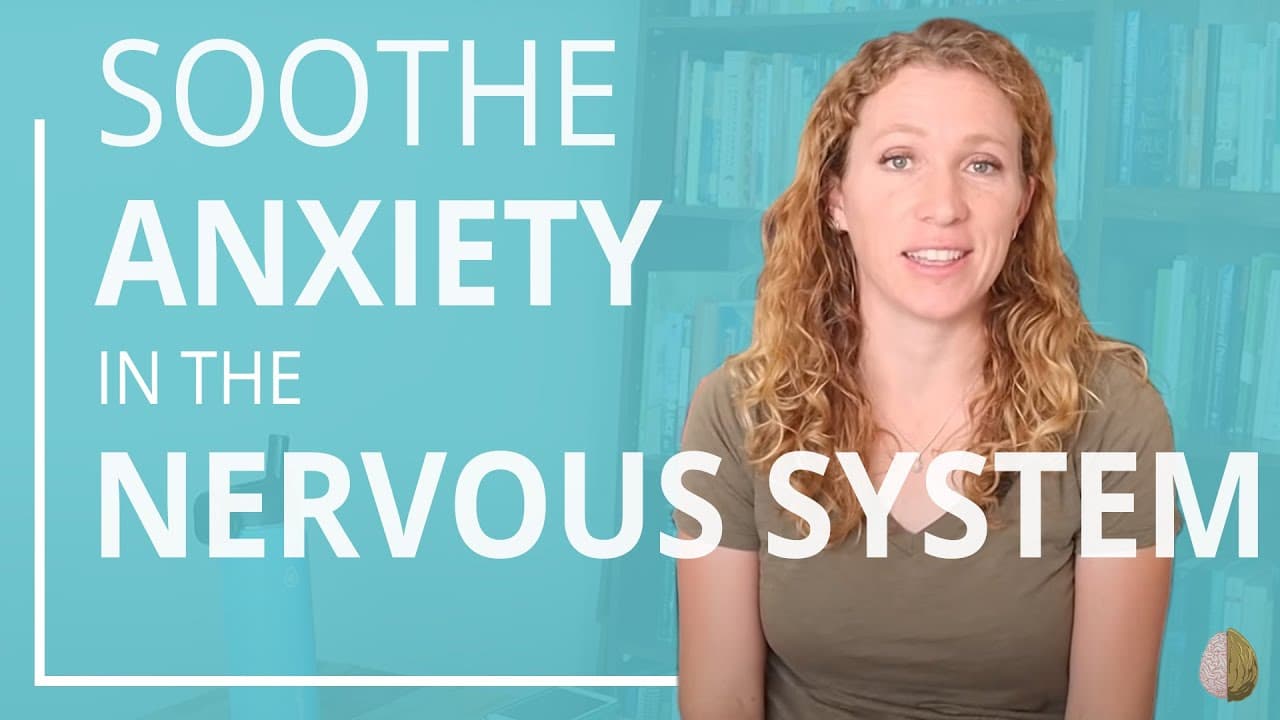
The body can be trained to switch from stress to calm by activating the parasympathetic system. Techniques include deep slow breathing to improve vagal tone, softening the eyes to use peripheral vision, practicing the Valsalva maneuver, and yawning to send calming signals to the brain. Regular use strengthens resilience over time.
Transcript
you know that feeling you get when you're anxious or scared or angry and you can feel your body start to spiral out of control almost like you're falling out of a plane without a parachute well stick around because I want to tell you about the built-in emotional parachute that your body has and how you can deploy it whenever you feel the need t... Read More
Key Insights
- Anxiety activates the sympathetic fight flight freeze response in the autonomic nervous system.
- The parasympathetic response acts as a natural parachute slowing the body and restoring calm.
- The vagus nerve is the main pathway for sending calming signals from body to brain.
- Deep slow breathing strengthens vagal tone and promotes parasympathetic activation.
- Heart rate variability is a practical measure of vagal tone and calm readiness.
- Softening the eyes and expanding peripheral vision reduce tunnel vision and trigger calm signals.
- The Valsalva maneuver increases chest pressure to slow the heart and calm the nervous system.
- Yawning serves as a simple trigger to engage the vagus nerve and relax the body.
- More videos from this channel:
- More from this channel: Therapy in a Nutshell
Install to Summarize YouTube Videos and Get Transcripts
Explore YouTube Video Summarizer or Get YouTube Transcript Extractor
Questions & Answers
Q: How can I start activating the parasympathetic system right away to calm anxiety?
To start, practice deep slow breathing to gently increase heart rate variability. Inhale slowly, exhale longer than inhale, and focus on the out breath. This helps strengthen vagal tone over time, signaling safety to the brain via the vagus nerve. Repeat in short sessions to build consistency.
Q: What role does peripheral vision play in calming anxiety?
Softening the eyes and shifting attention to peripheral vision reduces tunnel vision, a sympathetic response. By not fixating on a single threat point, you send signals through the vagus nerve that promote a parasympathetic state. Practice keeping the gaze soft and broad while still looking at the screen.
Q: Can you explain the Valsalva maneuver and how it helps anxiety?
The Valsalva maneuver increases chest pressure, which interacts with the vagus nerve to slow the heart and trigger calm. Do a controlled bear down for a few seconds after a slow inhale, then exhale, and repeat once or twice. Stop if you feel lightheaded and resume steady breathing afterward.
Q: What is the purpose of yawning in this context?
Yawning is presented as a simple, natural trigger for the parasympathetic system. The act engages the vagus nerve and helps shift the body from a stressed to a calmer state. Encouraging yawns can be an easy, accessible tool during anxious moments to initiate relaxation.
Q: How does deep breathing affect vagal tone long term?
Deep breathing strengthens vagal tone much like exercise builds muscles. Slower, longer exhales enhance heart rate variability, signaling safety to the brain via the vagus nerve. Over time, this training improves resilience and reduces the frequency and intensity of anxiety responses in stressful situations.
Q: Why is the vagus nerve described as bidirectional in this video?
The vagus nerve carries signals both from the brain to the body about stress and from the body back to the brain about safety. This bidirectional communication means calming bodily states can directly influence brain activity, helping to regulate emotions and reduce anxiety through parasympathetic activation.
Q: What practical steps can beginners take to improve parasympathetic activation?
Beginners can start with 5 minutes of slow, deep breathing daily, practice soft eye focus with peripheral vision, try the Valsalva maneuver once safely, and incorporate a few yawns or gentle breath holds. Consistency is key, as regular practice trains the system to transition more readily into a calm state when stressed.
Q: Are these techniques suitable for all anxiety types or conditions?
The techniques aim to support the body’s natural calming response and can be useful for general anxiety, situational stress, and PTSD-related arousal. However, they are not a substitute for professional care in severe cases. Consider using them as complementary strategies alongside therapy or counseling.
Summary & Key Takeaways
-
The video explains the parasympathetic system as the counterbalance to fight flight and details four practical techniques to trigger it. It emphasizes the vagus nerve as the bidirectional conduit for signaling safety from body to brain and back. The overall goal is to reduce anxiety naturally through physiology.
-
Deep breathing and increased vagal tone are highlighted as foundational skills, with practical steps to feel heart rate variability and relax via longer exhalations. Peripheral vision, eye softening, and gentle eye movements contribute to parasympathetic activation by shifting focus away from threat.
-
The Valsalva maneuver and yawning are presented as additional, accessible tools that can momentarily raise chest pressure or trigger yawning to stimulate the vagus nerve and calm the nervous system, making it easier to regain control during anxiety episodes.
Read in Other Languages (beta)
Share This Summary 📚
Summarize YouTube Videos and Get Video Transcripts with 1-Click
Try YouTube Summary with ChatGPT & Claude or YouTube Transcript Generator
Explore More Summaries from Therapy in a Nutshell 📚


Summarize YouTube Videos and Get Video Transcripts with 1-Click
Try YouTube Summary with ChatGPT & Claude or YouTube Transcript Generator