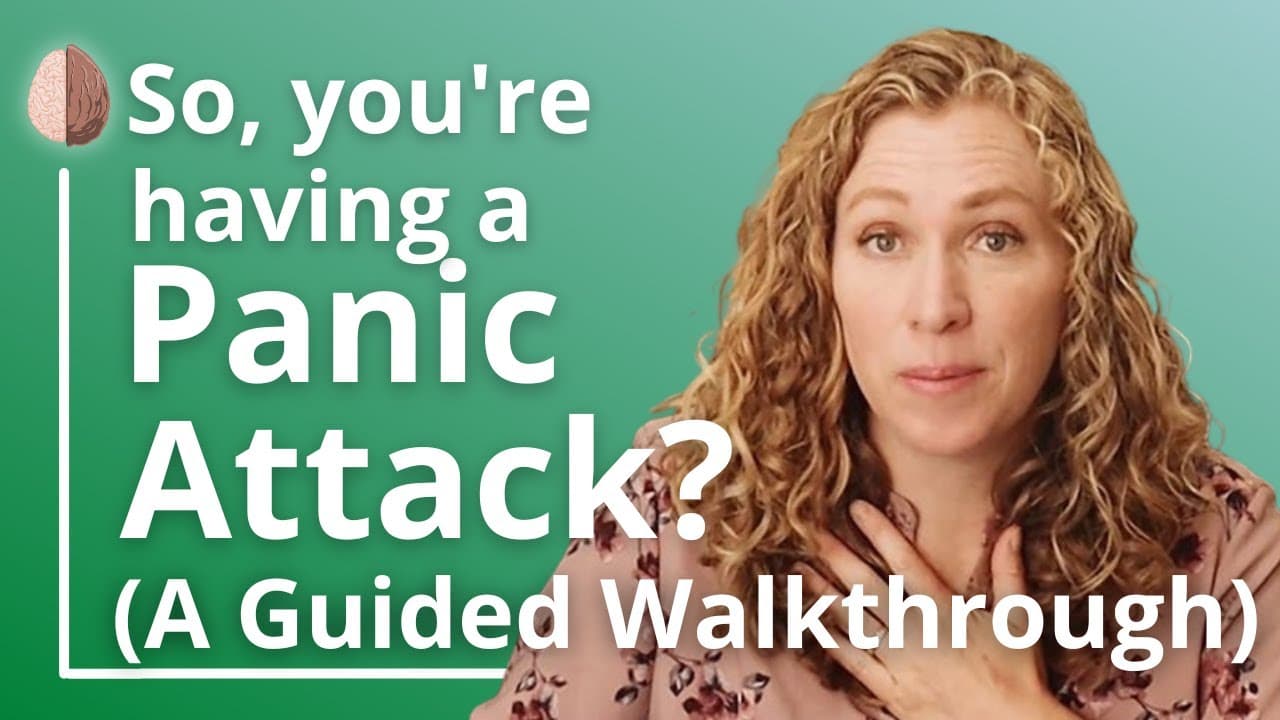
How to stop a panic attack with the anti-struggle method
TL;DR
The anti-struggle method teaches you to open up to sensations and drop the belief that anxiety is dangerous. By observing feelings and staying present, panic cycles can ease, often within minutes. Practice curiosity, compassion, and space for sensations to reduce future attacks and gain resilience.
Transcript
So you're having a panic attack. If you're right in the middle of a panic attack, this video is for you. For many people, a panic attack feels like a lot of intense physical symptoms. Maybe your heart is pounding, you might feel faint or tingly, or you're afraid that you're going to pass out or have a heart attack. In this video I'll walk you t... Read More
Key Insights
- The anti-struggle approach treats anxiety symptoms as non dangerous, reducing fear and breaking the panic cycle. It shifts focus from suppression to acceptance and observation.
- The core idea is to acknowledge uncomfortable feelings while remaining 100 percent safe, which calms the brain and slows the fight/flight response over time.
- Curiosity plays a central role; by observing sensations like a scientist, you can describe rather than judge what you feel.
- Open attention is encouraged: notice what you hear, see, and touch to create a broader sense of presence during a panic.
- The paradox is that trying to induce a panic attack signals safety to the brain, so you instead invite the feelings and let them pass.
- Compassionate self-talk such as “It’s okay to feel this” reduces shame and decreases emotional arousal.
- The technique promotes space for sensations rather than forcing calm, allowing natural relaxation to occur.
- Practice and repetition are essential, as most people experience fewer and less intense attacks with consistent use over time.
- More videos from this channel:
- More from this channel: Therapy in a Nutshell
Install to Summarize YouTube Videos and Get Transcripts
Explore YouTube Video Summarizer or Get YouTube Transcript Extractor
Questions & Answers
Q: How to stop a panic attack using the anti-struggle technique
The anti-struggle technique teaches you to stop fighting the sensations and instead open up to them with curiosity. Start by acknowledging that the feelings are uncomfortable but not dangerous. Describe each sensation as it arises, observe rather than judge, and gradually allow them to pass. This approach reduces fear, shortens the duration of the attack, and strengthens your sense of safety.
Q: What is the main purpose of accepting panic sensations
Accepting panic sensations is about teaching the brain that these feelings are not a threat. By saying statements like This feels uncomfortable but it is not dangerous, you counter the belief that danger is imminent. This shifts the brain’s interpretation from danger to neutrality, helping to halt the escalation and facilitating a quicker return to calm.
Q: How does awareness expansion help during a panic attack
Expanding awareness means noticing external cues beyond bodily sensations, such as sounds, sights, and textures. This helps anchor you in the present moment and interrupts the internal focus on fear. By gently engaging multiple senses, you reduce the intensity of the fight/flight response and promote recovery.
Q: Why is curiosity recommended during a panic attack
Curiosity reframes the experience from a threat to a phenomena to observe. By asking simple questions like What does this feel like? you create psychological distance and reduce judgment. This lowers arousal levels, makes room for sensations, and increases the chance that anxiety will subside without avoidance.
Q: What role does self compassion play in the technique
Self compassion provides a stable, nonjudgmental stance during fear. By speaking kindly to yourself and acknowledging the difficulty of the moment, you reduce shame and guilt. This support stabilizes emotion regulation, allowing the nervous system to shift toward relaxation instead of escalation.
Q: Can movement affect panic symptoms according to the video
The video suggests testing whether moving around makes symptoms better or worse to identify if anxiety is the cause. If walking around helps, this indicates anxiety rather than a physical condition, guiding how you apply the anti-struggle approach for quicker stabilization.
Q: What is the paradox described in the technique
The paradox is that trying to trigger a panic attack signals safety to the brain. By attempting to provoke the symptoms you remind yourself that you can feel anxious and still be safe, which reduces fear and breaks the cycle of panic.
Q: How does this technique compare to traditional calming methods
Unlike traditional calm down strategies that focus on slowing breathing or reducing arousal, the anti-struggle method emphasizes accepting and describing sensations, expanding awareness, and remaining present. This can lead to deeper, more sustainable relief as the brain learns that anxiety is tolerable and not dangerous.
Summary & Key Takeaways
-
The anti-struggle technique reframes panic sensations as non dangerous and invites you to observe them with curiosity rather than fear, which can reduce the intensity of the attack and shorten its duration. Practicing compassionate self talk helps normalize the experience and fosters safer emotional processing.
-
The method emphasizes staying present and expanding awareness beyond internal sensations by noticing surroundings and engaging multiple senses. This produces a grounded state that interrupts the runaway fight/flight response and supports quicker recovery from panic.
-
Over time, repeated practice lowers the frequency and severity of panic attacks as the brain learns that anxiety signals are harmless. The approach underlines safety and self trust, offering a sustainable route to calmer responses without forcing a quick fix.
Read in Other Languages (beta)
Share This Summary 📚
Summarize YouTube Videos and Get Video Transcripts with 1-Click
Try YouTube Summary with ChatGPT & Claude or YouTube Transcript Generator
Explore More Summaries from Therapy in a Nutshell 📚

Summarize YouTube Videos and Get Video Transcripts with 1-Click
Try YouTube Summary with ChatGPT & Claude or YouTube Transcript Generator