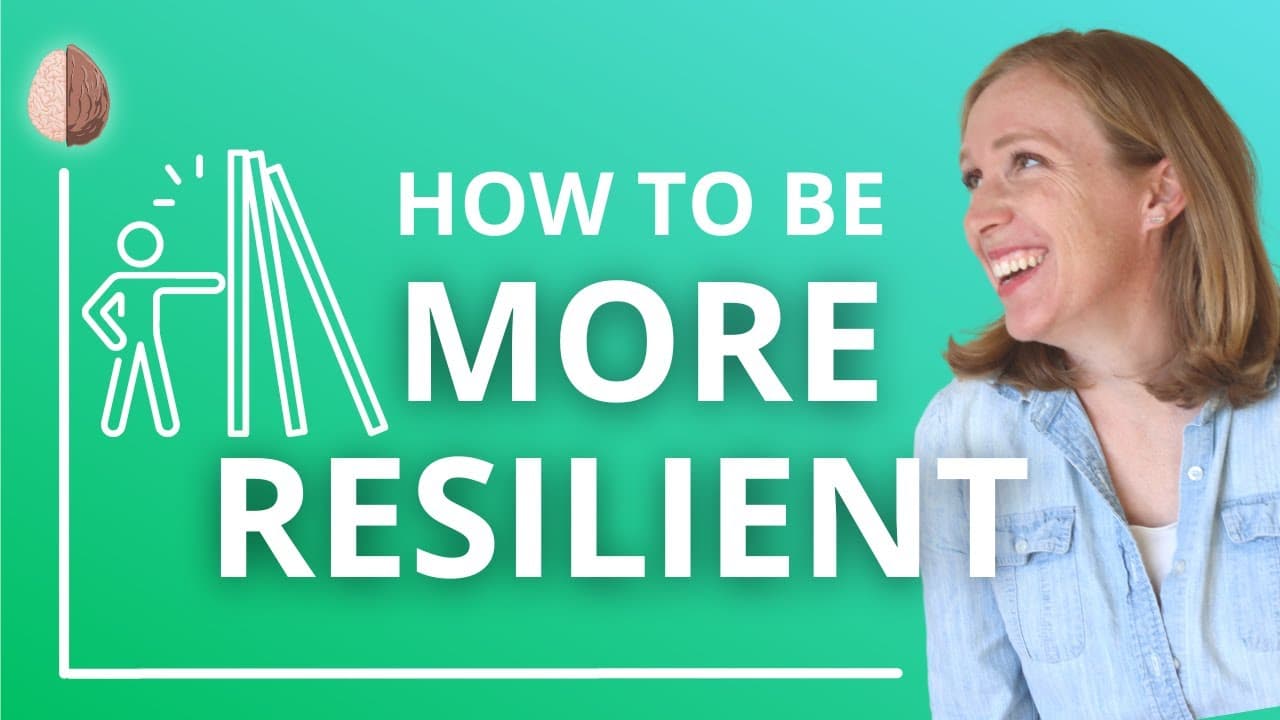
How to be More Resilient - 6 Traits of Resilient People - Featuring Laura Kampf
TL;DR
Resilience is a combination of toughness and flexibility, and can be developed through a growth mindset, seeking support, managing emotions, focusing on what can be controlled, being adaptable, and finding humor in difficult situations.
Transcript
Resilience is a skill that can be learned. And I was watching a creator the other day who totally embodies it: Laura Kampf. Like, she's such a great example of resilience. Oh hi, everybody, and welcome to my bathroom. So when it comes to being more resilient, a lot of people probably think that being more resilient means just try harder o... Read More
Key Insights
- 💪 Resilience can be learned by developing a toolbox of skills, rather than relying solely on grit and willpower.
- 💡 Resilient people have a growth mindset and believe that everything is figure-outable, viewing challenges as opportunities to learn and grow.
- 🤝 Resilient individuals seek support and build a network of people who can offer help and guidance, recognizing that asking for assistance is a sign of strength.
- 😌 Resilient people develop skills to tolerate uncomfortable emotions, taking breaks and practicing self-care to work through difficult situations.
- 🎯 Resilient individuals focus on what they can control and accept what is out of their control, directing their energy towards finding solutions rather than dwelling on uncontrollable factors.
- 🧠 Flexibility in thinking and adaptability to changing situations are key traits of resilient people. They are open to trying new approaches and accept failure as part of the learning process.
- 😄 Resilient individuals use humor and laughter as coping mechanisms, finding ways to lighten the mood and maintain a positive outlook even in challenging times.
Install to Summarize YouTube Videos and Get Transcripts
Explore YouTube Video Summarizer or Get YouTube Transcript Extractor
Questions & Answers
Q: How can a growth mindset contribute to building resilience?
A growth mindset is the belief that challenges and setbacks are opportunities to learn and grow. By approaching difficulties with a growth mindset, individuals are more likely to view them as temporary obstacles and not as reflections of their abilities. This mindset encourages resilience by fostering a sense of perseverance and a willingness to try different approaches until a solution is found. It also promotes a positive attitude and the belief that skills can be developed and improved over time.
Q: Why is seeking support an important trait of resilient people?
Seeking support is crucial for building resilience because it provides individuals with a network of people who can offer guidance, encouragement, and assistance. Resilient individuals understand that they don't have to face challenges alone and that reaching out for help is a sign of strength, not weakness. By building a support network, they have access to different perspectives, expertise, and resources that can help them navigate difficult situations more effectively. This support system also provides emotional support, which can boost morale and increase resilience during tough times.
Q: How can developing skills to manage uncomfortable emotions contribute to resilience?
Uncomfortable emotions are a natural part of facing challenges and setbacks. Resilient individuals understand the importance of managing these emotions effectively in order to bounce back and continue moving forward. By developing skills for emotional regulation, such as taking breaks, practicing self-care, and seeking healthy coping mechanisms, individuals can prevent overwhelming emotions from derailing their progress. These skills help individuals maintain a clear and focused mindset, allowing them to approach challenges with a calm and rational perspective, which in turn enhances their resilience.
Q: Why is flexibility an important trait for building resilience?
Flexibility is essential for resilience because it enables individuals to adapt and adjust their strategies in response to changing circumstances. Resilient individuals understand that maintaining a rigid mindset and continuously trying the same approach, even when it's not working, can hinder their progress. By being open to new ideas, perspectives, and solutions, they can find alternative paths to overcome challenges and setbacks. Flexibility also helps individuals develop problem-solving skills and promotes a sense of adaptability, allowing them to navigate unexpected obstacles with ease.
Q: How does finding humor in difficult situations contribute to resilience?
Finding humor in difficult situations can be a powerful tool for building resilience. It allows individuals to maintain a positive outlook and perspective, despite the challenges they may be facing. By finding the humor and lightness in a situation, individuals can reduce stress, release tension, and increase their overall well-being. Humor also promotes creativity and problem-solving, as it encourages individuals to think outside the box and find unusual solutions to their problems. Ultimately, finding humor in tough times boosts resilience by fostering a sense of optimism, adaptability, and emotional well-being.
Summary & Key Takeaways
-
Resilience is defined as the ability to bounce back from challenges and setbacks.
-
Resilient people have a growth mindset, believing that every challenge is an opportunity to learn and develop new skills.
-
Resilient individuals seek support from others, building a network of people who can provide guidance and assistance.
-
Resilient people develop skills to manage uncomfortable emotions and take breaks when needed.
-
Instead of focusing on what is out of their control, resilient individuals concentrate on what they can control and take steps to address those areas.
-
Resilient people are flexible in their thinking and willing to try new approaches to find solutions.
-
Lastly, resilient individuals have a sense of humor and find ways to laugh and lighten the mood, even in tough times.
Read in Other Languages (beta)
Share This Summary 📚
Summarize YouTube Videos and Get Video Transcripts with 1-Click
Try YouTube Summary with ChatGPT & Claude or YouTube Transcript Generator
Explore More Summaries from Therapy in a Nutshell 📚


Summarize YouTube Videos and Get Video Transcripts with 1-Click
Try YouTube Summary with ChatGPT & Claude or YouTube Transcript Generator