How to Use Breathing Exercises to Calm Anxiety
TL;DR
Slow, gentle breathing with a longer exhale can reduce anxiety by signaling safety through the vagal nerve and activating the parasympathetic response. Try inhaling for four counts and exhaling for six without forcing deep breaths, holding your breath, or lifting your shoulders. Regular practice can strengthen the nervous system's capacity to settle.
Transcript
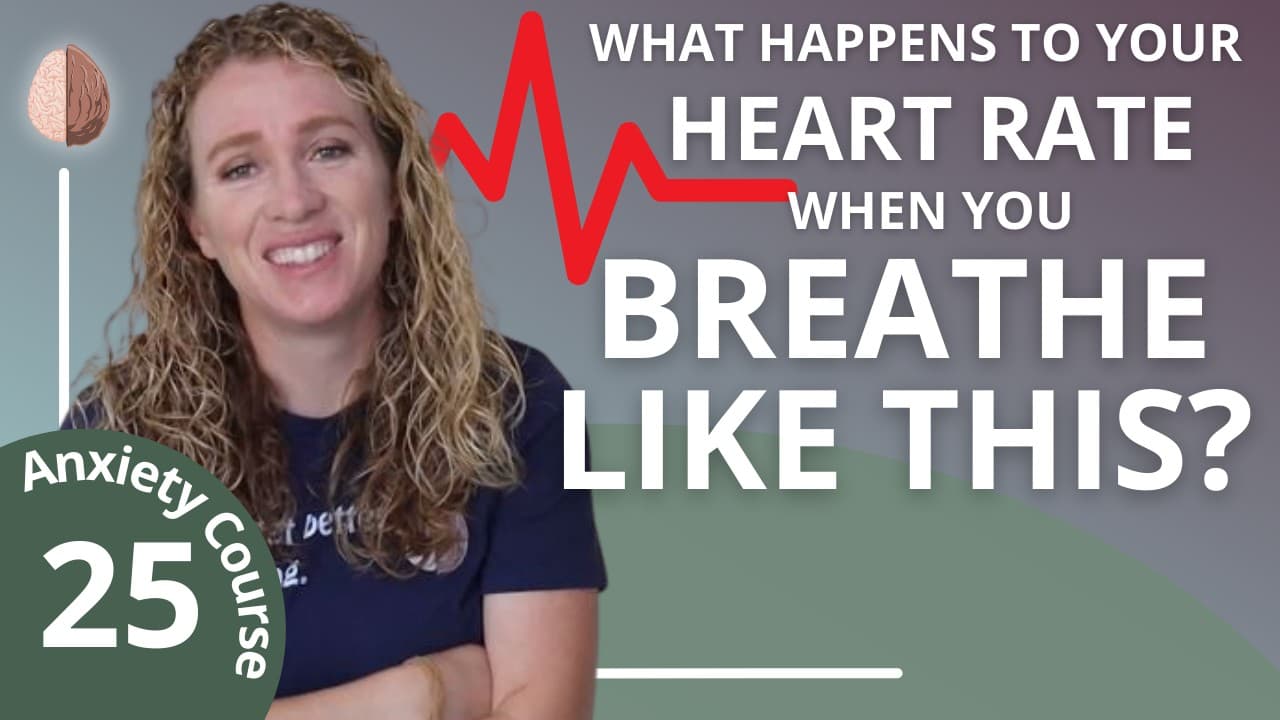
In this video you'll learn how to use your breath to calm anxiety using the vagal brake. Okay. So anxiety is a state of your nervous system. It's when your autonomic nervous system is activated. This can be triggered by an actual danger - a real threat in the present moment - but just as easily by a perceived danger- a threat that you imagine, ... Read More
Key Insights
- Anxiety is a state of autonomic nervous system activation that can be triggered by an immediate physical danger or by a perceived threat created through imagination and worry, even when the person does not recognize why the body is responding.
- Breath holding is an aspect of the freeze response that people may use throughout the day when they feel scared, tense, or uncertain. Observing this habit without immediately trying to change it can reveal how anxiety is expressed physically.
- Fast inhalations are activating because the body uses a sharp intake of breath when startled and preparing for action. By contrast, a sigh can provide a natural release of tension instead of expressing that tension through action.
- Heart rate variability is the difference between the faster heart rate associated with inhalation and the slower rate associated with exhalation. A larger difference is presented as a sign of healthier vagal tone and a stronger parasympathetic response.
- The vagal brake is the body's built-in system for slowing heart rate, lowering blood pressure, regulating breathing and digestion, and supporting relaxation. Slower breathing uses the vagal nerve's two-directional feedback loop to communicate safety from the body to the brain.
- Acceptance is essential when using breathing for anxiety because forcing calm can frame bodily sensations as threats. Making space for fast breathing, sweaty hands, and other uncomfortable sensations reduces the struggle that can otherwise reinforce perceived danger and continue the anxiety cycle.
- Belly breathing activates the parasympathetic response by allowing the stomach to rise before the chest while the shoulders remain relaxed. The breath should remain gentle because overly deep or forceful inhalation can cause some people to hyperventilate or feel faint.
- Paced breathing works by slowing the breath and lengthening the exhale, with four counts in and six counts out offered as a starting point. The pace can be shortened or lengthened, provided the breathing remains smooth, steady, and free of forced pauses.
Install to Summarize YouTube Videos and Get Transcripts
Explore YouTube Video Summarizer or Get YouTube Transcript Extractor
Questions & Answers
Q: How can breathing exercises calm anxiety?
Breathing exercises can calm anxiety by changing the body's physical state and sending a message of safety to the brain through the vagal nerve. Slow breathing, especially a longer and gentler exhale, activates the parasympathetic response. This vagal brake can slow heart rate, lower blood pressure, regulate breathing and digestion, and help the body relax.
Q: How do you practice paced breathing for anxiety?
Begin paced breathing by inhaling gently for four counts and exhaling slowly for six counts. Relax your shoulders, allow your stomach to rise, and picture the breath as a smooth wave with rounded peaks and valleys. Avoid sharp starts, breath holding, and forceful inhalation. Adjust the count if a shorter or longer pace feels more comfortable.
Q: What is belly breathing, and how is it performed?
Belly breathing, also called diaphragmatic breathing, involves allowing the stomach to rise before the chest during inhalation. Lie flat or sit in a chair, place one hand on the chest and one on the stomach, and breathe gently. Keep the shoulders relaxed, let the abdomen move loosely, and avoid gulping excessive amounts of air.
Q: Why should the exhale be longer than the inhale?
A longer, slow exhale is useful because inhaling tends to increase heart rate, while exhaling tends to decrease it. Extending the out breath therefore supports the body's calming parasympathetic response and sends a signal of safety to the brain. The suggested starting rhythm is four counts in and six counts out, performed gently and steadily.
Q: What is the vagal brake in anxiety regulation?
The vagal brake is the body's built-in mechanism for slowing heart rate, lowering blood pressure, regulating breathing and digestion, and promoting relaxation. It operates through the vagal nerve, which carries messages in both directions between the brain and body. Slowing the breath can engage this system and help turn down the anxiety response.
Q: Why can forcing yourself to calm down increase anxiety?
Forcing yourself to calm down can communicate that your current sensations are dangerous and unacceptable. Thoughts such as needing to stop the feelings immediately may turn the sensations themselves into a perceived threat, sustaining autonomic activation. A gentler approach is to allow the sensations, recognize that they will not harm you, and breathe without struggling against them.
Q: What should you do if deep breathing causes dizziness?
If deep breathing makes you feel faint or as though you are hyperventilating, stop trying to take large or forceful breaths. Focus instead on slowing the breathing without gulping air or filling the lungs excessively. Let the stomach move gently, keep the shoulders relaxed, and use a smooth rhythm of roughly four or five seconds per breath.
Q: How often should paced breathing be practiced?
Paced breathing should be practiced several times during the day so the nervous system becomes more familiar with the calming response. Repeated slow breathing and other parasympathetic exercises can strengthen vagal tone over time. The technique may also be used gently during stress, crisis, or panic, provided it is not treated as a forced demand to eliminate sensations.
Summary & Key Takeaways
-
Anxiety is an activated autonomic nervous system state that can arise from either present danger or an imagined threat. Because this system is not controlled directly, demanding that yourself calm down may fail. Gentle changes in breathing offer a physical route for communicating safety to the brain and reducing activation.
-
Breathing affects heart rate in observable ways. Inhaling and holding the breath tend to increase heart rate, while a long, slow exhale decreases it. This variation reflects vagal tone and the strength of the parasympathetic response. A pulse, heart rate monitor, or smartwatch can provide feedback during practice.
-
Belly breathing and paced breathing are presented as practical exercises. Let the stomach rise before the chest, keep the shoulders relaxed, and avoid gulping air. For paced breathing, begin with four counts in and six counts out, adjusting the timing until the breath feels smooth, gentle, and sustainable.
Read in Other Languages (beta)
Share This Summary 📚
Summarize YouTube Videos and Get Video Transcripts with 1-Click
Try YouTube Summary with ChatGPT & Claude or YouTube Transcript Generator
Explore More Summaries from Therapy in a Nutshell 📚
Summarize YouTube Videos and Get Video Transcripts with 1-Click
Try YouTube Summary with ChatGPT & Claude or YouTube Transcript Generator