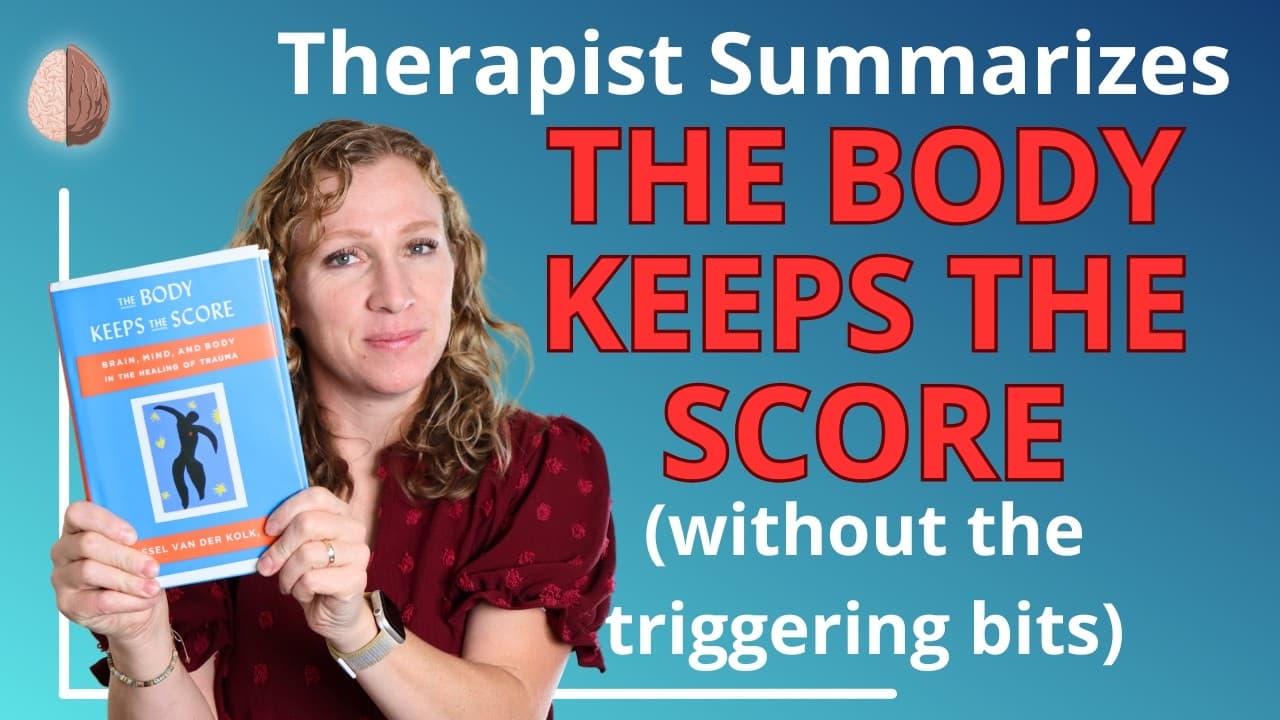
How does trauma reshape the brain and body explained
TL;DR
Trauma imprints itself on the mind, brain, and body and keeps survivors stuck in survival responses like fight, flight, or freeze. The video outlines how the brain’s three parts respond to danger, how memories are stored or repressed, and how chronic stress affects health, with encouragement toward understanding and body-based healing approaches.
Transcript
I think a lot of people are intimidated by The Body Keeps The Score and to be honest I was too. It's pretty long it has a lot of triggering examples of real-life trauma but it's also a great book for understanding how trauma affects the brain and body and that's probably why it's been on the New York Times bestseller list for like 5 years. ... Read More
Key Insights
- Trauma is an imprint left on mind, brain, and body with ongoing consequences.
- The brain is simplified into three parts: brain stem, limbic system, and prefrontal cortex.
- The prefrontal cortex can shut down under danger, triggering survival responses.
- The body responds with fight, flight, or freeze, and immobilization is a common trauma root.
- PTSD involves amygdala hyperreactivity and recalling traumatic memories.
- Trauma affects memory storage and retrieval, causing vivid or repressed memories.
- Chronic stress from trauma disrupts sleep, mood, and physical health.
- Depersonalization and dissociation can act as protective responses to trauma.
Install to Summarize YouTube Videos and Get Transcripts
Explore YouTube Video Summarizer or Get YouTube Transcript Extractor
Questions & Answers
Q: What is trauma as defined in the video?
Trauma is not just an event that happened in the past. It is the imprint left by that experience on mind, brain, and body, with ongoing consequences for how a person manages to survive in the present. This imprint can keep the nervous system and cognitive processes activated long after the event, altering perceptions and responses in daily life.
Q: How does the brain react to danger according to the video?
The video explains that danger triggers the brain stem, limbic system, and prefrontal cortex differently. In danger, the prefrontal cortex may shut down, and the reptilian brain takes over to initiate fight, flight, or freeze. This shift helps the body respond to immediate threats but can become a persistent pattern after trauma.
Q: What role does the body play in traumatic responses?
The body’s role is to run, scream, fight back, or take other actions to create safety. If escape or fighting is not possible, the body may shut down, leading to a slow heart rate, shallow breathing, and numbness. This immobilization is described as a root of many trauma responses.
Q: What is PTSD according to the video?
PTSD involves the amygdala staying on high alert, causing the lower brain to overreact to triggers even when the threat is gone. This results in flashbacks, nightmares, severe anxiety, and emotional numbing, which disrupts relationships and daily functioning.
Q: How does trauma affect memory, as described in the video?
Trauma can cause memories to be stored vividly or repressed, with some memories lingering and others fading. The brain may continue to secrete stress hormones when triggers occur, causing memory and attention difficulties and preventing full recall of the traumatic event.
Q: What are depersonalization and dissociation in trauma?
Depersonalization is a sense of detachment from oneself or the body, while dissociation involves separating from feelings or observing the trauma as if it were happening to someone else. These are protective responses that can help survivors cope but may disrupt day-to-day functioning.
Q: What health consequences are linked to chronic trauma, based on the video?
Chronic trauma and persistent stress can affect cardiovascular health, obesity or weight changes, digestive issues like IBS, sleep disturbances, and a higher risk of depression. The video emphasizes that trauma is a whole body response, not just a mental health issue.
Q: What healing approaches does the video hint at for trauma recovery?
The video points toward understanding trauma’s body-based effects and healing through approaches that regulate the nervous system and restore a sense of safety. While specifics are not deeply detailed in the excerpt, it suggests focusing on awareness, regulation, and body-centered therapies as effective components of recovery.
Summary & Key Takeaways
-
The video explains that trauma is an imprint on mind, brain, and body that continues to influence present functioning. It emphasizes that the response to trauma can be a mix of nervous system patterns, memory changes, and relationship difficulties, rather than a single event.
-
Understanding the three brain regions and their roles helps explain why trauma responses persist even after danger ends, and how awareness can aid healing.
-
The summary highlights the importance of body-based therapies and resilience-building as part of recovery from trauma, rather than relying on fear-based coping alone.
Read in Other Languages (beta)
Share This Summary 📚
Summarize YouTube Videos and Get Video Transcripts with 1-Click
Try YouTube Summary with ChatGPT & Claude or YouTube Transcript Generator
Explore More Summaries from Therapy in a Nutshell 📚

Summarize YouTube Videos and Get Video Transcripts with 1-Click
Try YouTube Summary with ChatGPT & Claude or YouTube Transcript Generator