How to Stop Over-Apologizing and Be More Assertive
TL;DR
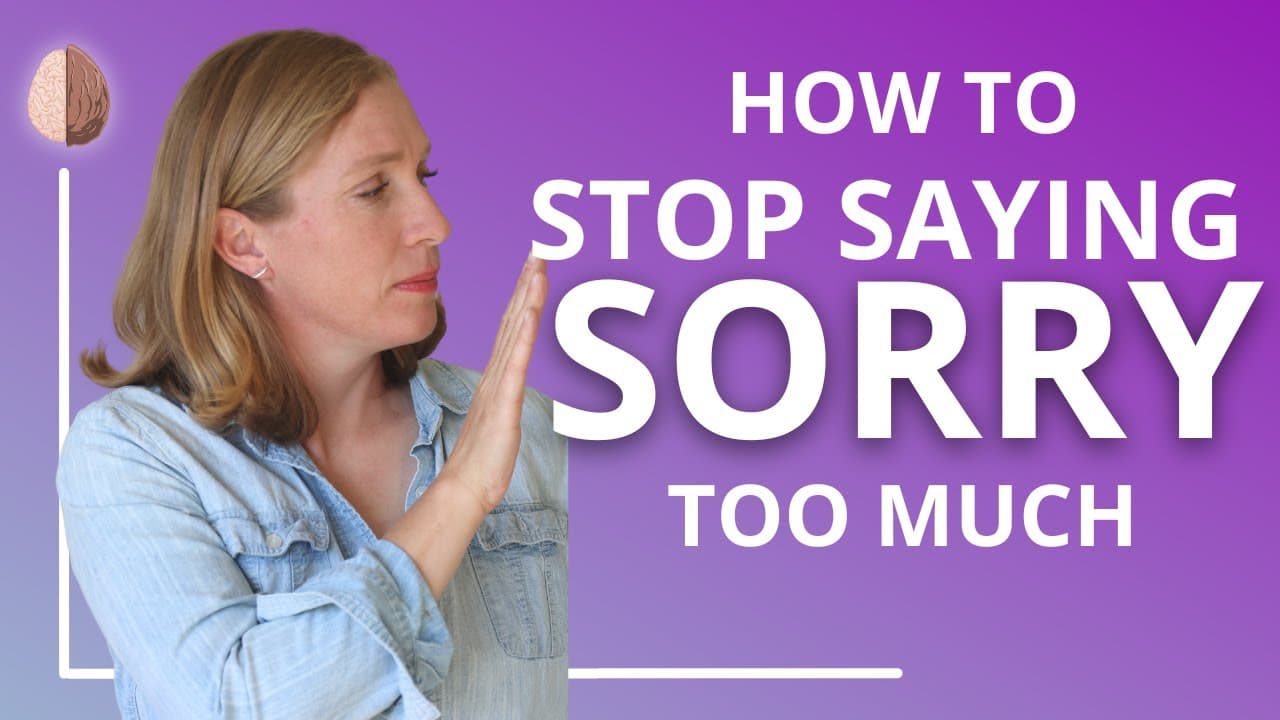
Saying sorry too much makes you look uncertain, insecure, and easily manipulated, and it undermines both relationships and communication. To stop, understand your triggers, pause before apologizing, and rephrase apologies as gratitude or assertive requests. Replace 'sorry for making you wait' with 'thank you for your patience' to build confidence and communicate more clearly.
Transcript
Have you ever found yourself saying sorry for things that didn't really deserve an apology in the first place? I once had a friend ask me, "Do you always apologize after giving someone a gift?" Now, it shook me a little bit because I had no idea I was doing that. But when I started watching myself, I totally did. I grew up in a culture of over-a... Read More
Key Insights
- Over-apologizing undermines how others see you and how you see yourself, affecting relationships both at home and in the workplace, and making you appear uncertain, unskilled, insecure, and easily manipulated.
- Low self-esteem drives over-apologizing as a form of reassurance-seeking that can become addictive; it relieves self-doubt short-term, but only internal validation is sustainable in the long run.
- Apologizing preemptively to avoid conflict works short-term but leads to poor communication, resentment, lack of clarity, and fewer good ideas being shared, creating more problems long-term.
- Over-apologizing is a defense mechanism to avoid vulnerability, tied to people-pleasing and the faulty mindset that you should never impose on others or that others' needs matter more than yours.
- Cultural conditioning shapes apology habits: in some cultures apologizing signals respect and humility, while in others it is viewed as weakness or subservience, and many apologize simply out of learned habit.
- Research found women reported offering more apologies than men but also reported committing more offenses, suggesting men apologize less because they have a higher threshold for what counts as offensive behavior.
- Over-apologizing has been associated with mental health conditions including anxiety, trauma, depression, low self-esteem, OCD, and perfectionism, making it worth addressing as part of broader well-being.
- Apologies can be rephrased into gratitude or assertive statements; saying 'thank you for your patience' instead of 'sorry for making you wait' preserves connection while building confidence and clearer communication.
Install to Summarize YouTube Videos and Get Transcripts
Explore YouTube Video Summarizer or Get YouTube Transcript Extractor
Questions & Answers
Q: Why is saying sorry too much a problem?
Saying sorry too much undermines how others see you and how you see yourself, impacting you both at home and in the workplace. It makes you look uncertain, unskilled, insecure, easily manipulated, and it interferes with good communication. In relationships, constant apologizing can make a partner feel they cannot express their own feelings or opinions, and it actually makes both people feel less secure rather than helping the relationship.
Q: Why do people over-apologize?
There are several reasons. Low self-esteem leads to apologizing to seek approval and reassurance, which can become addictive. Some apologize preemptively to avoid conflict, others to avoid vulnerability as a defense mechanism tied to people-pleasing. Cultural upbringing plays a role, since some cultures view apologizing as respect and humility. Many simply apologize out of learned habit, and research shows women tend to apologize more frequently than men.
Q: How does over-apologizing affect relationships?
In the story, Barbara apologized for everything, which annoyed her boyfriend Joe and caused him to dismiss her apologies, making her apologize even more. Joe explained that constant apologizing made him feel he couldn't express his own feelings or opinions. Barbara thought apologizing helped the relationship, but it actually made both of them feel less secure. He needed her to be more assertive and believe in her own worth.
Q: How do you stop over-apologizing?
There are four steps. First, understand your triggers by noticing which situations, family, friends, or colleagues, prompt your apologies, and journal about them. Second, pause and take a breath before saying sorry for something that is not your fault. Third, rephrase your response into gratitude or an assertive statement. Fourth, learn to be assertive by using 'I' statements, saying no when appropriate, and practicing self-affirmations.
Q: How can I rephrase an apology into something more assertive?
An apology can often be turned into a statement of gratitude or an assertive request. For example, say 'Thank you so much for your patience' instead of 'I'm sorry for making you wait.' When someone holds a door, say 'Thank you for waiting' rather than 'Sorry to make you wait.' Using 'I' statements to express feelings and needs, and making direct requests, replaces apologizing while keeping communication respectful and clear.
Q: Does gender affect how often people apologize?
Yes. Researchers found that gender contributes to apology frequency, as women often say sorry more frequently than men. According to a recent study cited in the video, women reported offering more apologies than men, but they also reported committing more offenses. This finding suggests that men apologize less frequently than women because they have a higher threshold for what constitutes offensive behavior, rather than simply refusing to apologize.
Q: What is the difference between negative, neutral, and assertive responses?
The video demonstrates three ways to handle situations. The negative or 'I'm bad' approach apologizes, like 'Sorry, my stuff is on the table.' The neutral approach expresses thanks, like 'Thanks for making space for my stuff.' The assertive approach states your need and makes a request, like 'I need some space on the table for my stuff. Could you slide down please?' Assertiveness allows honest give-and-take rather than one-sided self-sacrifice.
Q: How should I respond when I actually made a mistake?
When you genuinely mess up, avoid the negative approach of saying 'I'm so sorry, I'm such a screw-up, I'm the worst,' because it makes everything about you, doesn't make anyone feel better, and doesn't solve problems. Instead, take accountability by saying 'I messed up, I apologize.' To be more assertive and positive, say 'I messed up. How can I fix this, or how can I do better next time?' This focuses on solutions rather than self-criticism.
Summary & Key Takeaways
-
The creator grew up in a culture of over-apologizing and only realized in her 30s how harmful it can be. Saying sorry too much undermines how others perceive you and how you perceive yourself, and it damages relationships and communication both at home and at work.
-
People over-apologize for several reasons: low self-esteem and addictive reassurance-seeking, avoiding conflict, avoiding vulnerability tied to people-pleasing, cultural politeness norms, and simple habit. Research also links gender differences and mental health conditions like anxiety, trauma, and perfectionism to excessive apologizing.
-
Four steps help you stop: understand your triggers, pause and breathe before apologizing, and rephrase apologies as gratitude or assertive 'I' statements. Barbara sought therapy, set boundaries, and communicated directly, which improved her relationship with Joe and boosted her self-confidence.
Read in Other Languages (beta)
Share This Summary 📚
Summarize YouTube Videos and Get Video Transcripts with 1-Click
Try YouTube Summary with ChatGPT & Claude or YouTube Transcript Generator
Explore More Summaries from Therapy in a Nutshell 📚




Summarize YouTube Videos and Get Video Transcripts with 1-Click
Try YouTube Summary with ChatGPT & Claude or YouTube Transcript Generator