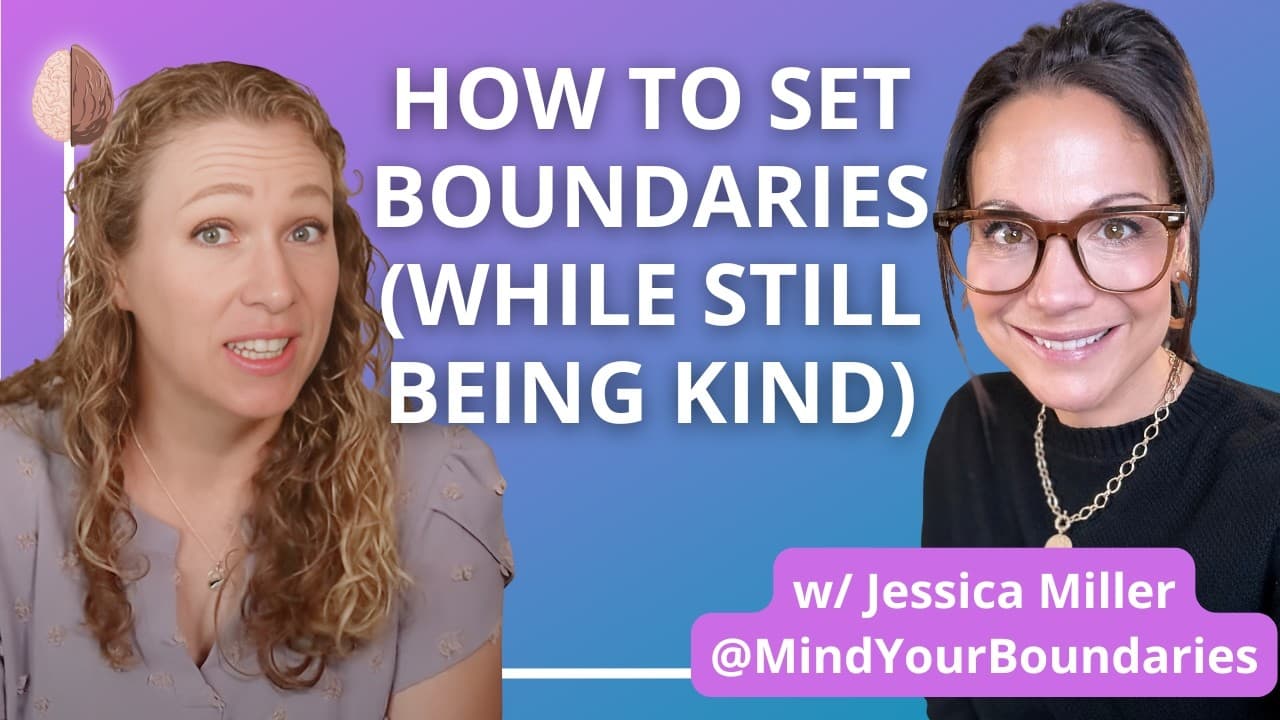
How to Set Boundaries Kindly and Effectively
TL;DR
A boundary is a self imposed rule that protects your needs and preserves relationships. Boundaries are not mean they are a form of self care and kindness to both sides. Communicating limits with care reduces resentment and supports healthier interactions and trust.
Transcript
Hi, everyone. Today I'm super excited that we're going to be talking about boundaries with a boundaries expert, Jess Miller. We're going to be talking about the nitty-gritty of setting boundaries. Why do we feel anxious when we do it? Why do we feel guilty after we do it? Why do we maybe shake or cry when we do it? What's the difference bet... Read More
Key Insights
- A boundary is a self imposed rule that keeps you safe balanced and protects relationships.
- Boundaries are learned as a kind act both to yourself and to others not as punishment or control.
- The fear of conflict often blocks boundary setting but avoiding it creates resentment and weakens trust.
- Being clear about the why behind a boundary helps you communicate it more effectively.
- Boundaries do not require meanness they can be firm and compassionate at the same time.
- Many people confuse kindness with saying yes to everything which leads to burnout and resentment.
- Practicing scripts and calm language makes boundary setting feel natural and humane.
- A boundary can involve limits on time energy space or accessibility and still be loving and respectful.
- More videos from this channel:
- More from this channel: Therapy in a Nutshell
Install to Summarize YouTube Videos and Get Transcripts
Explore YouTube Video Summarizer or Get YouTube Transcript Extractor
Questions & Answers
Q: How would you define a boundary?
A boundary is a self imposed rule or limit that keeps me safe balanced and strengthens my relationships. It serves as a clear signal of what I need and how I want to be treated while maintaining respect for others. Framing boundaries this way makes them feel like healthy boundaries rather than restrictions, and they support healthier interactions in daily life.
Q: What are common obstacles to setting boundaries?
Common obstacles include misunderstanding what a boundary is confusing it with being mean or selfish, and fear of disappointing others. People often avoid conflict and fear that asserting a limit will harm important relationships. Recognizing that boundaries prevent resentment allows you to reframe them as protective and caring rather than punitive.
Q: Have you always been good at setting boundaries?
No, I was a recovering people pleaser who tended to say yes to everything. The pattern involved burnout and retreat followed by more people pleasing. The turning point was realizing that communicating boundaries is kind to both me and the relationship, and that without them resentment grows, which actually weakens connections over time.
Q: How did you become a boundaries expert?
I became a boundaries expert by learning that setting a boundary is a compassionate act. It is the purest form of self love and it also protects relationships. Once I understood that not speaking up hurts the relationship and yourself, I started practicing clear but kind boundaries that preserve both your needs and others’ dignity.
Q: How can telling someone I don’t like what you’re doing be kind or loving?
Being kind means communicating your needs honestly while acknowledging the other person. It is possible to say, for example, that a behavior is not acceptable and still show care by offering a respectful alternative. Boundaries can guide behavior without attacking the other person, reducing defensiveness and maintaining the relationship’s trust.
Q: Can you give a boundary example with a family member?
A useful example is when a relative overstays and disrupts a nighttime routine with kids. You can calmly state the impact on the routine and the need for earlier endings, and offer a practical solution like a more limited visit or a set time. This keeps the relationship warm while protecting family time and children’s needs.
Q: Why is it important to know the why behind a boundary?
Knowing the why clarifies the purpose of the boundary and supports consistent communication. It helps you explain the boundary in terms of personal needs such as protecting time with your children or maintaining well being. The why makes your message feel meaningful rather than arbitrary and increases the likelihood others will respect it.
Q: What role does kindness play when setting limits with someone close?
Kindness in boundary setting means being direct, respectful, and empathetic about the other person’s perspective while still asserting your limits. It reduces the chance of misinterpretation and shows that you value the relationship. This approach helps both parties feel seen and respected, even when the boundary is firm.
Summary & Key Takeaways
-
Boundaries are framed as self care that protects time energy and relationships, not as manipulation. They start with a clear definition and the why behind setting them. The approach emphasizes kindness in the boundary and its impact on trust and respect within relationships.
-
The conversation highlights common obstacles such as confusing boundaries with selfishness and the fear of conflict. It also shares a personal shift from people pleasing to assertive but gentle boundary setting, illustrating practical communication strategies and the importance of understanding what is worth protecting.
-
Examples and scripts show how to set boundaries with family or close others in a compassionate way, turning potentially tense moments into constructive conversations that acknowledge the other person’s needs while asserting personal limits.
Read in Other Languages (beta)
Share This Summary 📚
Summarize YouTube Videos and Get Video Transcripts with 1-Click
Try YouTube Summary with ChatGPT & Claude or YouTube Transcript Generator
Explore More Summaries from Therapy in a Nutshell 📚


Summarize YouTube Videos and Get Video Transcripts with 1-Click
Try YouTube Summary with ChatGPT & Claude or YouTube Transcript Generator