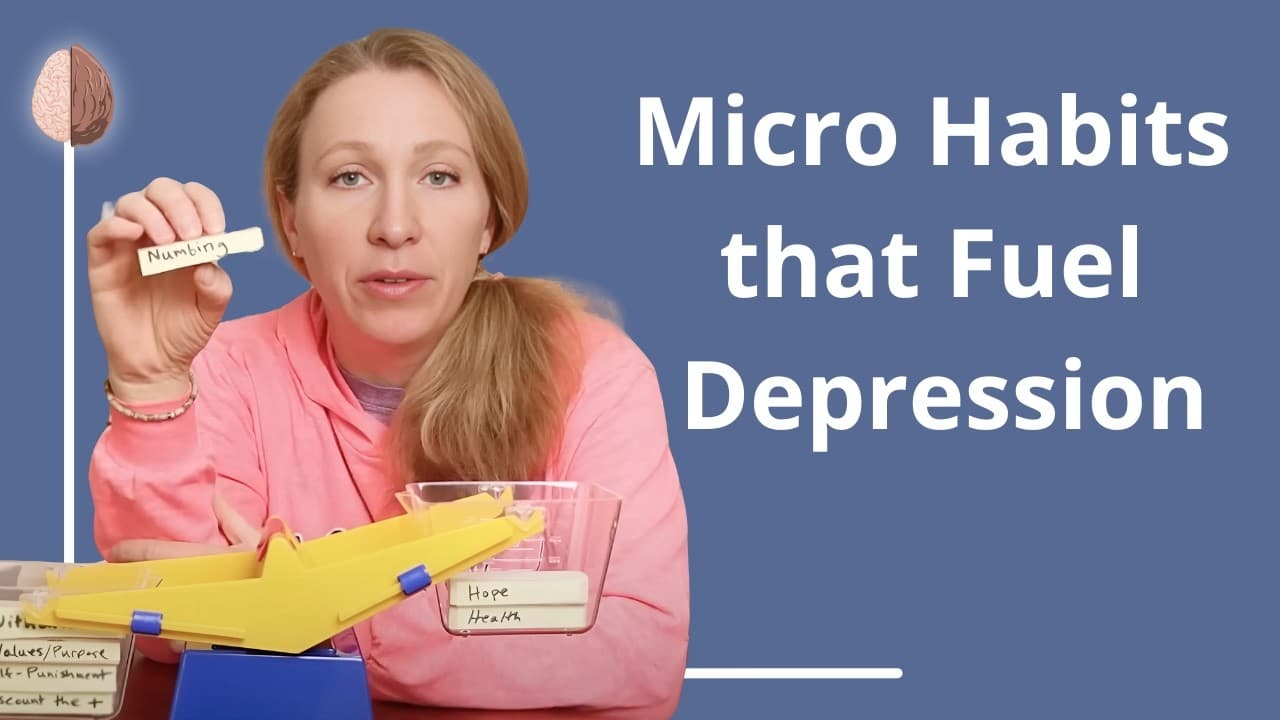
How to Break Micro Habits Fueling Depression
TL;DR
Small daily habits accumulate to worsen depression, while tweaking a few can restore mental resilience. Prioritize actions over motivation, practice self compassion, and tackle negative thinking patterns to reduce withdrawal, rumination, and emotional distress. Start with tiny steps like activating behavior, improving sleep, and seeking connection to counter depressive cycles.
Transcript
A lot of people who end up with major depressive disorder have no idea why they feel the way they do. Some have experienced trauma or a huge stressor but a surprising amount of them say something like, "Everything in my life is fine. I have no reason to be depressed but I just don't feel happy anymore." So here's my theory. Depression happens w... Read More
Key Insights
- Depression can be driven by micro habits that accumulate, overload the nervous system, and flip from effort to hopelessness.
- Self criticism and moral judgments about emotions fuel shame and inaction, undermining recovery and perpetuating depressive cycles.
- Replacing all or nothing thinking with small, doable actions helps maintain progress and reduces paralysis.
- Withdrawal from life creates loneliness and reinforces depressive states, so reengaging with activities is crucial.
- Numbing behaviors like overeating, distraction, or excessive phone use worsen mood by avoiding problems rather than solving them.
- Rumination keeps the brain stuck by replaying mistakes, which looks like problem solving but actually deepens distress.
- Motivation follows action; behavioral activation suggests taking small steps before feeling motivated to change mood.
- Growth mindset and reducing a victim or fixed mindset support resilience and adaptability in the face of adversity.
- More videos from this channel:
- More from this channel: Therapy in a Nutshell
Install to Summarize YouTube Videos and Get Transcripts
Explore YouTube Video Summarizer or Get YouTube Transcript Extractor
Questions & Answers
Q: How can micro habits impact depression?
Micro habits influence depression by accumulating over time to create patterns of avoidance, negative self talk, and emotional numbing. When small actions are withdrawn or replaced with negative cycles, the nervous system reinforces a sense of hopelessness. Recognizing and adjusting these tiny behaviors, such as choosing to engage in social activity or respond to stress with self compassion, can gradually restore balance and resilience.
Q: What is behavioral activation and why does it help?
Behavioral activation is a structured approach that encourages taking small, concrete actions even when motivation is low. It helps by counteracting withdrawal patterns that deepen depression, creating a sense of competence and connection. By gradually increasing activity levels, mood improves as the brain relearns that effort can lead to positive experiences, breaking the cycle of inaction.
Q: Why is self compassion important in managing depression?
Self compassion reduces shame and harsh self judgment that fuel depressive thinking. When people criticize themselves for feeling depressed, they reinforce a negative cycle that lowers motivation and increases withdrawal. Practicing kind, understanding responses to own emotions helps regulate stress responses and supports more adaptive coping strategies.
Q: How does all or nothing thinking affect mood?
All or nothing thinking locks people into black and white judgments, making small missteps seem like total failure. This pattern fuels hopelessness and stops attempts at partial progress, which are still valuable. Recognizing this thinking and choosing to act in smaller, incremental ways keeps momentum and mood from plummeting.
Q: What role does sleep play in depression according to the video?
Sleep disruption is tied to lower mood and greater depressive symptoms. Protecting sleep, avoiding stimulants late in the day, and maintaining consistent routines help stabilize mood. When sleep quality suffers, cognitive and emotional regulation worsens, making micro habits harder to sustain.
Q: How can rumination be reduced according to the insights shared?
Rumination sustains depressive thinking by over focusing on past mistakes and injustices. Redirecting attention to present actions and solutions, practicing mindfulness techniques, and engaging in small, purposeful activities helps interrupt this loop. Reducing rumination supports clearer thinking and more effective problem solving.
Q: What mindset shifts support recovery from depression?
Shifting from fixed or victim mindsets to a growth mindset is key. Believing that abilities and circumstances can improve with effort encourages flexible responses to adversity. This change promotes seeking help, learning new skills, and trying new strategies, all of which can reduce the impact of depressive symptoms.
Q: What practical steps can someone start with today?
Begin with tiny, doable actions such as scheduling a short walk, reaching out to a friend, or completing a small task you can finish. Pair these with reducing harsh self talk, choosing to view emotions as information rather than a verdict, and ensuring basic needs like sleep and nutrition are attended to. Small steps build momentum and resilience over time.
Summary & Key Takeaways
-
One analysis shows depression can stem from tiny, often unnoticed habits that accumulate and overwhelm the nervous system, leading to hopelessness and shutdown. By identifying and changing these micro habits, resilience can be restored and mood improved over time.
-
A key approach is behavioral activation, which encourages small actions even when motivation is low, to break the cycle of withdrawal and rumination and to rebuild engagement with life.
-
Emotional habits, such as self criticism and all or nothing thinking, reinforce negative moods; learning to separate feelings from reality and adopting a growth mindset helps shift toward healthier coping and recovery.
Read in Other Languages (beta)
Share This Summary 📚
Summarize YouTube Videos and Get Video Transcripts with 1-Click
Try YouTube Summary with ChatGPT & Claude or YouTube Transcript Generator
Explore More Summaries from Therapy in a Nutshell 📚





Summarize YouTube Videos and Get Video Transcripts with 1-Click
Try YouTube Summary with ChatGPT & Claude or YouTube Transcript Generator