How to find why you’re anxious and calm your brain
TL;DR
Anxiety often comes from small, overlooked threats in daily life, not just big dangers. When you identify if something is truly dangerous and choose a concrete action, you reduce the urge to flee. If there is no real danger, use breathing, acceptance, and willingness to return to calm and break the anxiety loop.
Transcript
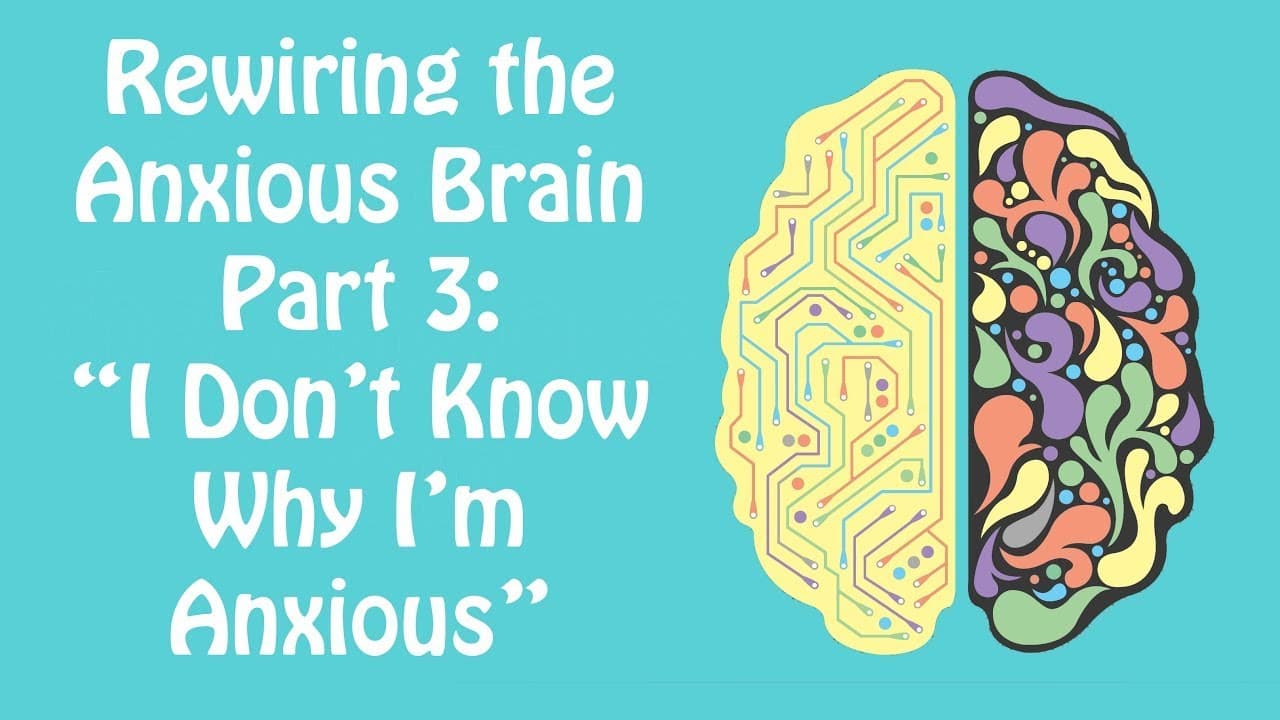
I made a video a while back titled rewiring the anxious brain. and it's all about how we accidentally train our brain to be more anxious through avoidance and how we can train our brain to be less anxious by facing our fears. and I used the fear of dogs as an example in that video. and in response to that video I got a lot of questions the most com... Read More
Key Insights
- Anxiety can be triggered by micro threats in the environment, not only by large, obvious dangers, leading to frequent false alarms and a persistent sense of unease.
- The fight flight freeze response is a fast, automatic reaction that can be activated by modern stressors such as traffic, noise, multitasking, and social interactions, even when the threat is not life threatening.
- Understanding the anxiety cycle helps you intervene early by assessing whether a threat is actually dangerous and choosing an appropriate response to return to calm.
- Avoidance and distraction reinforce anxiety by depriving the brain of the opportunity to learn that the threat is manageable, thereby maintaining the cycle.
- If a threat is not dangerous, facing it with breathing and staying present tends to restore calm and reduces future sensitivity to similar cues.
- If a threat is dangerous, taking action to reduce risk and then returning to calm through physical release of adrenaline helps break the cycle more efficiently.
- The best long term approach combines problem solving for real threats with acceptance and willingness when a threat cannot be controlled, preserving growth and freedom of response.
- Disordered anxiety is not a fixed genetic trait and can be reduced or adapted through trained skills and neuroplasticity, as described in the referenced courses and resources.
- More videos from this channel:
- More from this channel: Therapy in a Nutshell
Install to Summarize YouTube Videos and Get Transcripts
Explore YouTube Video Summarizer or Get YouTube Transcript Extractor
Questions & Answers
Q: What makes anxiety arise when there is no clear danger?
Anxiety can arise from micro threats that the brain interprets as dangerous even when there is no real danger. The fight flight freeze response can be triggered by everyday stimuli like traffic, noise, or social interactions, causing physical symptoms and a sense of unease. Learning to differentiate real threats from perceived ones helps you intervene with calm actions and reduce this misfiring over time.
Q: How should you respond when you realize there is no actual danger?
If there is no actual danger, the recommended approach is not to avoid or distract, but to breathe, stay with the moment, and calmly face the situation. This helps your parasympathetic system return you to calm and reduces the likelihood of future heightened responses. Repeated practice strengthens the ability to stay centered under similar cues.
Q: What happens when you avoid a perceived threat during anxious moments?
Avoiding a perceived threat tends to reinforce anxiety by teaching the brain that escaping is the safest option. This creates a pattern where future threats, even minor ones, trigger stronger anxiety. Facing the situation when possible breaks this negative reinforcement loop and supports healthier habit formation.
Q: What is the role of the parasympathetic nervous system in this context?
The parasympathetic nervous system helps return the body to a calm state after an anxiety surge. By breathing and engaging in calm making actions, you support this system in counteracting the fight flight freeze response. Strengthening this process over time reduces baseline anxiety and improves emotional regulation.
Q: What should you do if a threat is truly dangerous?
When a threat is truly dangerous, the correct response is to take action that mitigates the danger and then work to return to calm. This may involve physical movement or other risk-reducing actions. Afterward, you can process the event and practice skills to lower reactivity in the future.
Q: Why is willingness and acceptance important for handling anxiety?
Willingness and acceptance provide a framework to sit with uncomfortable emotions when a threat cannot be eliminated. This reduces avoidance and helps maintain contact with the present moment, decreasing the likelihood that anxiety will spiral. Acceptance can coexist with purposeful action when needed.
Q: What does the video suggest about the permanence of anxiety?
The video argues that disordered anxiety is not a permanent genetic trait but a condition that can be treated and reduced. Through neuroplasticity, specific skills, and structured practice, most people can lower their anxiety levels and live more comfortably, with the possibility of sustained improvement over time.
Q: How can one begin to rewire the anxious brain according to the video?
Begin by identifying micro threats and testing whether they are truly dangerous. Practice facing these cues with controlled exposure, use breathing to calm the body, and apply acceptance and willingness when you cannot change the threat. Additional resources such as online courses are suggested to reinforce these skills and support gradual neuroplastic changes.
Summary & Key Takeaways
-
A concise overview of how micro threats trigger the anxiety cycle and what to do to return to calm. The video explains distinguishing real danger from perceived danger and choosing actions that reduce anxiety over time.
-
Key strategies include facing rather than avoiding threats, using breathing to calm the body, and applying acceptance and willingness to manage emotions and prevent spiraling.
-
The video emphasizes that anxiety is treatable, not a fixed trait, and highlights practical steps and resources to learn neuroplasticity and coping skills for long term mental health improvement.
Read in Other Languages (beta)
Share This Summary 📚
Summarize YouTube Videos and Get Video Transcripts with 1-Click
Try YouTube Summary with ChatGPT & Claude or YouTube Transcript Generator
Explore More Summaries from Therapy in a Nutshell 📚



Summarize YouTube Videos and Get Video Transcripts with 1-Click
Try YouTube Summary with ChatGPT & Claude or YouTube Transcript Generator