10 Best Vox Explainers of All Time

Sep 15, 2026
17 min read
41 views
Last updated: September 2026
This is a ten-video sequence from Vox, ordered as a path rather than a ranking. It is for viewers who want concise explanations across biology, geopolitics, maps, sport, engineering, history, and music.
The full set runs just under an hour and a half. Among the most enduring are Vox's explainers on great white sharks, the Israel-Palestine conflict, and why every flat world map is distorted.
The videos on this list, in the order to watch them, are:
How Is Wildlife Trade Linked to Coronavirus Outbreaks? (Vox)
What Is the Saudi-Iranian Rivalry and Its Impact on the Middle East? (Vox)
This plane could cross the Atlantic in 3.5 hours. Why did it fail? (Vox)
Total: 10 videos, 88 minutes of watch time (1 hour 28 minutes), and 210.3M combined views.
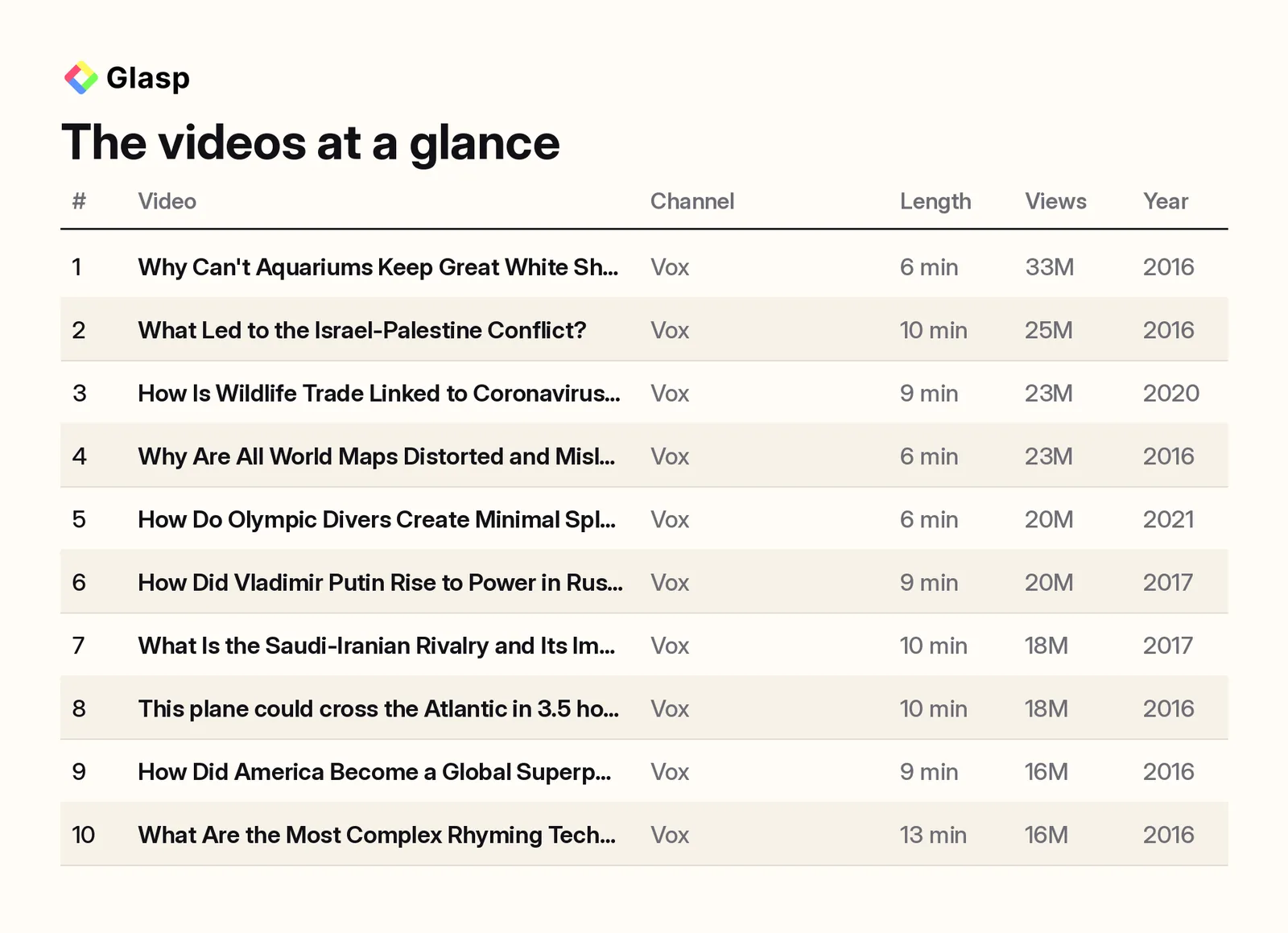
1. Why Can't Aquariums Keep Great White Sharks Alive?

"Why no aquarium has a great white shark" · Vox · 6 min · 33M views · 2016
In short: Great white sharks need open space and specific conditions that aquariums have not been able to provide without major costs and harm.
Start with a focused biological puzzle that shows how an explanation can overturn an assumption in six minutes. Vox asks why aquariums display nurse sharks, zebra sharks, reef sharks, and sand tiger sharks but not the world's largest predatory fish. The answer is not a lack of trying. Great whites need large, open environments and particular water conditions, and decades of attempts repeatedly ended with sharks refusing food, needing help to swim, or failing to survive.
The Monterey Bay Aquarium produced the clearest exception by focusing on juveniles, which are smaller and have different dietary needs from adults. Its program captured young sharks, acclimated them in ocean pens, and transferred them to a massive specialized tank. One juvenile lived for more than six months, but later sharks developed sores from tank walls. The physical harm, ethical concerns, and heavy resource demands helped end the effort, and no such attempt has been made since 2011.
Key takeaways
Great white sharks need large, open spaces and specific environmental conditions that aquariums struggle to reproduce.
Monterey Bay Aquarium kept one juvenile great white alive for more than six months by using ocean pens and a specialized tank.
Captive sharks developed physical injuries such as sores from tank walls, creating serious ethical concerns.
Aquariums have not attempted to keep great whites since 2011 because the work is costly, resource-intensive, and harmful to the animals.
Watch on YouTube · Read the summary and Q&A
2. What Led to the Israel-Palestine Conflict?
"The Israel-Palestine conflict: a brief, simple history" · Vox · 10 min · 25M views · 2016
In short: The conflict grew from competing claims to the same land as Palestinian nationalism, Zionist immigration, British rule, and later territorial disputes converged.
Move next from a contained scientific question to a historical conflict often distorted by a familiar myth. Vox argues that the Israel-Palestine conflict is not a centuries-old struggle driven mainly by ancient religious hatred. It traces the modern conflict to the early 1900s, when a Palestinian national identity was developing and Jewish immigration was increasing through the Zionist movement in a religiously diverse region that had long been under Ottoman rule.
After World War One, Britain controlled the region, tensions between Jews and Arabs grew, and limits on Jewish immigration contributed to the formation of Jewish militias. In 1947, the United Nations proposed separate Jewish and Arab states in response to sectarian violence, though many Arab states viewed the proposal as European colonialism. The later establishment of Israel, occupation of Palestinian territories, settlement movement, Intifadas, and stalled peace negotiations deepened the dispute and shifted political expectations on both sides.
Key takeaways
The modern conflict is primarily about two groups claiming the same land, not an ancient religious feud.
Palestinian national identity and Jewish immigration driven by Zionism became central forces in the early 1900s.
The United Nations proposed separate Jewish and Arab states in 1947 amid rising sectarian violence.
Occupation, settlements, the Intifadas, and failed peace efforts have intensified the conflict and reduced confidence in a resolution.
Watch on YouTube · Read the summary and Q&A
3. How Is Wildlife Trade Linked to Coronavirus Outbreaks?
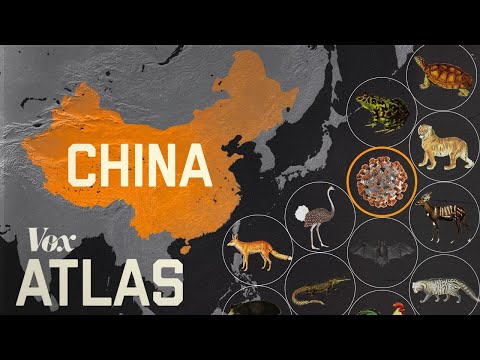
"How wildlife trade is linked to coronavirus" · Vox · 9 min · 23M views · 2020
In short: Wildlife markets place many species close together, increasing the risk that viruses will jump to people and spread through travel.
The third video keeps the focus on systems and consequences but shifts from national history to global health. Vox links the emergence of COVID-19 in Wuhan to the risks created by wet markets where wildlife is sold. Bringing many animal species into close proximity gives viruses more opportunities to move from animals to humans. The video argues that temporary shutdowns after outbreaks do not address the legal and illegal trade structures that allow the same danger to return.
SARS in 2003 provides the clearest precedent in the explanation because it also originated from similar wildlife markets in China. The wildlife trade had expanded after wildlife farming was legalized in the 1980s, and legal farming provided cover for illegal trade. After the coronavirus outbreak, the government temporarily shut wet markets and banned wildlife trade. Vox notes that most people in China do not consume wildlife, while a small, influential consumer base supports the market, making permanent policy a central prevention question.
Key takeaways
Wet markets that bring many wildlife species together increase the chance that viruses can jump from animals to humans.
China's wildlife trade expanded after the government legalized wildlife farming in the 1980s, which also provided cover for illegal trade.
SARS in 2003 came from similar wildlife markets, showing that the risk had already produced a major outbreak.
Temporary closures do not prevent the trade from returning, so the video argues for permanent action on wildlife markets.
Watch on YouTube · Read the summary and Q&A
4. Why Are All World Maps Distorted and Misleading?
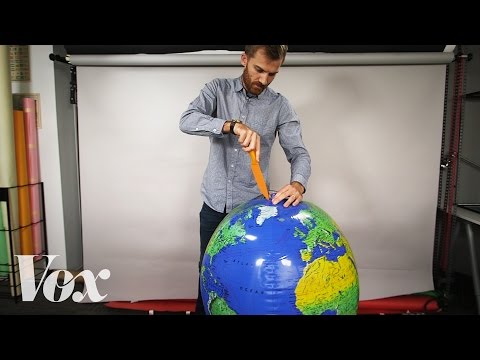
"Why all world maps are wrong" · Vox · 6 min · 23M views · 2016
In short: Flattening a spherical Earth always distorts shape, size, distance, or direction, so every map projection is a trade-off built for a purpose.
After three explainers about living systems and political history, this video supplies a compact lesson in how the tools used to see the world can mislead. Vox starts from a mathematical limit: the surface of a sphere cannot become a plane without distortion. Every projection therefore sacrifices some combination of shape, area, distance, or direction. The right question is not which flat world map is perfectly correct, but which compromise fits the task.
The Mercator projection preserves direction, which let navigators plot straight compass courses, but it greatly enlarges land near the poles. Gall-Peters preserves land area while stretching country shapes. Winkel Tripel offers a more balanced compromise between size and shape and is favored by many modern cartographers. Even Google Maps uses Mercator because preserving shapes and angles helps at city scale. GPS reduced reliance on paper maps for navigation, but the globe remains the most accurate representation of Earth.
Key takeaways
A spherical surface cannot be represented on a flat plane without distorting shape, area, distance, or direction.
Mercator preserves direction for navigation but exaggerates the size of land masses near the poles.
Gall-Peters preserves area at the cost of shape, while Winkel Tripel balances several kinds of distortion.
Google Maps still uses Mercator because its preservation of shapes and angles is useful for city-level navigation.
Watch on YouTube · Read the summary and Q&A
5. How Do Olympic Divers Create Minimal Splash?

"How Olympic divers make the perfect tiny splash" · Vox · 6 min · 20M views · 2021
In short: Divers reduce splash through a rip entry and underwater movements that break large air cavities into smaller bubbles.
At the midpoint, the sequence turns from the compromises inside a visual tool to the hidden mechanics behind a visible result. A small splash is not produced only at the instant a diver's hands meet the water. Vox breaks the dive into three components: above-water position, underwater swim, and underwater pike. Height, distance, and angular momentum set up the entry, while the movements below the surface control what viewers and judges see afterward.
The rip entry uses a specific hand position to break the surface with minimal disturbance. Some initial splash is unavoidable, but a second splash forms when an air cavity follows the diver underwater and then collapses. The underwater swim and somersault break that cavity into smaller bubbles, reducing the secondary splash. Judges consider splash size within their subjective overall impression even though minimizing splash is not formally the main goal in the FINA rule book. It remains a visible sign of a well-executed dive.
Key takeaways
A successful dive combines above-water position, underwater swim, and underwater pike.
The rip entry uses specific hand positioning to disturb the water surface as little as possible.
Underwater swimming and somersaulting break an air cavity into smaller bubbles, reducing the secondary splash.
Judges use splash size as part of their overall impression, even though it is not the official main goal of diving.
Watch on YouTube · Read the summary and Q&A
6. How Did Vladimir Putin Rise to Power in Russia?

"From spy to president: The rise of Vladimir Putin" · Vox · 9 min · 20M views · 2017
In short: Putin used post-Soviet disorder, KGB connections, oligarch support, war, and media control to consolidate an authoritarian system.
The sixth video returns to political history with the earlier lessons about systems and appearances in view. Vox traces Vladimir Putin's rise to the economic instability and political discontent that followed the Soviet Union's collapse. Wealth had become concentrated among a small group of oligarchs, while Putin used his KGB background and relationships with former intelligence officers and business elites to build influence. He became prime minister and then president, presenting himself as the leader who could restore order.
The Chechen conflict gave that image its strongest early boost, raising Putin's popularity through a display of strength and national pride. Once established, his administration suppressed dissent, controlled media, and used propaganda to reinforce his public position. Abroad, military interventions in Georgia, Ukraine, and Syria expanded Russian influence, while cyber warfare offered another way to disrupt Western political processes. Economic sanctions and domestic challenges remained, but these tools helped Putin retain power from 1999 onward.
Key takeaways
Post-Soviet economic chaos and the concentration of wealth among oligarchs created the setting for Putin's rise.
Putin used his KGB background and connections to become prime minister and then president.
The Chechen conflict increased his popularity by supporting an image of restored order and national strength.
Media control, suppression of dissent, military intervention, and cyber warfare became central tools of his rule.
Watch on YouTube · Read the summary and Q&A
7. What Is the Saudi-Iranian Rivalry and Its Impact on the Middle East?

"The Middle East's cold war, explained" · Vox · 10 min · 18M views · 2017
In short: Saudi Arabia and Iran compete for regional influence by backing opposing factions, turning other countries' conflicts into proxy wars.
Putin's use of influence beyond Russia leads into a wider account of indirect power. Vox frames Saudi Arabia and Iran as rivals that generally avoid fighting each other directly while supporting opposing sides in other countries. The competition resembles a Cold War and helps explain why separate uprisings, civil wars, and insurgencies become connected. Religious difference matters, but the Sunni-Shia divide is an intensifier rather than the rivalry's sole or primary cause.
The Iranian Revolution in 1979 sharpened historical, political, and religious differences between the two states. During the Iran-Iraq War in the 1980s, Saudi Arabia supported Iraq, deepening the hostility. The Arab Spring and the civil wars that followed then opened new arenas in which both powers backed different factions, including conflicts in Syria and Yemen. These proxy battles draw other countries into local wars, spread hardship across borders, and make efforts to stabilize the region more difficult.
Key takeaways
Saudi Arabia and Iran pursue influence by supporting opposing factions in other Middle Eastern countries.
The rivalry intensified after the Iranian Revolution in 1979 and is often compared with the Cold War.
The Sunni-Shia divide increases tension, but it is not the main origin of the rivalry.
The Iran-Iraq War, Arab Spring, and later civil wars created arenas for proxy conflict that destabilized the region.
Watch on YouTube · Read the summary and Q&A
8. This plane could cross the Atlantic in 3.5 hours. Why did it fail?

"This plane could cross the Atlantic in 3.5 hours. Why did it fail?" · Vox · 10 min · 18M views · 2016
In short: Concorde cut transatlantic travel to about three and a half hours, but noise limits, fuel and maintenance costs, environmental concerns, and a narrow market made it unsustainable.
The eighth video shifts from states competing for power to a technology whose performance could not overcome its constraints. Concorde carried passengers across the Atlantic at supersonic speed from 1976 to 2003, reducing a New York to London trip from about seven hours to roughly three and a half. Vox argues that technical achievement alone did not create a durable service. The plane's economics, environmental effects, route restrictions, and limited passenger capacity all worked against broader adoption.
Sonic booms kept supersonic flight away from populated land and largely confined Concorde to oceanic routes. Concerns that its exhaust could affect the ozone layer created another obstacle. Heavy fuel use, maintenance requirements, and small capacity pushed ticket prices beyond a broad market. A fatal crash in 2000 and the airline downturn after September 11 added decisive pressure. Airbus concluded that upgrading the aging fleet would cost too much, and Concorde retired in 2003 without a sustainable business model.
Key takeaways
Concorde reduced New York to London travel from about seven hours to roughly three and a half hours.
Sonic booms limited supersonic flights over populated areas, sharply restricting the routes Concorde could serve.
Fuel, maintenance, limited capacity, and high ticket prices prevented the plane from reaching a broad market.
The 2000 crash, the post-September 11 downturn, and high upgrade costs contributed to the fleet's 2003 retirement.
Watch on YouTube · Read the summary and Q&A
9. How Did America Become a Global Superpower?

"How America became a superpower" · Vox · 9 min · 16M views · 2016
In short: Territorial growth, industrial power, overseas expansion, postwar institutions, and Cold War alliances turned the United States into a global superpower.
After Concorde shows the limits of one ambitious technology, the ninth video expands the scale to two centuries of national power. Vox begins with United States territorial acquisitions across North America, often at the expense of Indigenous populations, and follows the country's reach to the Pacific. Industrialization strengthened the central state and gave expansionist leaders more capacity to act abroad. The Spanish-American War and the acquisition of Puerto Rico, Guam, and the Philippines marked the country's arrival as a global power.
World War I displayed growing American influence, though isolationism remained strong at home. After World War II, the United States helped create the United Nations and the Bretton Woods system to prevent conflict and stabilize the global economy. The Cold War added containment, NATO, and interventions against Soviet influence. Those commitments remained after the Soviet rivalry ended. The video measures their scale through more than 800 military bases worldwide and 37 percent of global military spending.
Key takeaways
Territorial expansion across North America and industrial growth gave the United States the base for overseas influence.
The Spanish-American War and acquisitions of Puerto Rico, Guam, and the Philippines marked its rise as a global power.
After World War II, the United States helped build the United Nations and Bretton Woods system.
More than 800 military bases and 37 percent of global military spending reflect the scale of continuing American power.
Watch on YouTube · Read the summary and Q&A
10. What Are the Most Complex Rhyming Techniques in Rap?

"Rapping, deconstructed: The best rhymers of all time" · Vox · 13 min · 16M views · 2016
In short: Rap evolved from simple end-rhyme patterns into dense internal, multisyllable, cross-bar, and whole-line structures that add musical and narrative complexity.
Close with an explainer that applies the sequence's attention to structure, hidden mechanisms, and history to an art form. Vox tracks how rap moved beyond basic AA BB patterns as artists increased the frequency, length, and placement of rhyme. Rakim introduced internal and multisyllable rhymes, while later artists developed smoother cross-bar movement, denser sound patterns, and unexpected accents. The result is a vocabulary for hearing technique that can otherwise pass too quickly to name.
Notorious B.I.G. used Rakim's methods to build smooth, unpredictable rhymes that cross bar lines. Mos Def filled bars with dense multisyllable patterns, and Andre 3000 shifted rhyme placement around the beat. Eminem paired packed rhymes with vivid storytelling in "Lose Yourself," while Kendrick Lamar used a repeating musical motive in "Rigamortus." MF Doom pushed the form toward holorime, making entire bars rhyme across nearly every syllable and using the relationship between rhyme and beat for wordplay.
Key takeaways
Rakim increased rhyme frequency and introduced internal and multisyllable rhymes that changed rap writing.
Notorious B.I.G. carried rhymes across bar lines, while Mos Def built dense patterns that hit nearly every note in a bar.
Kendrick Lamar used a musical motive to hold "Rigamortus" together, and Eminem combined dense rhyme with vivid storytelling.
MF Doom used holorime and wordplay so that entire setup and punchline bars could rhyme across their syllables.
Watch on YouTube · Read the summary and Q&A
Frequently asked questions
What are the best Vox explainers of all time?
Three of the strongest are "Why no aquarium has a great white shark," "Why all world maps are wrong," and "Rapping, deconstructed: The best rhymers of all time." Together they show Vox explaining a biological constraint, a mathematical limit, and the changing structure of an art form through specific evidence.
How long does it take to watch all ten Vox explainers?
The full list takes 88 minutes, or 1 hour 28 minutes. The shortest videos run 6 minutes, including the great white shark, world map, and Olympic diving explainers. The longest is the rap episode at 13 minutes, so every selection fits within a single short viewing session.
Why can't aquariums keep great white sharks alive?
Great whites need large, open spaces and specific environmental conditions. Earlier captive sharks often refused food or needed help swimming. Monterey Bay Aquarium kept one juvenile for more than six months using an ocean pen and specialized tank, but later sharks developed sores from tank walls. Resource demands and ethical concerns ended the program.
Why is every flat world map distorted?
The surface of a sphere cannot be flattened without changing shape, area, distance, or direction. Mercator preserves direction but enlarges land near the poles. Gall-Peters preserves area but stretches shapes, while Winkel Tripel balances several distortions. The best projection depends on its purpose, and the globe remains the most accurate model.
How do Olympic divers make such a small splash?
They use a rip entry with precise hand positioning, then control the air cavity below the surface through an underwater swim and somersault. Breaking the cavity into smaller bubbles reduces the secondary splash. Judges consider the result within their overall impression, even though splash is not formally the main goal of the dive.
Was the Israel-Palestine conflict caused by ancient religious hatred?
The video says no. It places the modern conflict in the early 1900s and centers two groups' claims to the same land. Palestinian national identity, Jewish immigration driven by Zionism, British rule, Israel's establishment, occupation, settlements, the Intifadas, and failed peace efforts all shaped the conflict. Religion is involved, but it is not the full explanation.
Why did Concorde fail despite cutting travel time in half?
Its speed could not support a sustainable business model. Sonic booms restricted routes, concerns about exhaust and the ozone layer limited its appeal, and high fuel and maintenance costs led to expensive tickets. The fatal 2000 crash, the post-September 11 downturn, and Airbus's decision that fleet upgrades cost too much led to retirement in 2003.
Which Vox explainer should I watch first?
Start with "Why no aquarium has a great white shark." In six minutes, it establishes the list's method: begin with a familiar absence, examine repeated failed attempts, and find the environmental, physical, ethical, and economic constraints behind it. It also leads naturally from a focused question into the broader systems covered next.
Are the older Vox explainers still worth watching?
Yes. Six videos on the list are from 2016, yet their central subjects remain clear historical or structural questions: aquarium limits, territorial conflict, map projection, supersonic aviation, American power, and rhyme technique. The older entries explain how those systems developed, what trade-offs they contain, and why familiar outcomes emerged.
How to use this list
Watch the videos in order to move from tightly framed puzzles about animals, conflict, disease, maps, and sport into larger accounts of political power, technological economics, national influence, and artistic form. If you only have twenty minutes, start with "Why Can't Aquariums Keep Great White Sharks Alive?" because its six-minute case shows how Vox builds an explanation from failed attempts and concrete constraints. If you want the single video that best explains an unavoidable trade-off, choose "Why Are All World Maps Distorted and Misleading?"
Related lists
💡 Want summaries and transcripts for any YouTube video? Try YouTube Summary with ChatGPT & Claude.