How Did Vladimir Putin Rise to Power in Russia?
TL;DR
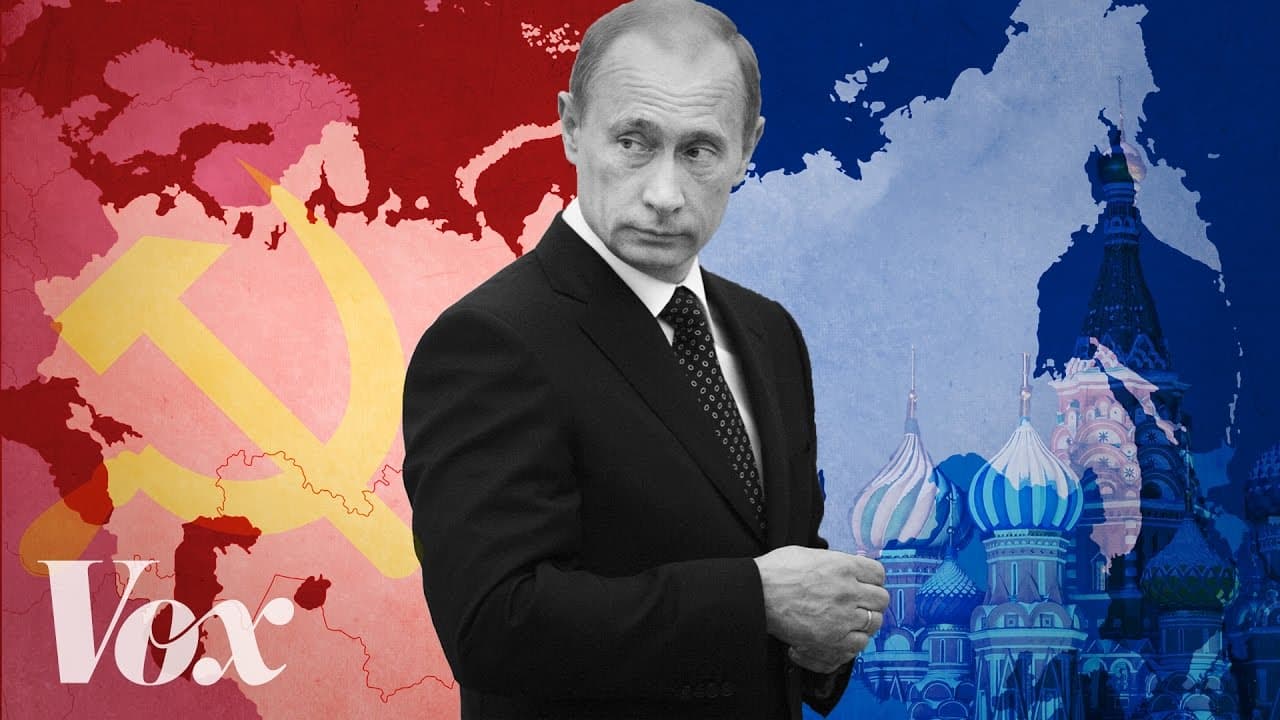
Vladimir Putin rose to power by exploiting the chaos following the Soviet Union's collapse, leveraging connections with oligarchs and former KGB officials to consolidate control. His popularity surged after the Chechen war, and he established an authoritarian regime characterized by media control, military aggression, and strategic cyber warfare, despite facing economic sanctions from the West.
Transcript
Vladimir Putin has been ruling Russia since 1999. In that time he's shaped the country into an authoritarian and militaristic society. He successfully invaded two of Russia's neighbors and strengthened ties with Syria and Iran. He's intent on pushing back against the Western world order... and it appears to be working. [Vladimir Putin, 17 years in ... Read More
Key Insights
- Vladimir Putin has been a dominant figure in Russian politics since 1999, transforming the country into an authoritarian state with a focus on militarism and nationalism.
- The fall of the Soviet Union led to economic chaos in Russia, with wealth concentrated among a few oligarchs, setting the stage for Putin's rise to power.
- Putin leveraged his KGB background and connections to gain political influence, eventually becoming prime minister and later president of Russia.
- His initial popularity surged following the Chechen conflict, where he was perceived as a strong leader who could restore order and national pride.
- Putin's administration has been marked by the suppression of dissent, control over media, and the use of propaganda to maintain his image as a powerful leader.
- On the international stage, Putin has pursued aggressive policies, including military interventions in Georgia, Ukraine, and Syria, to expand Russian influence.
- Cyber warfare has become a key tool for Putin's regime, with Russian hackers targeting Western nations to disrupt and influence political processes.
- Despite economic challenges and international sanctions, Putin's strategic maneuvers continue to bolster his position domestically and on the global front.
- More videos with Vladimir Putin:
Install to Summarize YouTube Videos and Get Transcripts
Explore YouTube Video Summarizer or Get YouTube Transcript Extractor
Questions & Answers
Q: How did Putin first gain political influence in Russia?
Putin gained political influence by leveraging his background in the KGB and his connections with influential figures in St. Petersburg. He used his position as deputy mayor to favor allies in the private sector, building a network of support among oligarchs and former KGB officers, which facilitated his rapid ascent in Russian politics.
Q: What role did the Chechen conflict play in Putin's rise to power?
The Chechen conflict was pivotal in boosting Putin's popularity and solidifying his image as a strong leader. Following deadly bombings blamed on Chechen separatists, Putin's decisive military response rallied public support, increasing his approval ratings and paving the way for his presidency. This conflict helped establish his reputation as a protector of Russian stability and security.
Q: How has Putin maintained control over Russian media?
Putin has maintained control over Russian media by ensuring that major news outlets are state-owned or aligned with the government. This allows his administration to dictate the narrative, suppress dissenting voices, and present him as a strong leader. The media serves as a propaganda tool, shaping public perception and reinforcing his authoritarian regime.
Q: What are some of Putin's key foreign policy strategies?
Putin's foreign policy strategies include military interventions, cyber warfare, and strategic alliances. He has used military force in Georgia, Ukraine, and Syria to assert Russian influence. Additionally, his regime has developed a sophisticated cyber army to disrupt Western nations and support sympathetic political movements, aiming to weaken adversaries and expand Russia's global reach.
Q: How has Putin's regime impacted Russia's economy?
Putin's regime has had a mixed impact on Russia's economy. While he has stabilized certain sectors, his aggressive foreign policies have led to international sanctions, isolating Russia from Western markets. This isolation, combined with a reliance on the energy sector, has resulted in economic challenges, including a devalued currency and reduced foreign investment.
Q: What is the significance of Putin's cyber strategy?
Putin's cyber strategy is significant as it represents a modern form of warfare that extends Russia's influence globally. By deploying hackers to steal information, disrupt political processes, and conduct propaganda campaigns, Putin aims to destabilize Western democracies, support right-wing movements, and maintain Russia's strategic advantage in international affairs.
Q: How did international relations change during Putin's leadership?
During Putin's leadership, international relations have become more confrontational. Initially, relations with the West were relatively positive, but Putin's aggressive actions in Georgia, Ukraine, and Syria, along with cyber attacks, have strained ties. His policies have led to increased tensions, sanctions, and a more isolated Russia on the global stage.
Q: What challenges does Putin's Russia face moving forward?
Putin's Russia faces several challenges, including economic sanctions, a declining energy sector, and international isolation. Domestically, maintaining control over a discontented population amid economic hardships is a concern. Internationally, balancing aggression with diplomatic relations is crucial as Russia seeks to assert its influence without further alienating potential allies or exacerbating economic woes.
Summary & Key Takeaways
-
Vladimir Putin's leadership has been characterized by a shift towards authoritarianism and militarism, beginning with his rise to power in the late 1990s amid the chaos following the Soviet Union's collapse.
-
Putin capitalized on economic instability and political discontent to build a support network of oligarchs and former KGB officers, enabling him to consolidate control and suppress opposition.
-
Internationally, Putin has pursued aggressive foreign policies, using military force and cyber tactics to expand Russia's influence, despite facing economic sanctions and criticism from the West.
Read in Other Languages (beta)
Share This Summary 📚
Summarize YouTube Videos and Get Video Transcripts with 1-Click
Try YouTube Summary with ChatGPT & Claude or YouTube Transcript Generator
Explore More Summaries from Vox 📚

Summarize YouTube Videos and Get Video Transcripts with 1-Click
Try YouTube Summary with ChatGPT & Claude or YouTube Transcript Generator