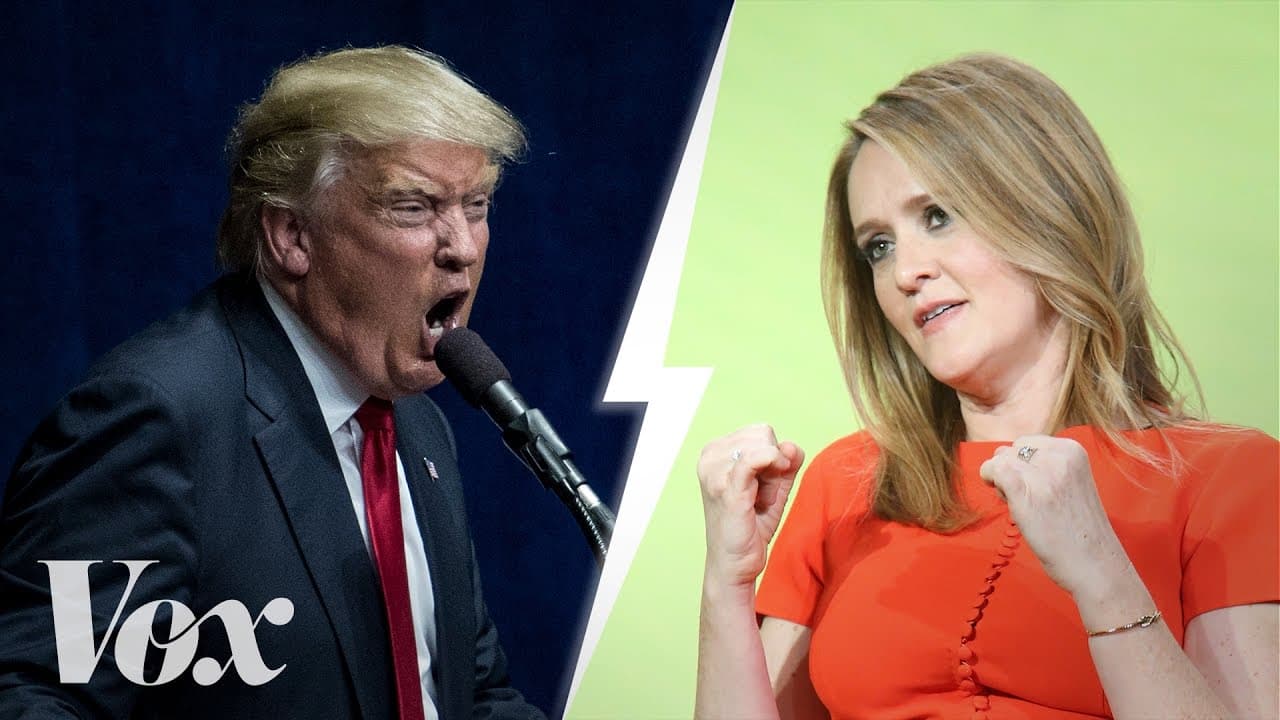
Comedians have figured out the trick to covering Trump
TL;DR
Comedians excel in covering Trump by cutting through absurdities.
Transcript
Late-night comedians have become rock stars in the Trump era. [John Oliver] "He's tweeting the chancellor of Germany like a drunk guy masturbating in a subway car!" Between Samantha Bee, John Oliver, Colbert, Myers, SNL, Comedians are playing a big part in how we talk about politics. [Seth Myers] "Trump does have a tendency to lie his ass off. That... Read More
Key Insights
- Late-night comedians have become influential voices in political discourse during the Trump era, using humor to address and critique his administration.
- Comedians like Samantha Bee, John Oliver, and Stephen Colbert have effectively highlighted the absurdity of Trump's statements, often outperforming traditional news outlets in coverage.
- Political satire offers a low tolerance for misinformation, making it a powerful tool in debunking falsehoods and conspiracy theories perpetuated by Trump.
- While major news networks often engage in debates over Trump's claims, comedians swiftly dismiss baseless allegations, emphasizing their ridiculous nature.
- Sophia McClennen argues that satire makes audiences smarter news consumers by encouraging skepticism and critical thinking about political narratives.
- Traditional journalists sometimes struggle to call out Trump's falsehoods due to a perceived need for seriousness, whereas comedians leverage humor to expose absurdities.
- Satire trains audiences to recognize and question manipulation, offering a perspective that traditional news may lack due to its format.
- Comedians have not only critiqued Trump's policies but also the media's coverage, urging journalists to focus on truth rather than false equivalency.
Install to Summarize YouTube Videos and Get Transcripts
Explore YouTube Video Summarizer or Get YouTube Transcript Extractor
Questions & Answers
Q: How have late-night comedians influenced political discourse during the Trump era?
Late-night comedians have become influential voices in political discourse by using humor to address and critique the Trump administration. Their satire allows them to highlight the absurdity of Trump's statements, often outperforming traditional news outlets in coverage. This influence has made them key players in shaping public perception and understanding of political events.
Q: Why do comedians excel in covering Trump's administration compared to traditional news outlets?
Comedians excel in covering Trump's administration because they have a low tolerance for misinformation and absurdity. By swiftly dismissing baseless allegations and using humor to expose ridiculous claims, they provide audiences with a critical perspective that traditional news outlets, which often engage in debates over such claims, may lack.
Q: What role does satire play in making audiences smarter news consumers?
Satire plays a significant role in making audiences smarter news consumers by encouraging skepticism and critical thinking. By highlighting the absurdity of political narratives and exposing misinformation, satire trains audiences to recognize and question manipulation, thus enhancing their understanding of political events and making them more discerning consumers of news.
Q: How do comedians critique both Trump's policies and the media's coverage?
Comedians critique Trump's policies by using satire to expose the absurdity and falsehoods in his statements. They also challenge the media's coverage by urging journalists to focus on truth rather than engaging in false equivalency. This dual critique helps audiences see through political spin and encourages a more informed and critical approach to news consumption.
Q: Why do traditional journalists struggle to call out Trump's falsehoods?
Traditional journalists sometimes struggle to call out Trump's falsehoods due to a perceived need for seriousness and objectivity. This can lead to a reluctance to label statements as false without extensive debate. In contrast, comedians leverage humor to quickly expose absurdities, providing a more direct and effective critique of misinformation.
Q: How does satire encourage audiences to think critically about political narratives?
Satire encourages audiences to think critically about political narratives by using humor to highlight inconsistencies and absurdities in political statements. This approach fosters skepticism and challenges audiences to question the validity of information presented to them, ultimately promoting a more discerning and analytical perspective on political events.
Q: What impact do comedians have on public perception of political events?
Comedians have a significant impact on public perception of political events by using satire to shape how audiences understand and interpret political narratives. Their humor and critique provide a counter-narrative to traditional news coverage, encouraging audiences to question misinformation and think critically about the political landscape.
Q: How does satire differ from traditional news coverage in addressing misinformation?
Satire differs from traditional news coverage in addressing misinformation by using humor to quickly and effectively expose absurdities and falsehoods. While traditional news may engage in lengthy debates over baseless claims, satire dismisses them outright, encouraging audiences to focus on the truth and fostering a more critical approach to news consumption.
Summary & Key Takeaways
-
Comedians have become key players in political discourse by using satire to effectively critique the Trump administration, often outperforming traditional news outlets. Their humor allows them to address and dismiss the absurdity of Trump's statements, providing audiences with a critical perspective on political narratives.
-
While major news networks engage in debates and discussions over Trump's claims, comedians like Samantha Bee and John Oliver quickly highlight the baselessness of such allegations. This approach encourages audiences to think critically and question misinformation, making satire a powerful tool in political coverage.
-
Sophia McClennen suggests that satire makes audiences smarter consumers of news by fostering skepticism and critical thinking. Comedians not only critique Trump's policies but also challenge the media's coverage, urging journalists to focus on truth rather than false equivalency, thus enhancing public understanding of political events.
Read in Other Languages (beta)
Share This Summary 📚
Summarize YouTube Videos and Get Video Transcripts with 1-Click
Try YouTube Summary with ChatGPT & Claude or YouTube Transcript Generator
Explore More Summaries from Vox 📚

Summarize YouTube Videos and Get Video Transcripts with 1-Click
Try YouTube Summary with ChatGPT & Claude or YouTube Transcript Generator