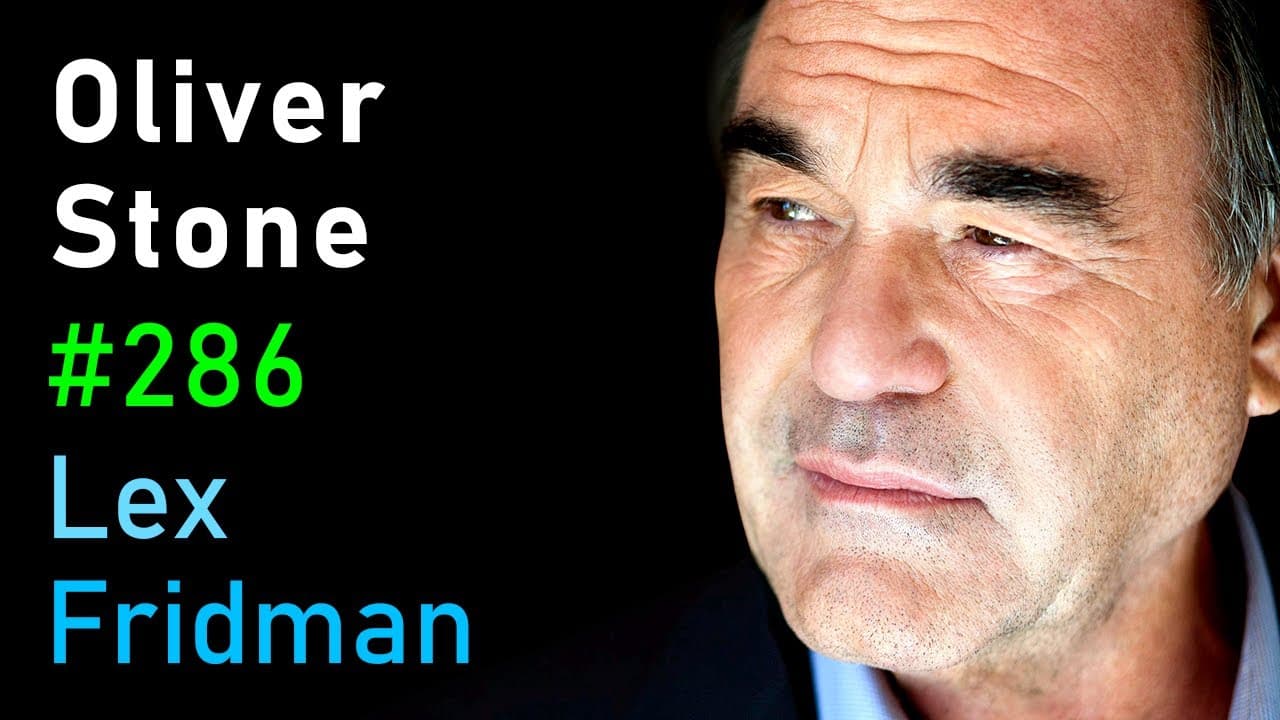
Oliver Stone: Vladimir Putin and War in Ukraine | Lex Fridman Podcast #286
TL;DR
Oliver Stone presents a nuanced perspective on Vladimir Putin, emphasizing the need to understand him as a political figure shaped by complex circumstances. The discussion explores themes of imperialism, military influence, and the global energy crisis, highlighting how these elements contribute to the ongoing conflict in Ukraine. Stone's insights encourage deeper reflection on the intersection of power, history, and humanitarian challenges.
Transcript
if you could talk to vladimir putin once again now what kind of what kind of things would you talk about here what kind of questions would you ask the following is a conversation with oliver stone he's one of the greatest filmmakers of all time with three oscar wins and 11 oscar nominations his films tell stories of war and power fearlessly and oft... Read More
Key Insights
- ❓ Oliver Stone emphasizes the importance of understanding the human being behind political figures like Vladimir Putin.
- 🙂 Stone's documentaries and interviews shed light on the corrupting influence of imperialism and the military-industrial complex.
- 🌍 The conversation delves into the topic of nuclear energy and the challenges of meeting the world's increasing electricity demands while addressing climate change.
- 🎙️ More videos with Vladimir Putin:
Install to Summarize YouTube Videos and Get Transcripts
Explore YouTube Video Summarizer or Get YouTube Transcript Extractor
Questions & Answers
Q: What topics did Oliver Stone and the interviewer mainly discuss in their conversation?
Oliver Stone and the interviewer mainly focused on Vladimir Putin, Russia's role in global politics, and the ongoing conflict in Ukraine.
Q: How does Oliver Stone view the human aspect of understanding political figures like Putin?
Oliver Stone believes in understanding the human being behind the political figure, trying to grasp their thoughts and perspectives, rather than simply labeling them as good or evil.
Q: According to Stone, what are some key insights from his extensive documentaries and interviews?
Stone's insights include the belief that imperialism and the military-industrial complex corrupt those in power, the importance of understanding the balance of power in global politics, and the need to acknowledge the deep truth that the line between good and evil runs through every person.
Q: How does Stone approach the topic of nuclear energy in his documentary?
Stone discusses the role of nuclear energy in the 21st century and the arguments made by researchers who believe it is necessary to close the gap in electricity generation, especially considering the growing demand in countries like India and China.
Summary
This conversation is with Oliver Stone, a renowned filmmaker, and focuses on his documentary about nuclear energy, as well as his interviews with Vladimir Putin. Stone discusses the role of nuclear energy in the 21st century, emphasizing the need for clean, reliable power to meet global electricity demands. He also addresses the misconceptions and challenges surrounding nuclear energy and highlights the importance of understanding the global picture. Stone then delves into his interviews with Putin, highlighting the human aspects of the Russian president and discussing the prejudices and biases that have shaped perceptions of him. Despite differing political ideologies, Stone finds Putin to be a reasonable and balanced individual.
Questions & Answers
Q: What is the role of nuclear energy in the 21st century?
Nuclear energy is crucial in meeting the expanding global electricity demands. While renewables are gaining traction, the gap between renewable energy production and electricity needs is significant. Nuclear energy offers a viable solution to bridge this gap and ensure a transition to a more sustainable energy future.
Q: How does the United States view nuclear energy?
The United States lacks the political will to embrace nuclear energy on a large scale due to political and fear-based reasons. The environmentalists have also played a role in creating misconceptions and exaggerations about the dangers of nuclear energy, further complicating the landscape. However, countries like China and Russia are leading the way in investing and developing advanced nuclear technologies.
Q: Who will lead the way on nuclear energy?
The path to embracing nuclear energy will not be a united effort by nations but rather an individual race driven by countries' self-interest. China appears to be taking significant steps in this direction due to the potential benefits of reducing coal reliance. Other countries, like India, may follow suit as they experience the environmental consequences of their energy choices.
Q: Is there a connection between energy and conflict?
While energy can be a source of conflict, it is not the sole driver. Wars over resources have happened throughout history, but it is necessary to evaluate the specific circumstances of each conflict. The question of energy and conflict on a global scale requires further analysis and understanding of historical contexts.
Q: What are some interesting aspects of Russian and Ukrainian cultures?
Oliver Stone does not provide specific insights into Ukrainian culture. However, he mentions that the Russian people have shown him warmth and openness during his interviews with Putin. Stone feels that Russia is often wrongly attributed entirely to Putin, disregarding the country's diversity and internal tensions. He emphasizes the importance of distinguishing between the individual and the nation when discussing Russia.
Q: Did Oliver Stone find Putin to be an honest man?
Stone believes that Putin is an honest individual based on his interactions and conversations with him. While acknowledging the controversies surrounding Putin, Stone saw him as a reasonable and calm leader who displayed a deep understanding of global dynamics. Stone also underscores the need to separate personal opinions from an objective assessment of a world leader.
Q: How did Oliver Stone feel while talking to Putin, one of the most powerful men in the world?
Stone felt that Putin was a human being rather than just a political figure. He found Putin to be balanced, reasonable, and calm throughout their conversations, which pushed Stone to view Putin in a more positive light. Stone also emphasizes the negative and shallow portrayal of Putin by the American media, contrasting it with his own experience interviewing the Russian president.
Q: Was Oliver Stone concerned about the charisma and potential deception of powerful individuals like Castro and Chavez?
Stone takes into account the charisma and potential deception of powerful individuals, but he notes that Putin does not rely on charm or manipulation. Instead, Putin directly answers questions and offers clear analyses, allowing for a more genuine exchange. Stone's assessment of Putin is based on these direct conversations rather than on superficial charm.
Takeaways
Oliver Stone's conversations with Vladimir Putin shed light on the human side of one of the world's most powerful leaders. Stone challenges the prevailing biases and prejudices against Putin, emphasizing the importance of understanding leaders in their own context. Additionally, Stone's documentary on nuclear energy highlights the need for countries to embrace clean and reliable power solutions to meet increasing electricity demands. The global picture must be considered, and misconceptions and myths about nuclear energy must be dispelled to create a more sustainable energy future.
Summary & Key Takeaways
-
Oliver Stone is known for his thought-provoking films that shed light on dark aspects of American and global history, including war and power.
-
In this conversation, Stone and the interviewer focus on Vladimir Putin, Russia, and the war in Ukraine.
-
Stone's perspective, as documented in his series "The Untold History of the United States," argues that imperialism and the military-industrial complex contribute to corruption and humanitarian crises.
Read in Other Languages (beta)
Share This Summary 📚
Summarize YouTube Videos and Get Video Transcripts with 1-Click
Try YouTube Summary with ChatGPT & Claude or YouTube Transcript Generator
Explore More Summaries from Lex Fridman Podcast 📚
Summarize YouTube Videos and Get Video Transcripts with 1-Click
Try YouTube Summary with ChatGPT & Claude or YouTube Transcript Generator