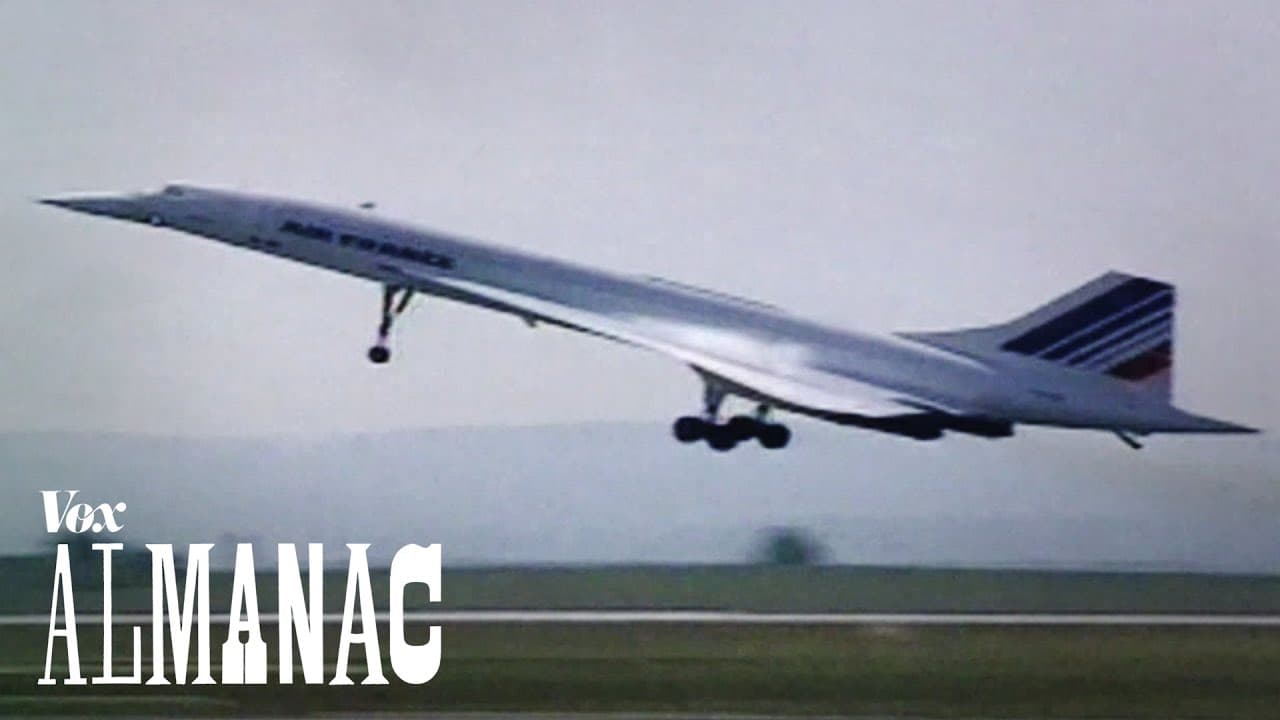
This plane could cross the Atlantic in 3.5 hours. Why did it fail?
TL;DR
Concorde's failure was due to economic and environmental challenges.
Transcript
We had it. From January 21, 1976 to October 24, 2003, we had a commercial supersonic passenger plane called Concorde. Today it takes 7 hours to fly from New York to London. On the Concorde it took About 3:30 (just under 3 hours if it was record time). A journey that would have taken the Titanic 137 hours had become just barely long enough to Watch ... Read More
Key Insights
- The Concorde was a marvel of engineering, reducing transatlantic flight times significantly, but faced numerous operational challenges.
- Supersonic flight was limited to oceanic routes due to noise concerns, especially the disruptive sonic booms in populated areas.
- Environmental concerns about the Concorde's exhaust affecting the ozone layer further limited its appeal and expansion potential.
- The Concorde's high operational costs, including fuel consumption and maintenance, made ticket prices extremely high, limiting its market.
- The tragic crash in 2000, combined with post-9/11 industry downturns, severely impacted the Concorde's viability.
- Airbus, the manufacturer, deemed the cost of upgrading the aging Concorde fleet too high, leading to its retirement.
- Despite its technological achievements, the Concorde lacked a sustainable business model and broader market appeal.
- Future supersonic travel dreams persist, but economic and environmental challenges remain significant barriers.
Install to Summarize YouTube Videos and Get Transcripts
Explore YouTube Video Summarizer or Get YouTube Transcript Extractor
Questions & Answers
Q: What made the Concorde a marvel of engineering?
The Concorde was a marvel due to its ability to travel at Mach 2, reducing transatlantic flight time significantly. Its design included a unique ogival delta wing for lift and drag reduction, a droop snoot for pilot visibility, and fuel distribution systems to manage the center of gravity. These innovations made supersonic passenger travel possible.
Q: Why was supersonic flight limited to oceanic routes?
Supersonic flight was limited to oceanic routes primarily due to noise concerns. The sonic booms created by breaking the sound barrier were disruptive, as demonstrated by tests over Oklahoma City, which resulted in numerous noise complaints and reported damages. This limitation prevented routes over populated areas, such as New York to LA.
Q: What environmental concerns affected the Concorde's operations?
The Concorde's high-altitude flight pattern raised concerns about its exhaust gases potentially damaging the ozone layer. Scientists feared that a large fleet of supersonic jets could have a significant environmental impact. This concern, along with noise issues, contributed to limiting the expansion of supersonic travel.
Q: How did the 2000 crash and post-9/11 events impact the Concorde?
The crash of Air France Flight 4590 in 2000, caused by a tire puncture, resulted in the grounding of the Concorde fleet. The subsequent post-9/11 industry downturn further depressed demand for luxury air travel. These events compounded the Concorde's existing challenges, leading to its eventual retirement in 2003.
Q: Why did Airbus decide to retire the Concorde?
Airbus decided to retire the Concorde due to the high costs associated with upgrading the aging fleet, which still relied on analog controls and a flight engineer. The economic model was unsustainable, with high operational costs, limited passenger capacity, and expensive maintenance, making continued support unfeasible.
Q: What were the economic challenges faced by the Concorde?
The Concorde faced significant economic challenges, including high fuel consumption and operational costs, which led to expensive ticket prices. With a capacity of only 120 passengers, it couldn't distribute costs effectively. Additionally, the need for specially trained crews and maintenance further increased expenses, limiting profitability.
Q: What role did noise concerns play in the Concorde's limitations?
Noise concerns, particularly the disruptive sonic booms, played a significant role in limiting the Concorde's routes to oceanic paths. Tests over populated areas showed the potential for noise disturbances and damages, preventing the Concorde from operating over land and reducing its commercial viability.
Q: What future prospects exist for supersonic travel?
Future prospects for supersonic travel remain, with ongoing interest in developing new technologies. However, the challenges that faced the Concorde, such as economic viability, environmental impact, and noise concerns, persist. Any future supersonic transport must address these issues to be successful and sustainable.
Summary & Key Takeaways
-
The Concorde was a supersonic passenger plane that significantly reduced transatlantic flight times but faced challenges such as high operational costs, environmental concerns, and limited routes due to noise issues. Despite its engineering marvel, it was retired due to unsustainable economics.
-
The tragic crash in 2000 and the post-9/11 industry downturn were significant blows to the Concorde's operations. Airbus found the costs of upgrading the aging fleet too high, leading to its retirement in 2003, marking the end of commercial supersonic flights.
-
Although the Concorde was a symbol of innovation and luxury, it lacked a sustainable business model. High ticket prices, limited passenger capacity, and environmental concerns hindered its success. Future supersonic travel remains a possibility, but challenges persist.
Read in Other Languages (beta)
Share This Summary 📚
Summarize YouTube Videos and Get Video Transcripts with 1-Click
Try YouTube Summary with ChatGPT & Claude or YouTube Transcript Generator
Explore More Summaries from Vox 📚



Summarize YouTube Videos and Get Video Transcripts with 1-Click
Try YouTube Summary with ChatGPT & Claude or YouTube Transcript Generator