10 Best CGP Grey Videos Explained

Sep 15, 2026
17 min read
28 views
Last updated: September 2026
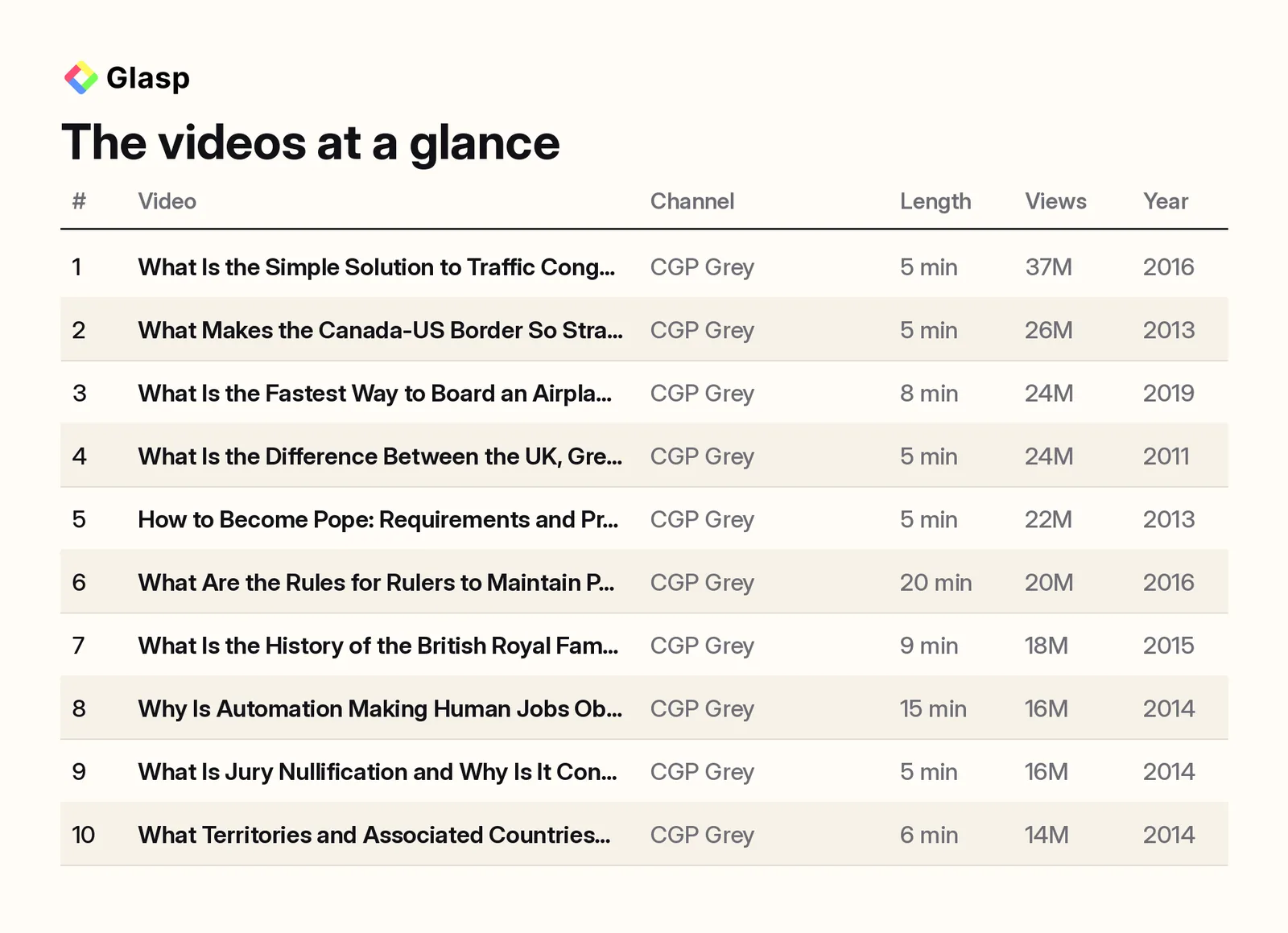
This is a ten-video sequence from CGP Grey, ordered as a path rather than a ranking. It is for viewers who want compact explanations of how everyday systems, borders, institutions, political power, and automation work.
The full set runs about one hour and twenty-three minutes. Three of the most enduring are CGP Grey's "The Simple Solution to Traffic," "Canada & The United States's Bizarre Border," and "The Rules for Rulers."
The videos on this list, in the order to watch them, are:
What Is the Simple Solution to Traffic Congestion? (CGP Grey)
What Makes the Canada-US Border So Strange? (CGP Grey)
What Is the Difference Between the UK, Great Britain, and England? (CGP Grey)
How to Become Pope: Requirements and Process Explained (CGP Grey)
What Is Jury Nullification and Why Is It Controversial? (CGP Grey)
What Territories and Associated Countries Does the U.S. Have? (CGP Grey)
Total: 10 videos, 83 minutes of watch time (1 hour 23 minutes), and 216.4M combined views.
1. What Is the Simple Solution to Traffic Congestion?

"The Simple Solution to Traffic" · CGP Grey · 5 min · 37M views · 2016
In short: Traffic congestion is a coordination problem that synchronized self-driving cars could solve more efficiently than human drivers.
Start with traffic because it turns a familiar delay into a simple lesson about systems. At an intersection, cars accelerate one after another instead of together, so some drivers miss the green light. The video argues that the number of cars is not the fundamental problem. Human reaction times, limited attention, and poor coordination create the slowdown, making traffic a useful first example of how individual actions can produce an inefficient shared outcome.
The same problem appears on highways without intersections. One driver slows, the next brakes harder, and the reaction travels backward as a traffic snake that can remain after its original cause is gone. Drivers can reduce the effect by keeping a consistent distance from the cars ahead and behind. Self-driving cars offer the structural solution: they can communicate quickly, hold optimal spacing, and accelerate together through intersections that would no longer need traffic lights.
Key takeaways
Drivers accelerating at different times create delays and gridlock at intersections.
A single slowdown can trigger a chain of braking and create congestion even when there is no intersection.
Consistent spacing helps drivers avoid over-braking and reduces the chance of traffic snakes forming.
Communicating self-driving cars could coordinate their movement and make intersections work without traffic lights.
Watch on YouTube · Read the summary and Q&A
2. What Makes the Canada-US Border So Strange?

"Canada & The United States's Bizarre Border" · CGP Grey · 5 min · 26M views · 2013
In short: The Canada-US border looks straight from afar but is a 5,500-mile collection of clearings, zig-zagging markers, disputes, and geographic exceptions.
Move next from a system you encounter on the road to a line drawn across a continent. The Canada-US border appears simple, but the video shows how historical negotiation, surveying, and geography made it irregular. Its 20-foot-wide no-touching-zone clearly separates the two countries for 5,500 miles, with exceptions for places that predate the boundary. The supposed straight line is instead defined by more than 900 real-world markers that zig-zag across the landscape.
The irregularities become clearest where the border meets islands, lakes, and towns. Both countries claim islands in the Atlantic, largely because of tourism and fishing rights. Vancouver Island and Point Roberts show places where the boundary does not behave like a simple straight line. In another case, an unclear 1783 map led negotiators to revisit where the border crossed a lake. Some resulting communities even have students who cross an international boundary to attend school.
Key takeaways
A 20-foot-wide cleared zone marks much of the 5,500-mile boundary between Canada and the United States.
More than 900 monuments placed by 1800s surveyors form a border that zig-zags when viewed on a modern map.
Canada and the United States both claim Atlantic islands connected to tourism and fishing rights.
Border irregularities can divide lakes and communities, creating daily international crossings for some students.
Watch on YouTube · Read the summary and Q&A
3. What Is the Fastest Way to Board an Airplane?

"The Better Boarding Method Airlines Won't Use" · CGP Grey · 8 min · 24M views · 2019
In short: Boarding window passengers before middle and aisle passengers reduces seat shuffles, while random boarding often beats more orderly group systems.
After traffic and borders, airplane boarding brings coordination into a narrow space where the source of delay is easy to see. The video separates an intuitive method, filling the plane from back to front, from methods that actually reduce waiting. Its main argument is that boarding speed depends on avoiding interference between passengers, not merely giving the queue a tidy order. That makes it the practical bridge from large public systems to deliberately designed procedures.
Bag stowage creates the main delay because everyone behind a passenger must wait while that bag is put away. Random boarding with assigned seats can outperform organized groups by increasing the chances that several passengers stow bags in parallel or move away from one another. Boarding window, then middle, then aisle passengers also removes seat shuffles and can be slightly faster. A precisely alternating back-to-front order could do better in theory, but human behavior makes that level of compliance impractical.
Key takeaways
Stowing bags is the main source of airplane boarding delays because it blocks every passenger waiting behind.
Random boarding with assigned seats can create more parallel activity than organized boarding groups.
A window, middle, aisle order eliminates seat shuffles and can be slightly faster than random or back-to-front boarding.
The theoretically fastest precise order is difficult to use because real passengers will not follow it perfectly.
Watch on YouTube · Read the summary and Q&A
4. What Is the Difference Between the UK, Great Britain, and England?
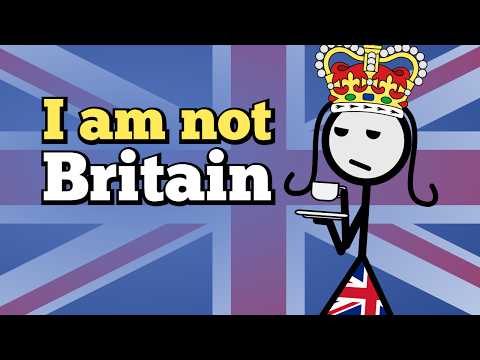
"The Difference between the UK, Great Britain & England Explained" · CGP Grey · 5 min · 24M views · 2011
In short: The United Kingdom is a country of four nations, while Great Britain is the island containing England, Scotland, and Wales.
The fourth video returns to geography, but now the task is to separate terms that describe different political and physical entities. It follows the border video by showing that familiar labels can hide several layers of governance and identity. England is not interchangeable with either Great Britain or the United Kingdom. The video builds a compact map of four nations, two major islands, and the territories and constitutional relationships connected to the British state.
The United Kingdom contains England, Scotland, Wales, and Northern Ireland. Great Britain is the largest island in the British Isles and holds the first three, while the island of Ireland contains the Republic of Ireland and Northern Ireland. The wider picture includes Commonwealth Realms, former colonies that became independent through diplomacy but still recognize the British monarchy as head of state, and British Overseas Territories, which have not become independent and rely on the United Kingdom for support.
Key takeaways
England, Scotland, Wales, and Northern Ireland are the four nations that make up the United Kingdom.
Great Britain is the island containing England, Scotland, and Wales, not another name for the whole United Kingdom.
The island of Ireland contains both the Republic of Ireland and Northern Ireland.
Commonwealth Realms and British Overseas Territories have different political relationships with the United Kingdom.
Watch on YouTube · Read the summary and Q&A
5. How to Become Pope: Requirements and Process Explained
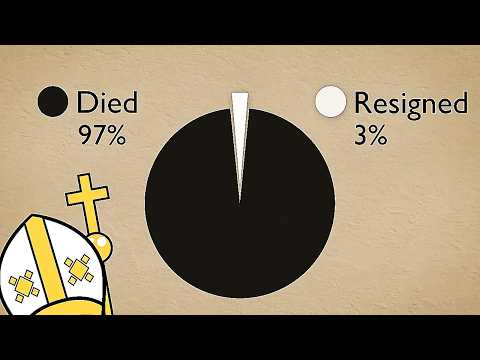
"How to Become Pope" · CGP Grey · 5 min · 22M views · 2013
In short: The practical path to becoming Pope runs from priest to bishop to cardinal before an election requiring a two-thirds majority.
With political geography established, the sequence moves inside a major institution and follows how someone reaches its highest office. Being a Catholic man describes the basic eligibility, but the practical process is a long internal ladder rather than a public campaign. A candidate normally becomes a priest, advances to bishop, and is appointed cardinal. Education, experience, recommendations, committee review, and decisions by senior religious leaders shape each step toward the papacy.
An aspiring priest needs a college degree in Catholic Philosophy and a master's degree in divinity. Bishops come from secret local lists that pass through interviews and research by the Pope's ambassador and the congress of bishops in Vatican City. The Pope personally appoints cardinals, usually from highly accomplished bishops. When a Pope dies or retires, cardinals younger than 80 are sequestered in Vatican City and vote four times a day until someone receives a two-thirds majority.
Key takeaways
The practical route to the papacy is to become a priest, then a bishop, and then a cardinal.
Priesthood requires education that includes a college degree in Catholic Philosophy and a master's degree in divinity.
The selection of bishops involves local recommendations, interviews, research, and review in Vatican City.
Cardinals under 80 elect a new Pope through repeated voting that requires a two-thirds majority.
Watch on YouTube · Read the summary and Q&A
6. What Are the Rules for Rulers to Maintain Power?
"The Rules for Rulers" · CGP Grey · 20 min · 20M views · 2016
In short: Rulers stay in office by controlling resources and keeping the key supporters who carry out their commands loyal.
The path now shifts from gaining one office to the general problem of keeping power. The throne may appear all-powerful, but a ruler can act only through other people. The video argues that the first rule is securing key supporters who can turn plans into action. The second is controlling treasure and distributing it without losing those supporters. This framework connects the papal election's need for cardinal support to the incentives operating in both dictatorships and democracies.
The number and needs of supporters change the governing strategy. A dictator may focus resources on a small essential group and, when vast resources are available, disregard citizens' quality of life. A democratic ruler must win blocks of voters while also managing key supporters through policies and favors. Systems with many essential supporters are harder to balance, and rulers with more of them tend to have shorter reigns. Productive democracies that distribute wealth broadly are described as more stable.
Key takeaways
A ruler's power depends on key supporters who are willing and able to carry out commands.
Control of treasure lets rulers reward supporters and maintain their loyalty.
Democracies require rulers to manage blocks of voters as well as other essential supporters.
Rulers with more key supporters face more competing needs and typically have shorter reigns.
Watch on YouTube · Read the summary and Q&A
7. What Is the History of the British Royal Family?
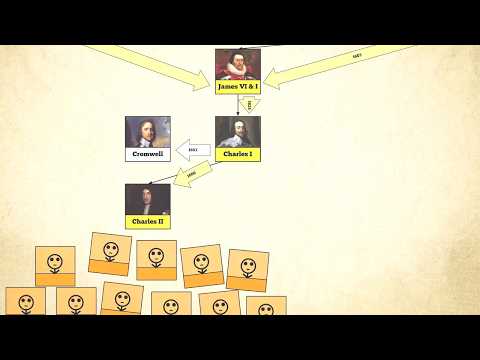
"Brief History of the Royal Family" · CGP Grey · 9 min · 18M views · 2015
In short: The British royal line runs from William the Conqueror through centuries of disputed inheritance before succession rules became clearer.
After the general rules of political survival, this video follows one ruling family across nearly a millennium. It begins with William the Conqueror in 1066 and shows why a family tree alone cannot explain the crown. Early succession rules were unsettled, allowing disputed claims, rushed coronations, civil wars, and contested marriages to redirect the line. The video therefore supplies a historical case of power passing through people before inheritance became a more formal process.
William's children William II, Henry I, and Adela all mattered to later succession. When Empress Matilda was expected to inherit, Stephen reached Westminster and was crowned first, beginning a decades-long civil-war stalemate. Later, Edward III's great-grandsons fought over the crown in the War of the Roses. Henry VIII wrote inheritance rules that placed oldest sons first and daughters after them. The Scottish line also entered the story when James VI of Scotland became James I of England.
Key takeaways
The video's royal family tree begins with William the Conqueror in 1066.
Unclear early succession practices produced disputed rulers and civil wars over the crown.
Stephen's coronation ahead of Empress Matilda led to a decades-long civil-war stalemate.
Henry VIII formalized inheritance around oldest sons first, with daughters inheriting only when there were no sons.
Watch on YouTube · Read the summary and Q&A
8. Why Is Automation Making Human Jobs Obsolete?

"Humans Need Not Apply" · CGP Grey · 15 min · 16M views · 2014
In short: Mechanical muscles and software minds are expanding automation from physical labor into transport, professional work, and creative tasks.
The eighth video turns from who holds power to how technological change can alter the place of workers across an economy. Humans have long built tools that reduce labor, from sticks and plows to tractors, while specialization and living standards increased. The argument here is that newer machines are not limited to making muscles stronger. General-purpose robots and software bots can perform a widening range of tasks, placing both low-skill and professional jobs at risk.
Baxter represents a general-purpose robot that is becoming affordable and versatile enough for work in places such as supermarkets and coffee shops. Self-driving cars could replace millions of transportation jobs because they do not get distracted and can operate more efficiently and safely. Research bots and doctor bots already assist with diagnosis and treatment, extending automation into white-collar work. Bots can also write music, so creativity does not create a guaranteed boundary against automation.
Key takeaways
Tools have reduced physical labor for thousands of years while enabling greater specialization and higher living standards.
Affordable general-purpose robots such as Baxter can take over low-skill work in multiple industries.
Self-driving cars have the potential to replace millions of jobs in transportation.
Software bots can affect professional and creative work, including medical tasks and music writing.
Watch on YouTube · Read the summary and Q&A
9. What Is Jury Nullification and Why Is It Controversial?
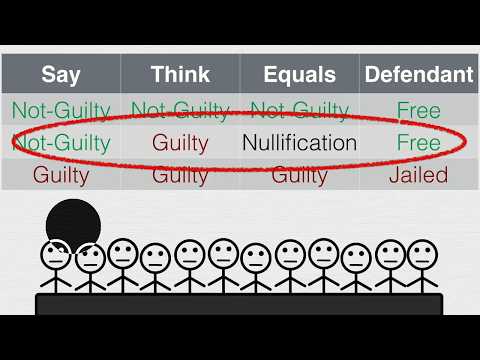
"The Law You Won't Be Told" · CGP Grey · 5 min · 16M views · 2014
In short: Jury nullification lets jurors acquit someone they believe is guilty when they decide that punishment under the law is not warranted.
After a broad argument about economic change, the ninth video narrows the focus to a specific point where citizens can affect the application of law. Jury nullification is not presented as an ordinary instruction from a judge. It follows logically from two protections: jurors cannot be punished for a wrong decision, and a defendant acquitted of a crime cannot be tried for that same crime again. Together, those rules give a jury room to return not guilty despite believing the charge is proved.
The power is controversial because its moral character depends on how a jury uses it. Northern juries refused to convict escaped slaves under the fugitive slave law, while Southern juries refused to convict lynch mobs. Courts generally do not inform jurors about nullification, and lawyers may screen for beliefs that prevent someone from deciding strictly under the law. Mock trials suggest that knowing about nullification makes evidence less important and sympathy for the defendant more influential.
Key takeaways
Jurors can acquit a defendant they believe is guilty when they decide the law should not be enforced in that case.
The possibility follows from protection against punishing juries for wrong decisions and from the ban on trying an acquitted defendant again.
Historical examples include both Northern juries protecting escaped slaves and Southern juries protecting lynch mobs.
Mock trials indicate that knowledge of nullification can reduce the weight jurors give to evidence and increase the role of sympathy.
Watch on YouTube · Read the summary and Q&A
10. What Territories and Associated Countries Does the U.S. Have?
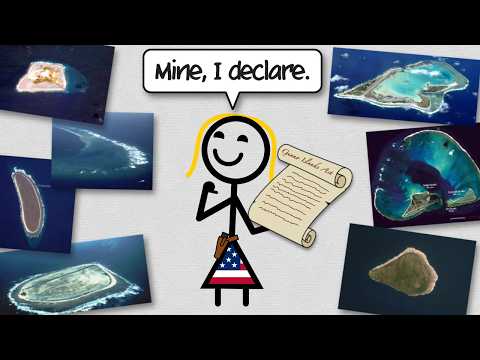
"American Empire" · CGP Grey · 6 min · 14M views · 2014
In short: The United States extends beyond 50 states into districts, reservations, several types of territories, and three associated countries.
Close with a map that combines the list's recurring questions about borders, law, citizenship, and political control. The United States has 50 states, including Alaska and Hawaii, but the full structure also includes Washington D.C., American Indian reservations, territories, and associated countries. These places do not all have the same relationship to the federal government. The distinctions between organized and unorganized, incorporated and unincorporated, determine how governance and constitutional rules apply.
Washington D.C. is under congressional control and lacks voting representation. American Indian reservations are administratively separate from states and have a legal status resembling foreign nations. Puerto Rico, Guam, the U.S. Virgin Islands, and the Northern Mariana Islands are organized, unincorporated territories whose residents are American citizens. American Samoa has its own government, but its residents are American Nationals. Unpopulated Howland and Wake Islands have no local government, while the uninhabited Palmyra Atoll is subject to the U.S. Constitution.
Key takeaways
The United States includes 50 states plus places with several different territorial and legal arrangements.
Washington D.C. is controlled by Congress and does not have voting representation.
Residents of four organized, unincorporated territories are American citizens, while American Samoa's residents are American Nationals.
The United States also has agreements with three associated countries involving economic and defense benefits.
Watch on YouTube · Read the summary and Q&A
Frequently asked questions
What are the best CGP Grey videos?
Three strong starting points are "The Simple Solution to Traffic" for coordination, "Canada & The United States's Bizarre Border" for geographic exceptions, and "The Rules for Rulers" for political power. Together they show the range of the list, moving from a five-minute everyday problem to borders and a 20-minute framework for understanding rulers.
How long does it take to watch all ten CGP Grey videos?
The complete sequence runs for 83 minutes, or 1 hour 23 minutes. Seven videos take between five and eight minutes, while the longer entries on royal history, automation, and political power take 9, 15, and 20 minutes. The whole list therefore fits into one long sitting or several short sessions.
How can traffic form when there is no intersection?
One driver slowing down can start a chain reaction in which each following driver brakes, creating a traffic snake or phantom intersection. The congestion can remain even after the first cause disappears. Keeping a consistent distance from the cars ahead and behind helps prevent over-braking, while communicating self-driving cars could coordinate spacing and acceleration directly.
Why can random airplane boarding be faster than boarding groups?
Bag stowage is the main delay, because one passenger putting away a bag blocks everyone behind. Random boarding with assigned seats spreads passengers through the cabin, increasing the chance of people stowing bags in parallel or moving away from each other. A window, middle, aisle order can be slightly faster still because it also eliminates seat shuffles.
What is the difference between the United Kingdom and Great Britain?
The United Kingdom is made up of England, Scotland, Wales, and Northern Ireland. Great Britain is the largest island in the British Isles and contains England, Scotland, and Wales, but not Northern Ireland. The island of Ireland contains two countries: the Republic of Ireland and Northern Ireland. These terms therefore describe different political and geographic groupings.
How do rulers maintain power?
Rulers need key supporters to carry out their commands and treasure to keep those supporters loyal. Dictators can concentrate rewards on a small essential group, while democratic rulers must also win blocks of voters through policies, favor-trading, and support. As the number of essential supporters grows, balancing their competing needs becomes harder and reigns typically become shorter.
Does automation threaten only low-skill jobs?
No. General-purpose robots such as Baxter can take on low-skill work, and self-driving cars could replace millions of transportation jobs, but software also reaches professional and creative tasks. Research bots and doctor bots can assist with diagnosis and treatment, while other bots can write music. The video's argument is that neither white-collar work nor creativity is automatically protected.
Which CGP Grey video should I watch first?
Start with "The Simple Solution to Traffic." In five minutes, it introduces the central habit behind much of the list: looking past an obvious explanation to find the coordination rules beneath it. Its examples are concrete, covering delayed acceleration at traffic lights, braking chains on highways, consistent spacing, and communication between self-driving cars.
Are older CGP Grey videos still worth watching?
Yes. The oldest video here, from 2011, separates England, Great Britain, and the United Kingdom. Entries from 2013 and 2014 explain 1800s border surveying, the papal election process, automation, jury nullification, and U.S. territories. These older videos still earn a place because they explain the definitions, historical arrangements, and system mechanics that the rest of the sequence builds on.
How to use this list
Watch the videos in order to move from visible coordination problems in traffic and boarding, through borders and institutions, to political power, royal succession, automation, law, and U.S. governance. The short early videos establish the method before the 20-minute account of rulers and the wider social questions that follow. If you only have twenty minutes, start with "The Rules for Rulers," which uses the full time to explain key supporters, treasure, dictatorship, and democracy. If you want the single video that turns an ordinary frustration into a compact systems lesson, choose "The Simple Solution to Traffic."
Related lists
💡 Want summaries and transcripts for any YouTube video? Try YouTube Summary with ChatGPT & Claude.